





Canon is the world's biggest and most successful DSLR manufacturer, but it hasn't launched a new DSLR since 2020. And yet, it continues to hold the lion's share of DSLR sales – despite the wider shift toward mirrorless systems.
Go Tokura, Executive Vice President and Head of Canon's Imaging Group, said in an interview with DPReview, "90% has now become mirrorless," referring to today's camera market.
So if mirrorless has taken over, why are DSLRs still hanging on – and why is Canon still winning?
A shrinking market Canon still owns
CIPA numbers tell a clear story: mirrorless cameras dominate, while DSLR shipments continue to decline year after year.
Still, Canon shipped around 790,000 DSLR units – nearly 90% of the global DSLR market in 2024. In 2025, global DSLR shipments came to 690,911 – with Canon dominating with approx. 600,000-620,000 DSLRs.
By comparison, Nikon dropped from 440,000 units in 2021 to just 70,000 in 2024, while Pentax remains a niche player at around 10,000 units annually.
Despite the rise of mirrorless, many photographers aren't ready to move on – and Canon is benefiting from that 'hesitation'.
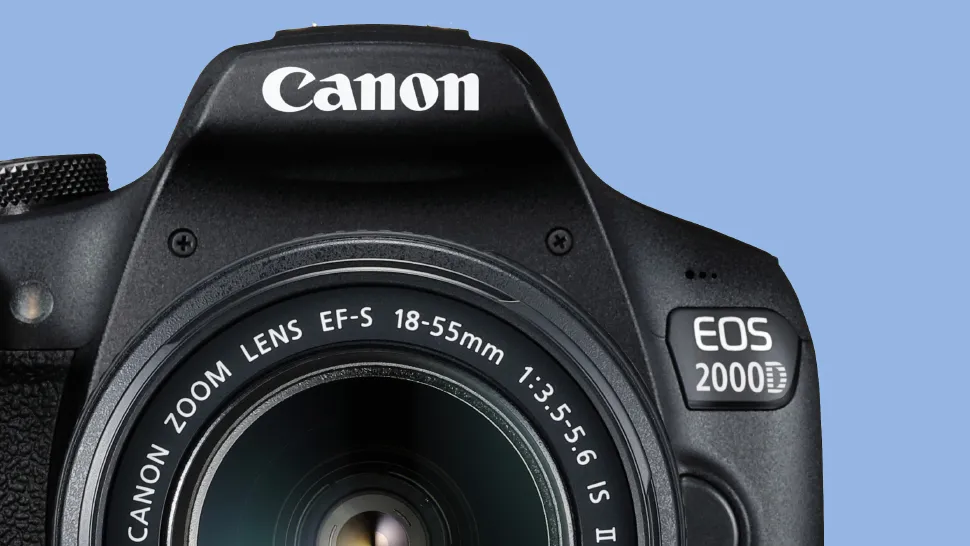
Canon's DSLR lineup is now more limited, but still includes models like the Canon EOS 2000D / Rebel T7 and Canon EOS 5D Mark IV.
Canon's continued success is likely driven by legacy investment and entry-level bundles, which remain attractive to beginners, students, and enthusiasts – one of the most affordable ways into photography.
There's a massive legacy audience out there – photographers with decades of EF-mount lenses, built-out kits, and little or no reason to switch systems.
Mirrorless reaches 90%
In the DPReview interview, Go Tokura pointed to just how far the shift has gone, stating that around "90% has now become mirrorless," referring to the interchangeable-lens market.
Shipments from Japan reached around 7 million units last year – marking modest growth of roughly 6% – and Canon expects this trend to continue rather than drop off suddenly.

However, forecasts suggest that momentum is slowing. CIPA is predicting far slower growth in 2026 than in 2025, with mirrorless shipments expected to dip slightly by around 2.6%.
That slowdown feels like a natural progression. Mirrorless cameras are becoming increasingly expensive, while major technological leaps are less frequent – pushing more photographers toward the second-hand market.
And while DSLRs continue their gradual decline, their core audience isn't disappearing. Even in a market where around 90% has moved to mirrorless, shipping data suggests a loyal base remains – one that isn't in a hurry to give up the familiar DSLR experience.
You might like...
Browse the best Canon cameras, the best DSLRs and the best full-frame DSLRs.

