





If you’re serious about wedding photography, choosing the right camera is one of the most important decisions you’ll make. Weddings are packed with once-in-a-lifetime moments, and unlike many other forms of photography, there are no second chances if you miss the shot. It’s an incredibly rewarding genre, but also one of the most demanding, and speaking from experience, having a camera you can rely on makes all the difference.
In this guide, I’ve brought together my top recommendations for wedding photography, drawing on my own experience behind the camera. For me, the priorities are simple: fast, reliable performance, accurate autofocus, and the ability to shoot discreetly throughout a long and often unpredictable day. Silent shooting is particularly important during ceremonies, while dependable autofocus in challenging lighting conditions is essential when moving between bright outdoor settings and dimly lit venues. Dual card slots are another feature I consider invaluable, providing that extra peace of mind when capturing moments that simply cannot be repeated.
Thankfully, you don’t need to spend a fortune to get a camera capable of delivering exceptional wedding photographs. While some of the best professional cameras come with eye-watering price tags, there are plenty of more affordable alternatives that offer the speed, image quality, and reliability wedding photographers need. My top choice, the Canon EOS R5 Mark II, is undoubtedly a premium option, but I’ve also included several excellent cameras that deliver outstanding performance without demanding quite such a substantial investment.

Lauren is a writer, reviewer, and photographer with ten years of experience in the camera industry. She's the former Managing Editor of Digital Camera World, and previously served as Editor of Digital Photographer magazine, Technique editor for PhotoPlus: The Canon Magazine, and Deputy Editor of our sister publication, Digital Camera Magazine. She has also shot her share of weddings, and lends her expertise to this guide.
The Quick List

The Canon EOS R5 Mark II is expensive, but class-leading in so many ways, with one of the most capable autofocus ever devised, and 45MP full-frame quality that can be further upscaled in-camera.
Read more below

Fujifilm's powerful APS-C hybrid is eminently capable for wedding photos and videography, with 6K open gate footage and heaps of codecs. It's priced well for beginners or the budget-conscious.
Read more below

The Z5 gives you full-frame mirrorless for an affordable price, with a natural-looking EVF, reliable handling, and access to a wide range of Nikon's Z-mount lenses.
Read more below

The A7 IV is the best all-around package for hybrid wedding photographers; a full-frame mirrorless with a sweet spot 33MP sensor, 10 fps, vari-angle touch screen, and 4K60p video.
Read more below

The Lumix S5II is the best hybrid camera in the lineup if you're shooting stills and video for weddings and need a competitively-priced option.
Read more below

This Micro Four Thirds camera is packed with technology and blazing specs and is weather-sealed to an impressive degree. Its fast burst shooting and clever built-in ND filters make it a pro powerhouse.
Read more below
Load the next products ↴

It's not new, and it's not particularly light, but the D850's handling and image quality are still hard to beat. If you're a pro who prefers the robust build of a DSLR, Nikon's incredibly fast camera could serve you well.
Read more below

The 100S II will take some skill to use, but it's capable of the most stunning imagery on this list. With a gorgeous 102MP sensor, it gives you huge resolution at an affordable price.
Read more below
The best cameras for wedding photography
Why you can trust Digital Camera World Our expert reviewers spend hours testing and comparing products and services so you can choose the best for you. Find out how we test.
Best professional

✅ Advanced AF system Registered Person Priority and eye-detection make it simple to get the critical shots you need.
✅ In-camera upscaling You can push the already high resolution still further with AI-powered upscaling.
❌ Large file sizes for both stills and videos (especially 8K) require significant storage capacity and powerful hardware for editing, adding to post-production workflow costs.
❌ Expensive This is a pro-priced camera, though I’d say it’s worth the asking price.
The original Canon EOS R5 was very nearly the ultimate camera for professionals, being particularly potent for weddings. But I think the EOS R5 Mark II goes one step better. If you’ve already got an EOS R5, I don’t necessarily think you need to rush to upgrade, but if you’re looking for a new professional camera for weddings, the EOS R5 Mark II is quite simply the best you can get.
You don’t just get to shoot 45MP images at 30fps with full autofocus – you get to shoot them with Dual Pixel Intelligent AF, which is the new standard by which autofocus systems will be judged. It’s not only smart enough to pick out human faces, it can also be programmed with Registered Person Priority to pick out specific individuals, like a bride and groom, and its Eye Detect AF ensures that the point of focus is always exactly where you want it. It’ll lock on in even extremely low light, which is vital for crucial moments like the first dance,
I used the previous EOS R5 for more than five weddings, and the EOS R5 Mark II is a bigger, better, and more sophisticated version of it. It does everything. If you need more resolution, you can take advantage of next-generation features like in-camera upscaling. If you want video, you’ve got 8K at your disposal, without the crippling recording limits of the first R5. In his review, James called it the best camera he’s ever used, and believe me, he has used a lot of cameras. The Canon EOS R5 Mark II is expensive, yes, as are the best Canon RF lenses, but it's quite simply a hell of a camera.
Read our full Canon EOS R5 Mark II review
Best entry-level
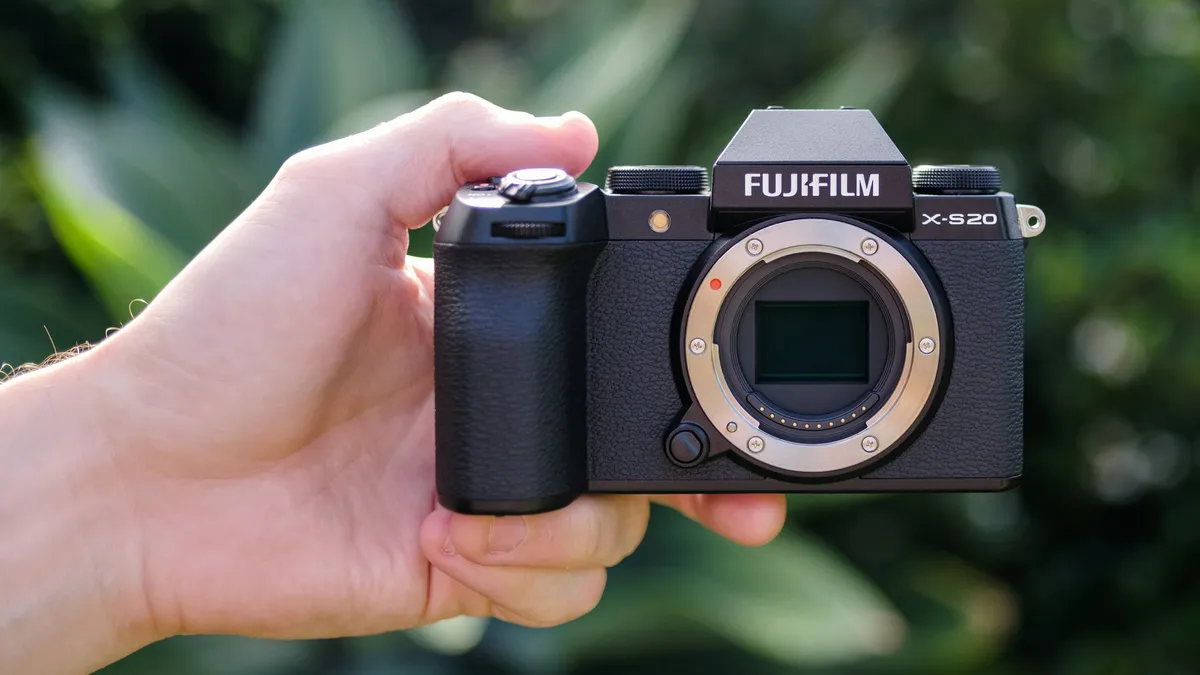
✅ Affordable: Great entry-level option for those just starting in wedding photography offering professional features without the high price tag.
✅ Battery Life: Can capture up to 800 frames on a single charge, reducing the need for frequent battery swaps during a full-day wedding event.
❌ Single Memory Slot: this could be a deal-breaker for some photographers who prefer to have dual card slots for backup purposes in case of card failure during a wedding.
❌ Lens Choices for Specialized Shots: there are many lenses in the X-mount lineup, you may find fewer options compared to full-frame systems,
If you're shooting your first few weddings or working as a second shooter for an established professional, the X-S20 is a great entry-level option. In our review, we praised its straightforward controls, excellent fully automatic modes, and its small and compact size. Of course, I wouldn't recommend the X-S20 if it couldn't handle the demands of a wedding. It builds on the success of the X-S10, with the same 26MP resolution but a processor and battery from Fujifilm’s flagship Fujifilm X-T5 and Fujifilm X-H2. The result is a compact camera with phenomenally fast subject recognition and tracking.
Another standout feature for weddings is the X-S20's enhanced battery, which Fujifilm claims can capture 800 frames on a single charge. Wedding pros always have plenty of spare batteries, but it's nice to know that you'll be swapping out the battery less often throughout the day. The 5-axis in-body image stabilization (up to 7 stops with compatible lenses) is on par with most of the options in this guide, and it gives you more leeway against camera shake in low light.
Despite the bigger battery, the X-S20 is lightweight at just 491g, and one of the most compact in this guide, yet there's still a comfortable handgrip and sensible button layout. The APS-C sensor and single memory slot might be a deal breaker for you. But if you're happy to live with just one SD card, the X-S20 is the ideal budget camera for wedding photography, along with Fujifilm's huge range of X-mount lenses.
Read our full Fujifilm X-S20 review
Best value full-frame

✅ Dual card slots: allow for instant backups, ensuring images are protected from card failure—an essential feature for professional wedding photographers.
✅ Great value: for a full-frame mirrorless camera, making it ideal for wedding photographers on a budget who want the benefits of full-frame quality.
❌ Lacks a top display panel: which some photographers rely on for quick settings checks. This is replaced by a mode dial, reducing ease of access to key settings.
❌ maximum burst rate of 4.5fps: the Z5 may not be fast enough for capturing fast-moving moments compared to higher-end cameras, which may offer more frames per second.
Nikon's entry-level full-frame mirrorless camera is incredible value if you're shooting weddings on a budget. Limitations come with its price, such as a maximum continuous shooting speed of 4.5fps, but this should be enough for most wedding scenarios. It has a 24.3MP CMOS sensor that not only captures beautiful, color-accurate photos but can also shoot 4K video – all with that full-frame fidelity and cinematic depth of field.
The Z5, unlike other full-frame Z cameras, doesn't have a top display panel, and its position is taken up by the camera's mode dial. Being smaller physically, it lacks the array of buttons that the Nikon D850 has for changing settings without having to delve into menus. Otherwise, it handles very well, and I'm pleased that the Z5 has dual UHS-II slots so your images can be safely backed up on the second in case of a card failure.
The 273-point hybrid autofocus system is also fast and accurate, and eye autofocus makes sure your wedding portraits and walks down the aisle are always in focus. It's lightweight, and weather sealing is important for weddings that take place outside in rainy weather. If you're coming from a Nikon DSLR, the Z5 is a great choice since the Nikon FTZ adapter means you can use your existing (and cheaper) Nikon F-mount lenses. While Nikon has since released the Z5 II, I'm sticking with the original Z5 for now as my budget choice – while the sequel is great value, this original is still available and significantly cheaper.
Read our full Nikon Z5 review
Best all-rounder

✅ 33MP sensor: delivers excellent image quality, providing more detail than other cameras in its price range (typically 20-24MP), ideal for producing high-quality wedding albums and large prints.
✅ Advanced Autofocus: state-of-the-art autofocus system ensures accurate focus, making it easy to capture fast-moving subjects like the couple’s first dance
❌ No Fully Articulating Screen: The screen is tiltable but not fully articulating, which can limit flexibility when shooting from unusual angles
❌ Complex Menus: menu system can be complicated to navigate, especially for users new to Sony’s ecosystem.
I loved and used the Sony A7 III for years, but impossibly, I love the Sony A7 IV even more. I'd recommend it wholeheartedly to wedding pros who don't want to spend quite as much as a flagship camera like the Canon EOS R5 but need an all-rounder to go between video and stills.
Our reviewer found the A7 IV to be a powerful hybrid model. "Stills photographers can revel in its 33MP resolution and incredible burst mode, while videographers get a camera that leaves the previous A7 III far behind." The A7 IV has state-of-the-art autofocus, a massive buffer depth, and dual card slots (as you'd expect). Image quality is excellent and visibly better than the 20-24MP rival cameras in this price bracket, and Sony has possibly the biggest range of third-party and own-brand lenses to choose from.
One downside is Sony's image stabilization, which can lag behind rivals. Static shooting is perfect, but for run-and-gun style filming you'd be wise to use a gimbal. The menus can also be quite complex to set up and use, but if you're coming from another Sony model, the settings and controls are a logical extension of what you already know.
Read our full Sony A7 IV review
Best hybrid
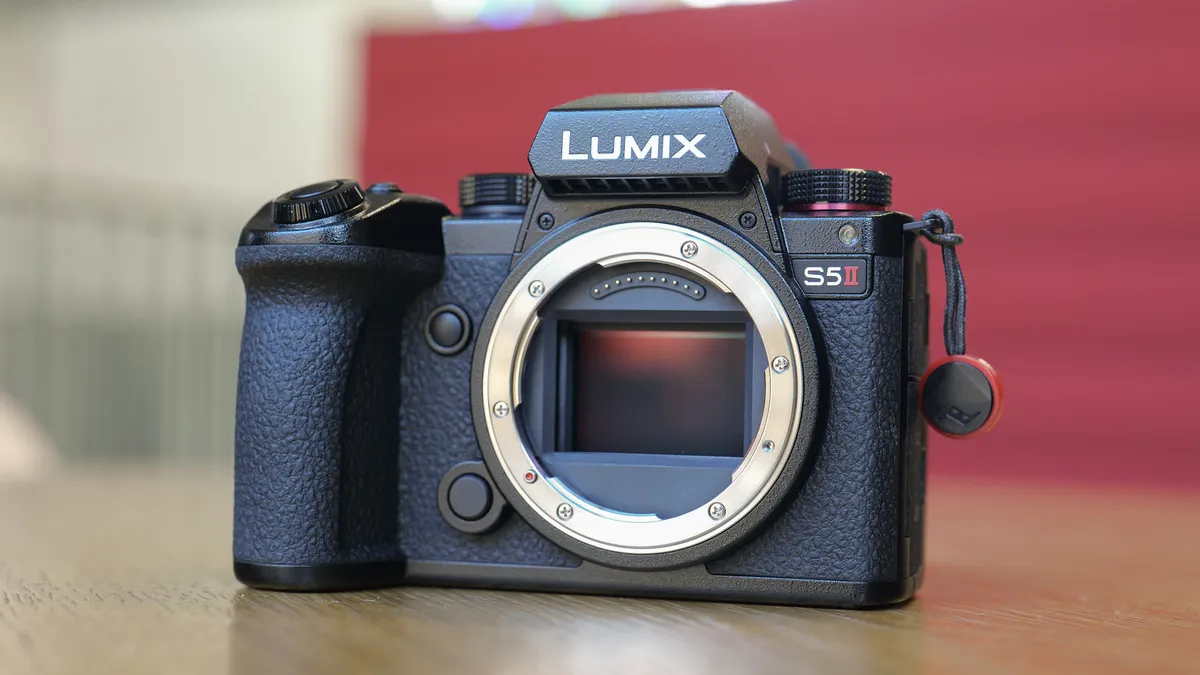
✅ Phase Detection Autofocus: Improved autofocus brings the S5 II in line with other top hybrid cameras, solving previous issues with Panasonic's focus system and making it much more reliable for wedding photography
✅ Excellent Video Features: A true video specialist, capable of shooting 6K video with full-sensor readout and 10-bit color (including 4:2:2 C4K/4K 60p), making it ideal for high-end wedding videography.
❌ No CFexpress Slot: Lacks a CFexpress card slot, which means it may not be able to handle the highest-resolution video recording or faster data transfer speeds needed for intensive workflows,
❌ Battery Life: The battery life may not last as long as competing models when shooting continuously, especially in 6K or high-resolution video modes
In the past, I've found it hard to recommend Panasonic's Lumix line-up to wedding photographers because of its focusing abilities. However, the addition of phase-detection autofocus brings the S5 II right in line with some of the best hybrid cameras money can buy. It's becoming increasingly common for wedding photographers to shoot both stills and video simultaneously. If that's you, the S5 II has you covered for a very reasonable price.
In our review, we loved the S5 II's tough and compact frame, 5-axis in-body image stabilization, and excellent color science. You get two SD UHS-II card slots, although there's no CFexpress slot to handle the highest-resolution video recording (6K with a full-sensor readout at 29.97, 25, 24, or 23.98p).
Its active image stabilization utilizes the power of an entirely new image processor and deploys algorithms that can detect and anticipate camera motion - it becomes particularly effective when you're moving for run-and-gun footage, then. The S5 II is a video specialist, and almost all of its extensive recordable video formats can be captured with a maximum of 10-bit color, including 4:2:2 10-bit C4K/4K 60p video, without any video recording limits. If you're already a wedding videographer or looking to offer more video for clients, the S5 II can produce incredibly high-end results.
Read our full Panasonic Lumix S5II review
Best Micro Four Thirds

✅ Compact & Lightweight: the small and lightweight design makes it one of the most portable options for wedding photographers, reducing fatigue during long shooting sessions.
✅ Greater Depth of Field in Low Light: The Micro Four Thirds sensor’s 2x crop factor allows for a larger depth of field, making it easier to keep both the bride and groom in focus in low-light scenarios like church ceremonies.
❌ Conservative Resolution: The standard 20.4MP resolution may feel limited for photographers who prioritize high-res images, especially when compared to full-frame cameras offering 45MP or more.
❌ Less Popular Among Pros: The Micro Four Thirds format is less popular among professional wedding photographers, and may not be seen as a "go-to" for high-end wedding work.
Wait a minute – aren't Micro Four Thirds cameras just toys that aren't suitable for professional use? Not quite. One of its most criticized characteristics – the fact that its 2x crop factor sensor gives you twice the depth of field – is an overt strength for wedding photography.
When you're shooting in low light on a full-frame camera (such as a church ceremony), and you open your aperture, your depth of field is so thin that it's a struggle to get more than one subject (like the bride and the groom!) in focus. However, because an f/1.8 aperture on the OM-1 Mark II gives you results more like an f/3.6, you get double the depth of field – and, thus, more of your subjects in focus when shooting in low light. The compromise, of course, is that you have to work a bit harder to get a shallow depth of field.
The OM-1 Mark II is my MFT pick for wedding photography. It's a clever refinement of what was already a very good camera, the original OM-1, and it brings smart features to the game that can make a real difference. The built-in ND and GND filters can be just what you need to control exposures on glaringly sunny wedding days when everybody is outdoors. And then, once the evening starts and the light gets low, the 8.5 stops of stabilization help you keep on getting sharp shots with slower shutter speeds. The ultra-fast burst modes also now have an extra-deep buffer, meaning you can thoroughly protect yourself against missing the crucial moment.
Read our full OM System OM-1 Mark II
Best DSLR

✅ High-Resolution 45MP Sensor: The 45MP full-frame sensor captures stunning detail, making it perfect for wedding photos, especially when trying to preserve intricate textures like the bride's dress.
✅ Impressive Shooting Speed: A 7 frames per second (fps) burst rate (which can go up to 9fps with an optional battery grip) is fast enough to capture action shots without missing any key moments.
❌ Heavier Compared to Mirrorless: The D850 is heavier than most modern mirrorless cameras, which could be tiring during long wedding shoots or when carrying multiple lenses.
❌Limited Video Capabilities: While the D850 can shoot 4K video, its video features are not as advanced as some modern mirrorless cameras that offer more cinematic video capabilities
In a world of advanced mirrorless cameras, the D850 might feel a bit behind the times, but that feeling will change once you start shooting with it. It's one of the best (if not the best) DSLRs ever made, and the perfect do-it-all camera for wedding photography if you like the form factor.
The excellent 45MP full-frame sensor with a broad dynamic range helps you to get every bit of detail from the bride's dress, and the advanced 153-point AF can handle moving subjects with ease. It maintains a shooting speed of 7 frames per second (or 9 frames per second with the optional battery grip). Even without the grip, the D850 has an impressive battery life of 1840 shots, surpassing almost all mirrorless competitors.
The D850 is heavy compared to mirrorless rivals – and even the medium format Fujifilm GFX 100S below. However, this compact size is advantageous when using large, heavy lenses – a factor often overlooked by compact mirrorless users. And as a DSLR, it has a bright, clear optical viewfinder, which is still preferred by many photographers over digital displays. With a durable, weather-sealed build, it should last you years. It's a modern classic.
Read our full Nikon D850 review
Best for resolution

✅ Exceptional Image Quality: Breathtaking image quality with superior color depth, clarity, and detail that surpasses most full-frame cameras, making it ideal for capturing stunning, high-quality wedding photos.
✅ Relatively Light On Its Feet: Medium-format used to be prohibitively heavy, but the GFX 100S II is no different in bulk to a high-spec full-frame camera.
❌ Large File Sizes: The 102MP images produce massive file sizes, requiring high-capacity memory cards and a powerful computer for post-processing
❌ Poor Battery Life: Our review found that it's easy to churn through the GFX 100S II's battery in a matter of hours. For a day's wedding, spares are a must, and you may not want that extra stress.
A few years ago, I wouldn't have dreamt of recommending a medium format camera for wedding photography. They were heavy, slow, and rightfully required a careful rather than a run-and-gun shooting approach. However, Fujifilm’s medium format GFX series has well and truly changed the game. The GFX 100S II is the lightest camera yet – at 883g, it’s lighter even than some full-frame cameras, well and truly disproving the notion of medium-format being too unwieldy and bulky for wedding photography.
The biggest draw of this camera is, of course, its image quality. That large 102MP sensor gives you an incredible amount of leeway for cropping into images and producing large prints, not to mention that elusive medium-format ‘look’ that’s just impossible to replicate. Its noise control is beyond reproach – it’s the only camera on this list that does better in this regard than the EOS R5 Mark II. It does, of course, produce huge file sizes, so you’ll need big, beefy cards and a powerful computer to work with your images.
Speeds of the camera have also been improved since the original GFX 100S. The 5fps burst rate has now been upped to 7fps, which is far from the fastest on this list, but is still eminently workable. In general, you will need a bit more skill to shoot weddings with the GFX 100S II than other cameras on this list, but your reward will be absolutely breathtaking image quality, colour and clarity. And hey, skill is why your clients hire you, right?
I’ll let Gareth’s five-star review of this camera have the last word: “I am just blown away by the capabilities of a 102MP large sensor. Photos are pin-sharp, and the ability to crop into the smallest details is unreal. Any pro photographers about to click buy on a new full-frame camera should seriously consider the GFX 100S II as an alternative.”
Read our full Fujifilm GFX 100S II review
How to choose the best camera for wedding photography
Choosing the right camera for wedding photography starts with understanding where you are in your photographic journey and, perhaps more importantly, where you want to be in a few years. There’s little point in spending thousands on a camera packed with professional video features if you only ever intend to shoot stills. Equally, buying something too basic could leave you wanting to upgrade sooner than expected. My advice has always been to invest in the best camera your budget allows, making sure it meets your needs today while giving you enough room to grow as your photography develops.
It's also worth thinking carefully about what you'll actually be shooting. Wedding photography has become an increasingly competitive industry, with many photographers now offering both stills and video as part of their packages. If that's something you're considering, a capable hybrid camera makes a lot of sense. However, if photography is your sole focus, I'd concentrate on image quality and performance rather than getting distracted by impressive video specifications you'll never use. Higher-resolution sensors give you more flexibility when cropping and producing large prints, but those extra megapixels also mean larger files, more demanding editing workflows, and a greater need for memory cards and storage.
Sensor size is another important consideration. Full-frame cameras generally offer an advantage when shooting in low light, which can be particularly useful in dimly lit churches and evening receptions. However, APS-C cameras can deliver excellent results while keeping costs down, making them an attractive option for photographers starting out. Micro Four Thirds cameras are another alternative, offering smaller, lighter equipment and a 2x crop factor, meaning a 50mm lens provides a field of view equivalent to 100mm on a full-frame camera.
If there's one thing I've learned from photographing weddings, it's that people rarely stay still, and some of the best moments happen when you least expect them. That's why fast, accurate, and dependable autofocus should be near the top of your priorities. Whether you're capturing the bride walking down the aisle, an emotional exchange during the speeches, or guests enjoying themselves on the dance floor, you need a camera that can keep up. Thankfully, every camera in this guide offers advanced autofocus capabilities, including subject tracking and eye detection, helping you capture those fleeting moments with confidence.
For anyone planning to shoot wedding videos alongside their photography, I'd recommend looking for a camera capable of recording at least 4K resolution. Long recording times are particularly important, especially when filming ceremonies and speeches where stopping to restart the camera simply isn't practical. In-body image stabilization is another feature worth having, particularly if you prefer shooting handheld rather than relying on a tripod or gimbal throughout the day.
It's also important to remember that buying a camera means investing in an entire lens system. Every model featured in this guide uses interchangeable lenses, but each manufacturer offers a different selection of optics, and that can have a significant impact on both your budget and the way you shoot. Canon has an excellent range of RF lenses, with some third-party options available, while Sony's more open E-mount system gives photographers an enormous choice of lenses from both Sony and independent manufacturers. I'd always recommend looking beyond the camera body itself and considering which system offers the lenses you're likely to need as your business grows.
Finally, if you're struggling to decide between a couple of cameras featured here, I'd encourage you to read our full reviews before making a decision. Our team of experts has spent time using and testing these cameras in real-world conditions, looking beyond the specifications to understand how they actually perform. From autofocus reliability and image quality to handling and battery life, we've highlighted the strengths and weaknesses of each model to help you choose a camera you can depend on when it matters most.

Do you need a full frame camera for wedding photography?
While many professionals use full frame cameras, this is by no means a necessity. Full frame sensors tend be higher resolution, have better dynamic range, and produce cleaner results at high ISOs. They are also physically bigger, and thus balance better with larger lenses.
However, APS-C (and Micro Four Thirds) cameras have made enormous strides in all those departments. They are physically smaller and lighter, with accordingly smaller and lighter lenses, and are more affordable.
Do wedding photographers need two cameras?
Having two cameras isn't absolutely essential for wedding photography, but speaking from experience, it's something I'd strongly recommend. Weddings are unpredictable, and the last thing you want is for your camera to develop a fault halfway through the day, leaving you unable to capture moments that simply cannot be repeated.
Carrying a second body, ideally an identical model, gives you that extra peace of mind, but there are also some very practical advantages. Having a different lens attached to each camera means you can switch between focal lengths in an instant, perhaps keeping a versatile zoom on one body and a fast portrait prime or macro lens on the other. It saves valuable time changing lenses and, more importantly, reduces the risk of missing those spontaneous moments that often make the best wedding photographs.
The same principle applies if you're offering both photography and videography. While some of the best hybrid cameras are more than capable of handling both disciplines, having one camera dedicated to stills and another set up for video can make your workflow considerably easier. Rather than constantly switching between shooting modes, adjusting exposure settings, and changing frame rates, you can simply pick up the appropriate camera and carry on shooting. When you're working in a fast-moving environment where every second counts, that kind of flexibility can make a real difference.
Is 24MP enough for wedding photography?
When it comes to wedding photography, you really don't need an enormous number of megapixels to capture beautiful, professional-quality images. For most photographers, 24MP is more than enough, and even cameras such as the 20.4MP OM System OM-1 are perfectly capable of delivering the kind of detail and image quality you'd expect from a professional wedding shoot. Higher resolution certainly has its advantages, but it's far from the most important factor when choosing a camera.
In my experience, good composition and the right choice of lenses will make a much bigger difference than simply having more megapixels at your disposal. If you regularly find yourself cropping heavily into your photographs, whether that's because you couldn't get close enough to your subject or didn't quite nail the framing in-camera, a higher-resolution sensor will give you considerably more flexibility. However, getting the composition right in the first place will always be my preferred approach, and it's something that no amount of resolution can truly replace.
Of course, there are situations where those extra megapixels really come into their own. If your wedding photography business involves producing particularly large prints, fine-art albums, or heavily cropped images, a higher-resolution camera can be a worthwhile investment. But for the majority of wedding photographers, I'd argue that reliable autofocus, excellent low-light performance, and a camera you feel completely comfortable using are far more valuable than chasing the highest megapixel count.
How we test cameras for wedding photography
At Digital Camera World, we take camera testing seriously, and every model featured in our wedding photography buying guides is put through a combination of extensive real-world testing and carefully controlled laboratory assessments. We look beyond the specifications to understand how a camera actually performs, examining everything from image quality and autofocus reliability to handling and performance in challenging lighting conditions. Our lab tests also give us measurable results for resolution, dynamic range, and noise performance, allowing us to compare cameras objectively rather than relying on manufacturer claims.
To assess resolution, we use industry-standard ISO resolution charts to measure how effectively a camera captures fine detail. Dynamic range is tested using specialist DxO Analyzer equipment, helping us understand how much detail a camera can retain in both highlights and shadows. We also examine noise performance across the entire ISO range, which is particularly important for wedding photographers who regularly find themselves shooting in dimly lit churches, reception venues, and after-dark celebrations.
By combining these laboratory results with hands-on experience in real-world shooting situations, we're able to build a much clearer picture of each camera's strengths, weaknesses, and overall capabilities. It's this approach that forms the foundation of our recommendations, ensuring that the cameras featured in this guide have been properly evaluated rather than simply selected on the strength of their specifications. If you'd like to know more about our process, you can read our full guide to how we test cameras at Digital Camera World.

