



The best low-light cameras offer the kind of power and performance required to capture sharp detail in dim conditions. If you want to shoot night-time city scenes or capture atmospheric images in dim interiors such as bars and clubs, then a good low-light camera is what you need.
A good low-light camera can offer any of a number of qualities. It might be capable performance at high ISO sensitivities, or broad big dynamic range for maximizing detail in the shadows, a highly effective stabilization system that enables the use of slower shutter speeds handheld – or much more.
Conventional wisdom often says that only an expensive full-frame camera will get the job done in low light, but I don't think this is true, especially given recent advances in computational photography. So, I've included a broad mix of the best mirrorless cameras and best compact cameras, all of which have impressed our reviewing team for their proficiency in low light.

Jon is one of our go-to specialists when it comes to all aspects of photography, from cameras and action cameras to lenses and memory cards. Here, he has worked with our review team to put together this up-to-date list of the best cameras for music videos.
Best low-light cameras: our top picks

This full-frame mirrorless camera is adept at a range of scenarios, but gets my vote for best low-light all-rounder thanks to its incredible autofocus and gorgeous lens range.
Read more below...

With fantastic dynamic range and smooth image processing, even in darker environments, it delivers superb image quality even at sky-high ISO settings.
Read more below...

With a 1-inch sensor, Xiaomi's phone tears strips off the competition for low-light photos and videos, giving images a genuinely professional look.
Read more below...

Superb stabilisation and excellent noise control mean the OM-1 Mark II defies stereotypes surrounding Micro Four Thirds to deliver top low-light performance.
Read more below...

The Fujifilm X-T5 has a brand new sensor from Fujifilm that is better than ever at handling low light photography at higher ISOs.
Read more below...

The latest version of the biggest iPhone variant is your best bet for low-light photography on an Apple smartphone.
Read more below...
Load the next products ↴

There's still a lot to be said for the good old DSLR, and the Nikon D850 delivers reliably brilliant low-light performance in a range of situations.
Read more below...

Though it's hard to get hold of thanks to high demand, Fujifilm's X100VI is a superb compact for low-light street and travel shooting.
Read more below...

The ultra-tough TG-7 is your best bet for low-light photography in challenging conditions, whether you're underwater, buried in snow or in extreme heat.
Read more below...
The best low-light cameras
Why you can trust Digital Camera World Our expert reviewers spend hours testing and comparing products and services so you can choose the best for you. Find out how we test.
Best all-round low light camera

The Nikon Z6 III is the latest all-rounder in Nikon's full-frame mirrorless range, and it boasts a raft of features that make it brilliant for low light as well as general-purpose shooting. It goes toe to toe with Canon's full-frame all-rounder, the EOS R6 Mark II, and while it's more expensive, I think it's the superior option if your budget will allow it.
Keeping the megapixel count down to a sensible 24MP, the Nikon Z6 III is able to deliver images with a broad dynamic range, preserving details in shadows that can be recovered in raw processing. The autofocus system has received a big upgrade from the previous Z6 II, able to keep acquiring focus accurately in conditions as dim as -10EV, as well as benefiting from the auto subject detection modes from the pro-spec Z8 and Z9.
We found in our testing that the Z6 III is capable of delivering super-clean images even at higher ISO settings, meaning you can push the sensitivity in low-light conditions and not worry about ruining your shots. I also love the Z-mount lens range, which the Z6 III can of course benefit from. You have your pick of pin-sharp, high-quality lenses, many of which are well-optimized for low-light work.
Again, it's an expensive prospect. It's also worth noting that improvements to the speed of the Z6 III have come with some trade-offs in dynamic range compared to the Z6 II. Despite this, the strength of the overall feature-set means it's still my pick as the best all-rounder for low-light right now. You won't be disappointed with this exceptionally capable camera.
Read more: Nikon Z6 III review
Best low light camera for filmmakers

The Sony A7S III is a full-frame camera with a focus on video capabilities, particularly in low-light settings. It boasts excellent dynamic range and smooth image processing, ensuring impressive image quality even in darker environments. The camera features a 12MP backside-illuminated sensor, which, while relatively low in pixel count for a full-frame camera, contributes to its exceptional performance in low-light conditions.
The autofocus is both fast and precise, and the image stabilization is of high quality, allowing for handheld shooting in various situations. Additionally, users have a wide selection of lenses to choose from. The camera offers several notable video features, including uncropped 4K video, 16-bit raw recording, and a high-resolution viewfinder. These attributes make it a compelling choice for those who enjoy capturing video in challenging lighting conditions.
However, it's worth noting that while the Sony A7S III excels in low-light and video scenarios, it may have limitations for individuals who also engage in other types of photography.
Read more: Sony A7S III review
Best phone for low light

The Xiaomi 17 Ultra isn't just the best smartphone for low-light – it's the best smartphone for photography, period. Thanks to a sophisticated camera array that includes a 1-inch sensor as its main driver, the Xiaomi 17 Ultra is capable of capturing images on par with those of high-end compact cameras. With an f/1.67 aperture and OIS on board, it's well equipped for shooting in low-light conditions.
As we found in our review, the phone's performance in low light isn't just technically impressive, but also characterful, and dare I say it, photographic. Shadows retain a good deal of depth, and highlights tend not to blow out too much. However, images don't just have the neutral, flat, too-much-HDR look that a lot of phones produce at night – the Xiaomi 17 Ultra gives them contrast and drama.
The lens is boosted by Leica's optical design and the look of images is augmented with Leica color profiles – similar to Fujifilm's popular Film Simulations, these apply analog-style looks to your images. In our review, Gareth found Leica Authentic to be his preference – a slightly undersaturated look with strong contrast and a mild vignette.
A new feature for this latest Xiaomi phone is that the telephoto module features a 75-100mm equivalent mechanical zoom. A nifty bit of engineering, to be sure, though in practice Gareth felt that the 25mm zoom range didn't add a lot in the way of versatility, – and there was also some noticeable color inconsistency between the main and telephoto lenses.
This is undoubtedly an expensive option for a smartphone – you could get a decent compact camera for the same price. But it also captures low-light images at a level of quality similar to that of a compact camera, while also offering the much broader functionality of a smartphone.
Read more: Xiaomi 17 Ultra review
Best Micro Four Thirds for low light

Micro Four Thirds has a reputation as being poor in low light – a reputation that is, in my view (and the view of several of my DCW colleagues), outdated, unfair and just not really true anymore. Case in point: the OM System OM-1 Mark II. This is the flagship camera from the reborn OM brand (formerly Olympus), and while it uses the smaller Four Thirds sensor format, it delivers absolutely top-class low-light performance.
There are a number of factors that contribute to this. The OM System OM-1 Mark II boasts some of the most effective stabilisation on the market, with an IBIS system capable of up to 8.5 stops of compensation, bolstered by algorithmic improvements in the camera's next-gen processor. It's absolutely rock-solid, even at slow shutter speeds.
Helping you out in low light is a highly effective autofocus system that can cope in conditions as dim as -5.5EV. In-camera computational features such as light-painting, or Starry Sky AF for astro, also open up possibilities for the kinds of techniques you might want to try out in low light.
And as for that much-touted old saw that MFT sensors perform poorly at high sensitivities due to their smaller physical size – the OM-1 Mark II absolutely stormed its way through our lab tests. In dynamic range, it matched full-frame rivals like the Nikon Z7 II and Sony A7 IV, even performing better than some of them. And its signal-to-noise performance was on par, showing clean images even at high sensitivities.
Read more: OM System OM-1 Mark II review
Best APS-C camera for low light
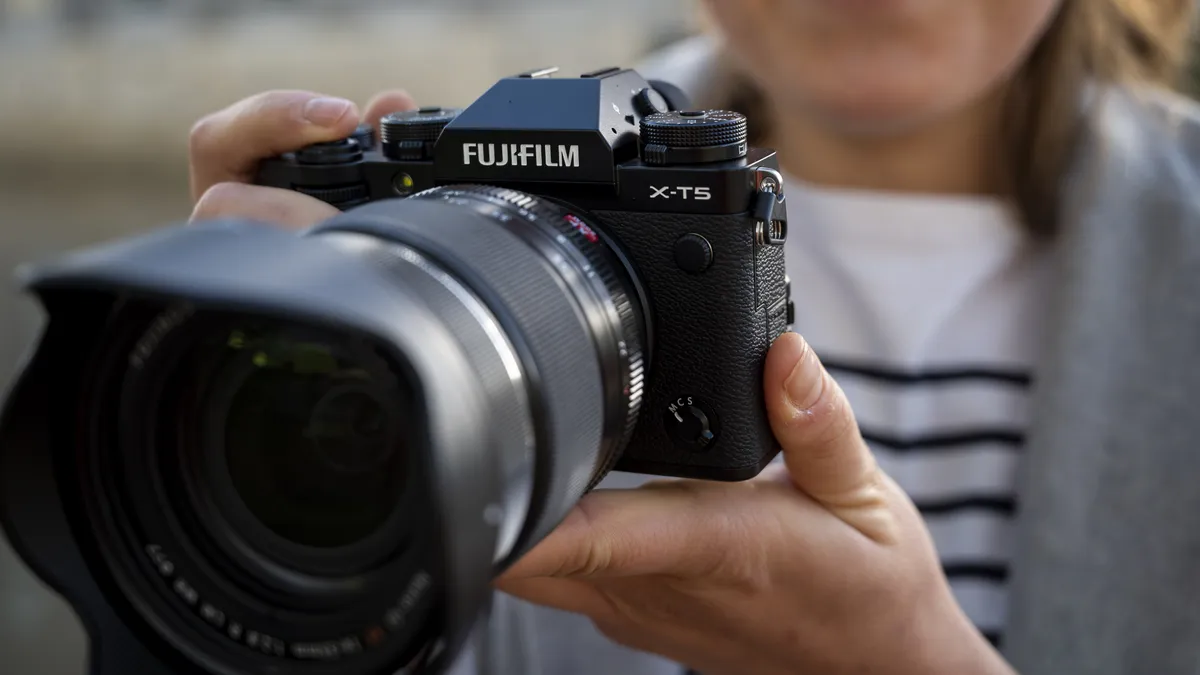
The Fujifilm X-T5 sets a new bar for Fujifilm's APS-C range, with its beautiful design and cutting-edge technology proving to be a match made in heaven. The 40MP sensor is not more detailed than ever, as is a BSI CMOS sensor for even better low light capabilities with better handling of ISO. The X-T5 has also been upgraded to up to 7 stops of in-body image stabilization for steadier shooting at night.
You may be interested in understanding the distinctions between the Fujifilm X-T5 and the X-H2, given that they share the same sensor and processor. The main difference lies in their ergonomics and design, with the X-H2 featuring a more modern layout with a top screen and the X-T5 equipped with more retro dials. Otherwise, both produce very similar results, and both cameras are compatible with Fujifilm X-mount lenses.
Read more: Fujifilm X-T5 review
Best iPhone for low light
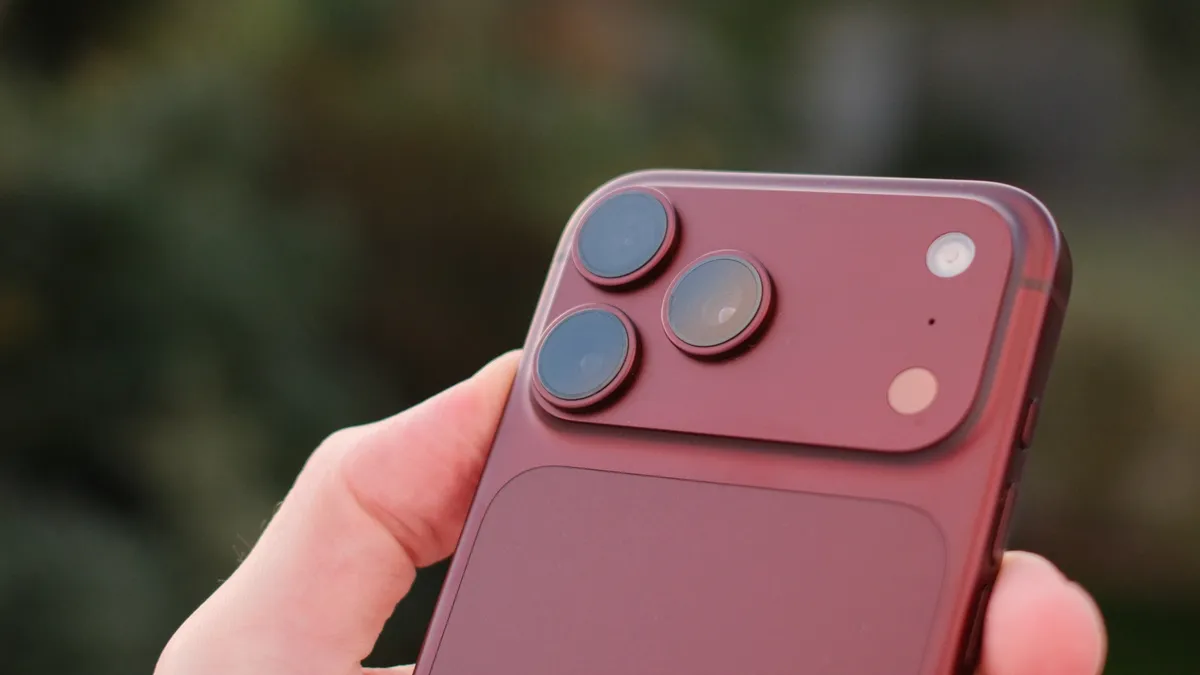
Apple adds something new with every fresh iteration of its iPhone, but that doesn't always mean that the newest model is bets for photographers. However, the flagship iPhone 18 Pro Max receives a feature that makes it a slam dunk for the best iPhone for photography and the best for low-light specifically – a six-blade variable aperture with an f/1.48 maximum setting.
Allowing more light than ever to reach the sensor, the large aperture setting further improves the iPhone's already excellent low-light capabilities. As we found in our review, low-light performance on the iPhone 18 series is excellent. Apple's Night Mode is a reliable workhorse – it kicks in automatically when it detects the light levels are low, and merges multiple frames together to boost detail, dynamic range and clarity.
Also, if you don't mind doing some post-processing work on your shots, shooting in Apple's ProRAW or ProRAW Max format is a great way to pull back detail in the shadows, allowing for extensive editing, with an option to capture in 48MP to create extremely large and malleable files.
While Android rivals definitely have the edge over Apple in terms of raw camera quality and versatility, the iPhone 18 Pro Max is a very good photographic device indeed, with solid advancements that make it a very attractive option for low-light photography.
Read more: Apple iPhone 18 Pro Max review
Best DSLR for low light

Although you’d be forgiven for thinking that mirrorless has well and truly taken over, there’s still a lot to be said for DSLRs. Nikon’s once class-leading D850 has now dramatically reduced in price, making it a bit of a bargain in comparison to some of those featured here.
We’ve been saying all the way through this piece that high resolution is no friend to low-light photography, but here’s one camera that provides the exception to the rule.
With its high-resolution sensor it makes for a good all-rounder, while still putting in a good low-light performance thanks to a fast and sensitive AF system and a good expandable ISO range.
Many will prefer the handling of a DSLR compared to a mirrorless, while the lens range for DSLRs is still yet to be rivaled by their mirrorless counterparts. The big downside here is that there is no image stabilization in the body, so you’ll be relying on image-stabilized lenses for handheld shooting.
Read more: Nikon D850 review
Best compact camera for low light

The much-awaited sequel to the stratospherically popular Fujifilm X100V, the X100VI has been in high demand around the globe. It's a tough camera to get hold of, and opportunistic scalpers have been busy flogging them for more than double the asking price (and finding people willing to pay!).
Still, if you can get one, the Fujifilm X100VI is an absolutely superb compact camera, and as we discovered when we took it on some night-time jaunts through the streets of Tokyo, it's also a beautiful performer in low light. The combination of a well-sized X Trans sensor, a stabilised f/2 lens and a selection of dynamic Film Simulation modes makes for a camera that produces brilliant results, again and again.
The key thing about these cameras – hard to convey with words and still images – is how they feel to use. Shooting with an X100 camera has always been brilliant, and the X100VI offers the best experience yet. If you're interested in low-light shooting because you like the idea of pounding night-time streets for atmospheric, neon-lit images, you'll be in absolute heaven with this compact camera. That is, if you can get your hands on it. Patience is a virtue, as they say.
Read more: Fujifilm X100VI review
Best rugged camera for low light

Yes, the OM System Tough TG-7 shares a lot of similarities with the Olympus Tough TG-6 – except for the fact that you can't buy the TG-6 any more, as it's been discontinued.
Sure the tech isn't cutting edge any more, but short of adding phase detect autofocus (which, let's be honest, isn't coming to a compact like this any time soon) or a higher resolution sensor (which previous Toughs have had, but traded up pixels for better low light performance) what more could we really ask for?
You're not buying this camera for a fancy autofocus system or millions of megapixels; you're buying this camera because you want to take great photos while you're swimming in the ocean, or while your kids are playing in the sand, or when you're hiking through the mud, or when you might drop it on some rocks, or when you're in the freezing snow or the middle of the desert.
The OM System Tough TG-7 remains the best everything-proof camera on the market, and is an essential all-round compact camera for vacations, adventures, travel and everyday photography.
Read more: Olympus Tough TG-7 review
How to choose the best low light camera
Image Stabilization A lot of modern mirrorless cameras come with in-body image stabilization (IBIS) which helps to not only keep video footage smooth but enables you to shoot at slower shutter speeds and still capture sharp images. Some lenses will come with stabilization on the lend but stabilization on the camera is much better. Often both stabilization will work together to make sure you get the sharpest images possible.
High ISO capabilities Cameras that have bigger ISO ranges will operate better in low light conditions as you'll be able to shoot at higher ISO's without having too much noise in your image. The general rule of thumb is the lower the ISO the cleaner your images will be which is why people shooting in broad daylight like to shoot at around ISO 200-400. However, modern cameras are incredible at minimizing noise, even shooting as high as ISO 10 000; on something like the Sony A7 III you can create passable images with a little bit of noise reduction in post-processing.
Lenses Most of the cameras we've included are interchangeable lens cameras. This is because the lens you choose often determines how much light can be let in based on the maximum aperture. You'll want a lens that has a wide aperture of f/1.4-f/2.8 if you want to shoot mostly hand-held. Of course, if you're planning on shooting night skies for example, you'll be shooting using a tripod and bulb mode so the aperture doesn't matter so much as you'll be letting a lot of light in with super long shutter speeds.
Remote control apps Lots of modern cameras can be triggered from your smartphone. If you’re mounting your camera on a tripod and are shooting low-light street and landscape scenes, this can be incredibly useful to avoid camera shake and to save you spending money on a remote release.
How we test low light cameras
We test mirrorless and DSLR cameras both in real-world shooting scenarios and in carefully controlled lab conditions. Our lab tests measure resolution, dynamic range and signal to noise ratio. Resolution is measured using ISO resolution charts, dynamic range is measured using DxO Analyzer test equipment and DxO Analyzer is also used for noise analysis across the camera's ISO range. We use these real-world testing and lab results to inform our comments in buying guides. For compact cameras and phones, we judge on real world handling and photographic results alone.
Lab test charts
These charts show the Signal-to-Ratio, Dynamic Range, and Resolution at different ISO settings for the cameras in this guide that we have tested in our lab
| Timestamp (ISO) | Nikon Z6 III () | OM system OM-1 II () | Fuji X-T5 () | Nikon D850 () | Fujfilm X100VI () |
|---|---|---|---|---|---|
| 1 | 45.82 | 41.11 | N/A | 41.42 | N/A |
| 2 | 43 | 37.7 | 40.19 | 38.38 | 40.14 |
| 3 | 36.46 | 35.64 | 37.45 | 34.34 | 37.37 |
| 4 | 37.76 | 32.84 | 34.53 | 31.48 | 35.22 |
| 5 | 33.61 | 29.35 | 31.76 | 28.12 | 31.82 |
| 6 | 30.94 | 26.47 | 28.97 | 25.06 | 29.37 |
| 7 | 27.63 | 24.38 | 25.8 | 22.63 | 26.4 |
| 8 | 24.84 | 21.24 | N/A | 19.74 | 23.15 |
| 9 | 21.89 | 18.2 | N/A | 16.39 | N/A |
| Timestamp (ISO) | Nikon Z6 III () | OM system OM-1 II () | Fuji X-T5 () | Nikon D850 () | Fujfilm X100VI () |
|---|---|---|---|---|---|
| 1 | 12.33 | 12.31 | N/A | 12.23 | N/A |
| 2 | 12.33 | 12.52 | 12.47 | 12.22 | 12.51 |
| 3 | 12.22 | 12.27 | 11.94 | 11.96 | 12.24 |
| 4 | 12.5 | 11.84 | 11.89 | 11.87 | 11.76 |
| 5 | 12.24 | 11.25 | 11.94 | 10.4 | 11.97 |
| 6 | 11.83 | 10.48 | 10.68 | 9.76 | 10.76 |
| 7 | 10.6 | 9.84 | 9.34 | 9.02 | 9.54 |
| 8 | 9.71 | 9.01 | N/A | N/A | 8.63 |
| 9 | 8.66 | 8.18 | N/A | N/A | N/A |
| Timestamp (ISO) | Nikon Z6 III () | OM system OM-1 II () | Fuji X-T5 () | Nikon D850 () | Fujfilm X100VI () |
|---|---|---|---|---|---|
| 1 | 28 | 26 | N/A | N/A | N/A |
| 2 | 28 | 26 | 32 | N/A | 34 |
| 3 | 28 | 26 | 32 | N/A | 34 |
| 4 | 28 | 26 | 32 | N/A | 34 |
| 5 | 28 | 26 | 32 | N/A | 34 |
| 6 | 26 | 26 | 30 | 40 | 32 |
| 7 | 26 | 24 | 30 | N/A | 32 |
| 8 | 24 | 22 | 28 | N/A | 30 |
| 9 | 22 | 20 | N/A | N/A | N/A |

FAQs
Do you need a full-frame sensor for low light?
A full-frame sensor can be an asset for shooting in low light, but it's not a requirement.
The general rule is that the bigger the sensor, the better equipped it is for low-light scenarios. This is because it has a bigger surface area so it can capture more light but it's not quite as simple as that. While there are a lot of full-frame cameras in our guide, cameras with back-illuminated sensors tend to perform best in low-light conditions. You also need to take into account the pixel count as cameras with a smaller pixel count use larger individual pixels so they are better at gathering light information.
That being said, you can get excellent APS-C cameras in low-light. You just need to weigh up what is most important to you in a camera system. Cropped sensor cameras are often smaller, lighter, more portable, and have smaller lenses so if you intend to travel a lot or have it on you at all times, it might be an idea to think about that too. There are also Micro Four Thirds cameras that perform well in low light, and even compacts with 1/2.3-inch sensors can do well in the right circumstances. We've included all of the above in our guide.
What camera settings should I use for low light?
Shooting in low light is all about getting the most out of whatever light is available to you. Settings-wise, you want to use the widest aperture setting possible, meaning the smallest f-number – f/2, f/1.8, f/1.4 or wider. This opens up the iris to let in as much light as possible.
You want to use the longest shutter speed you can get away with. If you're using a stable tripod and your subject isn't moving then this can be as long as you want it to – if you're shooting handheld, this will depend on a number of factors. The conventional rule used to be that the minimum shutter speed you could get away with using handheld would correspond to your lens' focal length – so if you were using a 50mm lens, 1/50sec, or 1/200sec for a 200mm lens, etc. However, modern stabilisation systems have changed the game, and in testing we've found ourselves able to capture sharp images on speeds as slow as 1/15sec. It'll depend on your camera.
ISO is a similar story – pushing it up will improve your results, at the cost of increased image noise, and different cameras handle noise different. An image shot at 6400 on a compact camera with a 1/2.3-inch sensor will look very different to one shot at 6400 on a full-frame mirrorless model. So you'll want to use the highest ISO setting your camera offers that doesn't seriously compromise your images – it's worth experimenting to get a feel for what you're comfortable with.
Compare prices
