
The best hybrid cameras are the ideal buy for content creators who want a versatile setup for both photography and videography. Allowing you to seamlessly transition from one type of shooting to another, a good hybrid camera should be able to capture sharp, dynamic stills as easily as it can shoot high-quality, great-sounding video.
I've put together this list of the best hybrid cameras for a range of budgets, based on my own experience as DCW's Reviews Editor. Every single camera on this list has been fully tested by me or a member of my team, ensuring that it offers solid video performance in at least 4K, AND high-quality stills capabilities
Fast burst rates, reliable autofocus, lots of video modes – these are the cameras that do it all. Read on to find the perfect hybrid camera for your creative workflow.

Gareth is the Reviews Editor at Digital Camera World and the person in charge of approving all the latest camera-related tech. He gets hands-on with many of the cameras we test, shooting both stills and video to assess each one's hybrid capabilities. Outside of photography, expect to find him cycling around London, or deep in a Netflix binge.
The Quick List

The Canon EOS R6 Mark III is one of the most fully-featured cameras around, blending high-speed stills capture with impressively high-resolution video. Its autofocus and stabilization are among the best of the best, and it's my pick for hybrid shooters.

If you're into live-streaming or hoping to start, the GH5 II is a great option. It's Panasonic's most video-centric Micro Four Thirds camera, but dual SD card slots, IBIS, and 4K cement it as a fantastically affordable hybrid model.

The Nikon Z50 II is the best choice for beginners who want to dabble in stills and video, offering pro-level AF performance at a beginner-friendly price – especially if you get it in a kit-lens bundle.

The Panasonic Lumix S1R II is a powerhouse full-frame mirrorless camera that blends high-resolution stills with class-leading 8K video capabilities.

The A7 V is Sony's latest top all-rounder, and thanks to a partially stacked sensor design, it features some of the best and fastest performance on the market. Be aware that its video resolution tops out at 4K.

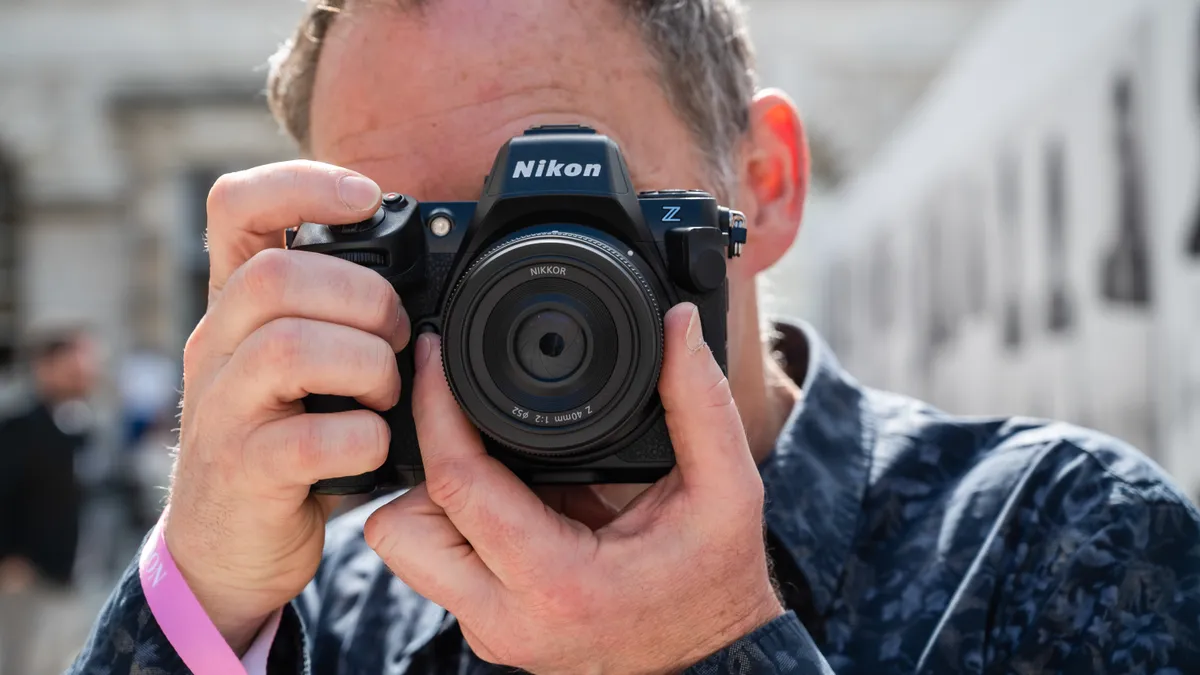
The Z8 is like a Z-series equivalent of the popular D850. The combination of a back-illuminated 45.7MP sensor for detailed low-light work, 5.5-stop IBIS and 8K video up to 60p will satisfy most advanced users and Nikon fans wanting a mirrorless camera.
View the full list ⇩

With 40fps blackout-free shooting, the Fujifilm X-H2S is one of the fastest guns in the west for sports shooters – and it's also a powerhouse for video, capable of producing 6.2K 30p video using the full width of its sensor. It's expensive for APS-C, but it's hugely capable.

The R5 C borrows good bits from the EOS R5 and adds unlimited video recording to make a phenomenal dedicated cinema camera. It's an entry-level Cinema EOS with the bonus of great stills, but only pro videographers will get the most out of its features.

The A6700 is an APS-C camera for advanced creators. It's a compact hybrid that still managed to make room for a viewfinder. With 4K 120p video recording, IBIS, and AI autofocus, it's a more traditional alternative to Sony's ZV vlogging lineup.
The best hybrid cameras
Why you can trust Digital Camera World Our expert reviewers spend hours testing and comparing products and services so you can choose the best for you. Find out how we test.
Best all-rounder hybrid camera


✅ You want truly exceptional stills and video performance: The EOS R6 Mark III delivers 32.5MP stills at high speeds AND 7K 30p open-gate video.
✅ You want high-speed AF and top-class stabilization: The EOS R6 Mark III excels in both of these categories.
❌ You're on a budget: The EOS R6 Mark III isn't the most expensive camera on the market (or this list), but it's a long way from the cheapest.
❌ You want to shoot long, extended takes: The lack of an active cooling system means the EOS R6 Mark III is less suited to sustained shooting than the C50.
On reviewing the Canon EOS R6 Mark III, James said that it might just be the best Canon camera on the market... and that it might in fact be the camera that "can do absolutely everything, and do it at a supremely high level". Well, having used it myself, I can't really find fault with his argument – and as such, it's my pick as the best hybrid camera you can buy.
The EOS R6 Mark III is superpowered in terms of both its stills capability and its video. Let's deal with stills first – the EOS R6 Mark III shoots crisp, pristine 32.5MP images with its new full-frame sensor, and is capable of firing out 40fps bursts with pre-capture to absolutely, positively ensure you have no chance of missing the crucial moment.
Autofocus has received a significant upgrade over previous models in the EOS R6 line, benefiting subject detection and absolutely superb, sticky tracking – James used the camera to follow birds and humans alike, and never had any problem keeping up with either. Also, if you know who you're going to be shooting in advance, you can take advantage of one of Canon's professional features – Registered People Priority, which allows you program in ten individual faces, which the camera will prioritize for focusing in the order you specify.
And video-wise, it's a similar story – the EOS R6 Mark III is very well-equipped. It's capable of capturing 7K 60p RAW and 7K 30p open-gate, and you also get the benefit of pre-capture when it comes to video, which is handy. However, it lacks an active cooling system, meaning that while you can shoot essentially indefinitely in 4K, using the higher resolutions may curtail
That leads me nicely on to my one note of caution regarding the EOS R6 Mark III – this camera is very much of a piece with the Canon EOS C50, boasting much of the same internal architecture, but the EOS C50 has an active cooling system, among other video-centric advantages. So, if you're a hybrid shooter with an emphasis on photos, I'd recommend EOS R6 Mark III; if you're a hybrid shooter with an emphasis on video, the EOS C50 is a better bet.
Read our full Canon EOS R6 Mark III review
Best beginner hybrid camera


✅ You do a lot of handheld shooting: The image stabilization goes up to 6.5 stops (lens dependent) and delivers shake-free footage.
✅ You'll be shooting outdoors often: The GH5 II's magnesium body is resistant to splashes and dust, and freezeproof down to -10 °C (14°F) for any cold weather spells.
❌ You want BIG resolution: The 20.3MP sensor is outclassed by several options on this list and isn't the most generous for landscape or fine art images.
❌ You need dependable run and gun AF: The GH5 II's autofocus for video is effective if you stay still, but not in the same league as rival cameras with phase AF.
The Panasonic Lumix GH5 II is several years old, but one of the best-value hybrid cameras on the market right now. Why? The first GH5 was widely regarded as one of the best consumer video cameras you could buy, and the second generation is only an improvement on that for video producers. Unlike the full-frame S5 IIX above, the GH5 II has a smaller Micro-Four-Thirds sensor, which is easier to stabilize for video. You also get C4K/4K UHD up to 60p video, and wireless streaming support.
The GH5 II's high-end video features include vectorscope and waveform monitoring – these are both found in the EOS R5 C and prove Panasonic's dedication to making professional video. However, using the GH5 II isn't necessarily a steep learning curve. "The menu system is excellent, and a model of clarity both in its organization and its appearance," said our reviewer, also praising how the camera focus shifts smoothly and silently for video.
They also said that the Lumix GH5 II is hard to fault for stills photography. Its 20MP MFT sensor places limits on the resolution and high ISO performance, but our lab tests often show that MFT sensors hold their own against larger APS-C sensors. The 6.5-stop IBIS produced sharp images with 0.5sec and 1sec exposures, meaning you can push the camera in low light if that's something you need.
Many users will likely be put off by the GH5 II's chunky build, but I'd counter this by saying it helps it stay balanced with premium zoom lenses. Compared to many of the hybrid cameras on this list, the specs don't break any boundaries. But it adds up to more than the sum of its parts for stills and video shooters, particularly if you're on a budget.
Read our full Panasonic Lumix GH5 II review for more details
Best budget hybrid camera

✅ You're a hobbyist: The Z50 II is Nikon's best "serious" mirrorless camera under $1,000, balancing solid specs for stills and video for beginners.
✅ You want fast, nimble autofocus: The Z50 II inherits the Expeed 7 processor used in high-end cameras, delivering superb autofocus speeds.
❌ You need hyper-smooth footage: With only lens-based VR rather than IBIS, the Z50 II won't handle camera shake effectively when moving fast.
❌ You want high resolution: The Z50 II still uses a 20.9MP sensor – fine for most purposes, but lower than the average for modern cameras.
A lot of the cameras on this list come at a fairly high price, as you might expect given their high-end stills and video capabilities. If you're looking to expand your creative arsenal on a budget, the Nikon Z50 is an ideal hybrid shooter. Nikon has made some savings by eliminating a few components you would find in higher-end cameras, such as image stabilization. That means you'll need a lens with some IS built-in if you want to get the most from your videos – or, better yet, use a gimbal.
This APS-C camera delivers solid image quality with its 20.9MP sensor, however where the upgrades have really come in comparison to the original Z50 is in speed and operational performance. This is thanks to the inclusion of the Expeed 7 processor, previously found on Nikon's professional full-frame Z-series cameras such as the Z9.
This processor gives the Nikon Z50 II a whole new bag of tricks, including a fantastically capable autofocus system with subject-detection modes, a 30fps 'High-speed frame capture +' mode, and improved image quality at higher ISOs for better low-light performance.
As required for a hybrid camera, it's also a very capable performer for video shooting. It offers 4K 30p oversampled from 5.6K, uncropped using the full width of the sensor, as well as 4K 60p with a 1.5x crop. N-Log recording with a full 10-bit codec provides a huyge amount of flexibility when it comes to post-production color grading. Or, if you're someone who prefers to get things done in camera, you can take advantage of Product Review mode, which specifically optimises settings for up-close product reviews.
The Z50 II is designed to be small and agile – even if it is a little heavier than the original Z50. I still find it ideal for travel and street shooting, with the option to switch between the LCD screen and viewfinder as I prefer. Our reviewer praised how the screen had been fixed to be a fully vari-angle type, fixing an annoyance with the original Z50, which only had a flip-down screen that didn't play well with tripods.
Ultimately, you're getting a robust and modern set of features that will please almost any casual user or would-be influencer – at a price that won't break the bank.. The Z50 II is cheaper and lighter than full-frame Z models, but it’s compatible with Z-mount lenses for greater versatility. To get the most from the system, I’d recommend pairing it with the 16-50mm pancake kit lens which is super-slim and has a full mechanical zoom.
Read our full Nikon Z50 II review
Best 8K hybrid camera
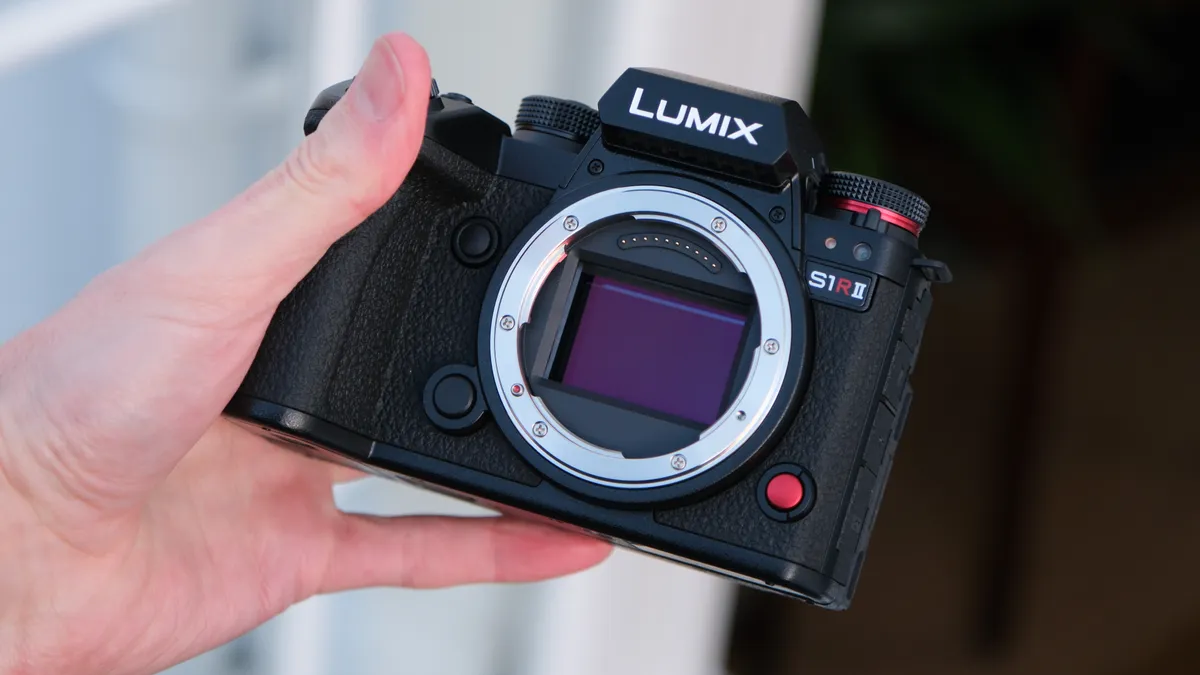
✅ You want industry-leading 8K video: with 14 stops of dynamic range and open gate recording, on the way, it's a serious contender.
✅You want blazing-fast stills: with a stills performance of 40fps the electronic shutter speeds its lightning fast!
❌You want maximum still resolution: the new 44MP sensor is slightly lower resolution than the original S1R.
❌You want the best value for hybrid shooting: the more affordable Lumix S5IIX may meet your needs for less.
The Lumix S1R II marks a welcome and long-awaited refresh of Panasonic’s flagship mirrorless camera, reclaiming its place at the top of the lineup as both the highest-resolution model and the one with the most advanced video capabilities. And the video specs are seriously impressive: 14 stops of dynamic range in 8K, with 8K open gate arriving via an upcoming firmware update, plus a host of RAW and Apple ProRes internal recording options. Image stabilization has also taken a leap forward, offering up to 8.0 stops of compensation alongside Panasonic’s new cropless electronic stabilization system.
On the stills side, the upgrades are more subtle but no less worthwhile. A new 44MP sensor — fractionally lower in resolution than before — is paired with Panasonic’s latest autofocus system, which can detect and track more subjects with greater precision. The most notable photographic improvement comes in shooting speed, with the electronic shutter now capable of an impressive 40fps, a huge jump from the S1R’s modest 9fps.
There’s very little to criticize here, though one potential sticking point is that Panasonic’s own Lumix S5IIX is so capable in the video department that it arguably encroaches on the S1R II’s territory. For many hybrid shooters, the more affordable model may well meet their needs just as effectively, making the S1R II a more niche — though undeniably powerful — choice.
Read our full Panasonic Lunmix S1R II review for more details
Best advanced hybrid camera

✅ You shoot a bit of everything: The A7 V is a lightweight and versatile camera that turns its hand to just about anything.
✅ You need best-in-class autofocus: The A7 V has received a serious autofocus upgrade, and its performance is some of the best around.
❌ You want higher than 4K video resolution: With max resolutions of 4K 60p and cropped 4K 120p, the A7 V lags behind some competitors.
❌ You're on a budget: This is the most expensive A7-series camera yet, and there are cheaper options out there with similar specs.
This is the best A7 camera that Sony has ever produced. It's expensive, but offers a pretty superb feature-set for stills and video alike, making it one of the strongest hybrid cameras for advanced users. I tested it myself, and while I didn't completely fall in love with it, I feel comfortable calling the Sony A7 V a very, very capable camera for enthusiasts and professionals who dabble in photo and video.
Let's start with its best features. Autofocus has received a major upgrade in the Sony A7 V, to the point where it has a case to be called one of the best systems on the market – certainly one of the best in its price bracket. It's just lightning-quick to acquire its subject, and once it has it, the tracking is incredibly sticky and intuitive. It works really well with the touchscreen interface, too.
The sensor on the A7 V features a partially stacked design, enabling professional-level features like 30fps blackout-free shooting with autofocus and auto exposure. There's also a pre-capture mode to provide a little extra safety when it comes to capturing the crucial moment. If you can afford them, you can take advantage of CFexpress Type A cards (the camera will also accept SD) for plenty of speed and storage.
Video-wise, the Sony A7 V is obviously very well equipped – but honestly, this is an area where I would call the camera 'good' rather than 'great'. Its 4K/120P footage, oversampled from 7K, benefits from fast readout speeds due to the partially stacked sensor – but when rival cameras at similar prices are offering 6K, even 7K top-line resolutions, it can't help but feel a little outdated – there's also no internal RAW.
Still, this is a very, very fast and very, very smart camera, capable of absolutely scintillating image quality for advanced users.
Read my full Sony A7 V review
Best professional hybrid camera
✅ The Nikon Z9 is too big: The Z8 packs similar image and video quality levels as the Z9 into a smaller body.
✅ You want to upgrade your Nikon DSLR: If you've been waiting to upgrade to mirrorless and currently have a DSLR like the D850, the Z8 makes sense.
❌ You're already embedded with Canon: If you've bought into the Canon ecosystem and have compatible lenses, the EOS R5 makes more sense.
❌ You want the highest res possible: Sure, the 45MP sensor is impressive, but 60MP (and higher) resolution cameras are better suited for landscape photography.
The Nikon Z6 II previously had a spot in this guide, and for good reason. It offered decent hybrid specs for enthusiasts but the 4K 60p footage was cropped, and it didn't have an articulating screen, limiting its appeal for serious video and vlogging uses. By contrast, the Z8 is a much more advanced, expensive alternative, but it's the best Nikon camera overall, and one of the best hybrid cameras you can get.
The 45.7MP full-frame sensor almost rivals the Sony A1, and for video, there's up to 8K 60p video recording or 8K 30p with an impressive 2-hour record limit. That's better than the flagship EOS R5. Action photographers and wildlife photographers will also be well served by the 120fps continuous shooting speed, while the autofocus can recognize a huge range of subjects.
Design-wise, our expert reviewer found the Z8 "borrows much of its form factor and handling characteristics from the Nikon D850 – widely considered to be the best all-around DSLR ever made". It's got lots of direct-access controls, a tilting LCD (still not as good as a fully articulating screen), and a fully weather-sealed magnesium body for excellent durability outdoors. While we tested the Z8's autofocus on animals, we found it fell just short of rivals like the Canon EOS R5 and Sony's A1. It's still formidable, but not class-leading.
Like the Sony A1, the Z8 gives you a true combination of speed, resolution, ruggedness, and video capability in one. But it's a couple of grand cheaper. If you're already a Nikon shooter looking to upgrade, or a professional looking for an accomplished all-rounder to last for years to come, the Z8 could be it.
Read our full Nikon Z8 review for more details
Best hybrid camera for speed

✅ You want class-leading shooting speeds: With up to 40fps available when using the electronic shutter, the Fujifilm X-H2S is a speed demon.
✅ You want open gate video: The Fujifilm X-H2S uses the entire width of its APS-C sensor to record high-quality video, which not all hybrids do.
❌ You want full frame: While the APS-C sensor puts in an excellent performance, full-frame rivals still edge it out at higher sensitivities.
❌ You want a budget option: This is still a pretty expensive camera, especially for APS-C and even a couple of years down the line.
The Fujifilm X-H2S is a muscly option for photographers and videographers alike. It seems expensive at first blush, especially for an APS-C camera, but once you dig into its features – as I did in my review – you find you’ve got a superstar stills speedster on one hand, and a comprehensive video professional on the other – both in the same body. And what hybrid shooter can ask for more than that?
Let’s look at stills first. The Fujifilm X-H2S shoots at 26.1MP, which is fairly low especially compared to some of the competition on here, but is realistically enough for most purposes. It uses a stacked sensor design that allows for blinding readout speeds and enabled blackout-free continuous shooting at up to 40 frames per second. That beats both the Sony A1 and the Nikon Z8, and the X-H2S also has a deep buffer to keep up.
While conventional wisdom says that APS-C sensors offer inferior dynamic range compared to full-frame, in my testing the Fujifilm X-H2 held its own against full-frame rivals like the Nikon Z6 II and Canon EOS R6 II. It was only when the ISO was taken above 6400 that the larger-sensor models really pulled ahead.
Video-wise, the Fujifilm X-H2S is a stunner. It shoots 6.2K 30p 10-bit video open-gate, meaning it uses the full width of its sensor. It also supports three Apple ProRes codecs – ProRes 422 HQ, ProRes 422, and ProRes 422 LT, and offers F-Log2 capability for maximising dynamic range. Recording times are up to 240 minutes in 4K 60p thanks to a superb heat-dissipating structure, though if you need it, you can buy and attach the optional cooling fan.
Superb in both stills and video capabilities, the Fujifilm X-H2S is a true hybrid camera – especially for sports shooters who want its speed.
Read our full Fujifilm X-H2S review for more details
Best hybrid camera for filmmakers

✅ You use a tripod or gimbal: Canon has traded the EOS R5's in-body image stabilization for fan-powered cooling, which isn't great news for handheld filming.
✅ You're filming productions: With dedicated cinema menus, the R5 C puts all the settings you need in a sensible, ordered place.
❌ You want a seamless hybrid: The R5 C has separate modes for separate stills and video modes, and you have to reboot it to switch between them.
❌ You don't need 8K: As with the Sony A1, 8K video is still unnecessary for most outputs, and you might be paying more for specs that sound good on paper.
The Canon EOS R5 C is a unique addition to this guide, and will only appeal to professional videographers and dedicated cinematic shooters. I've included it because it takes many design cues from the flagship Canon EOS R5 and makes an entry-level Cinema EOS – one that's smaller and cheaper than most – with the bonus of great stills capture. Our reviewer called it "two cameras in one."
The headline video feature is 8K video at 30p (which reaches 60p with a compatible external power supply) and oversampled 4K at 120fps. As a dedicated video camera, Canon has installed a cooling fan and vents that mean you should be able to shoot unlimited 8K video without overheating – a big improvement on the EOS R5. The downside of this is that you lose IBIS, although Five-axis Electronic IS helps to smooth handheld footage.
The EOS R5 C has a very similar design to the EOS R5, and while it will feel familiar to Canon users, there's a separate Cinema EOS menu with the option to set things like waveform, vectorscope monitors, and false colors. While having two menus for stills and video might seem complex, this allows you to differentiate more clearly between the two and offers a video-oriented workflow when you need it.
Our review called the EOS R5 C’s still photography output first-rate. "Raws from the 45-megapixel EOS R5 C are packed full of detail and processed sympathetically and are capable of serious enlargement"
If you're a serious content creator or videographer, the EOS R5 C is a better investment than the EOS R5. There are too many internal and external recording modes to list, and while you don't get built-in ND filters as with some of Canon's advanced camcorders or the EOS C70, these are by no means dealbreakers.
Read our full Canon EOS R5 C review for more details
Best portable hybrid camera
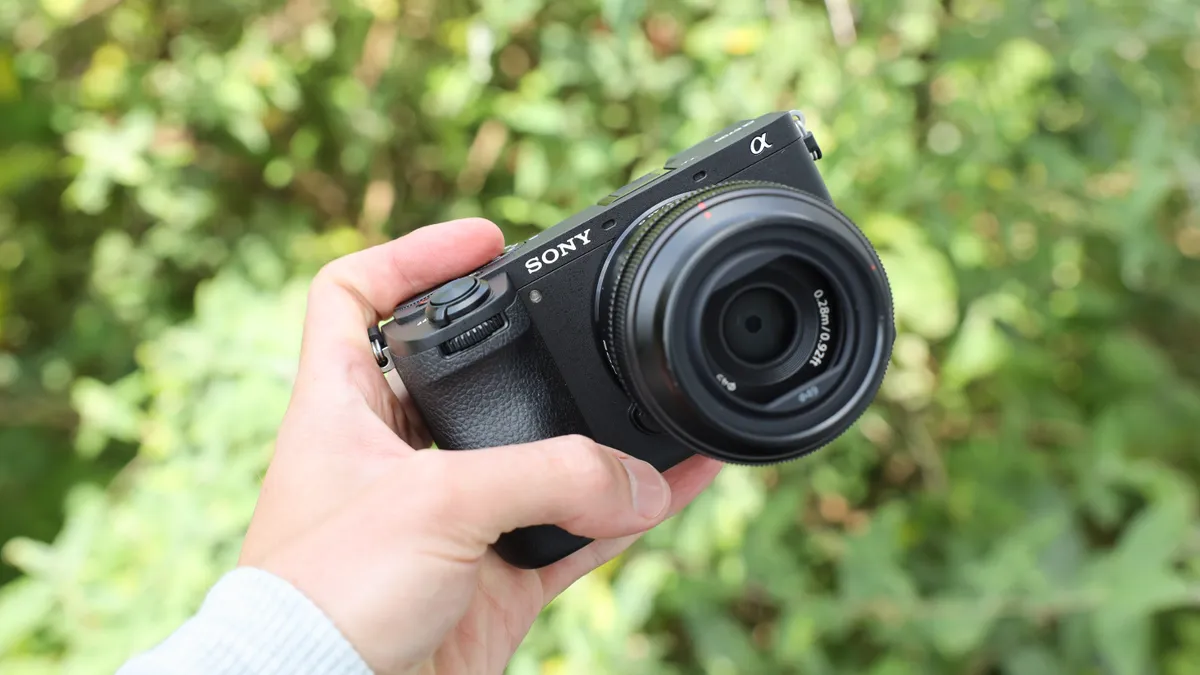
✅ You want a viewfinder: It's rare to get a viewfinder on an APS-C camera this small, even if it is placed to the left rather than central.
✅ You want a travel hybrid: The A6700 is comfortable to hold, well-built, compact, and has decent battery life too.
❌ You want low light performance: The APS-C sensor doesn't handle noise as well as full-frame alternatives, and it becomes an issue above ISO 6400.
❌ You want uncropped 4K slow-mo: With a heavy 1.6x crop on 4K 120p slow-motion footage, you'll need a wider lens to get the most from it.
The Sony a6700 is the next camera on from the a6600, and it’s a slimline mirrorless APS-C camera for hybrid shooters who still want a viewfinder. 4K 120p video recording, IBIS, and the latest in AI autofocus make this a compelling alternative to Sony's ZV vlogging lineup. Altogether, it feels more adult, with more of a lean towards the stills experience.
The a6700’s 26MP APS-C sensor is modest when you compare it to something like the Sony A1, but it’s not designed for professionals making massive prints. Nor is it priced as such. For stills, our reviewer praised the accurate colors it could capture – including skin tones – with a “richness and vibrancy that makes them pop without looking unnatural.” Sony’s Bionz XR processor and AI Chip also work together for fast and accurate focus acquisition. “Where the a6700 now shines is in its AI recognition and tracking capabilities.”
Tracking is also incredibly reliable for video, with the camera able to follow subjects moving in and out of the frame without hesitation. And while image stabilization will be enough for gentle pans and zooms, IBIS is softer for walking shots (nothing a basic gimbal wouldn’t solve).
The A6700 is a little pricey when compared to the competition, and it costs more than the fantastic Fujifilm X-S20 in this guide. The viewfinder is one of this camera’s selling points, but it falls down in its resolution, brightness, and positioning on the left. Still, I think the A6700 is one of the best options for hybrid travel photographers or content creators who like the Sony ecosystem and want professional features in a compact package.
Read our full Sony a6700 review for more details
Best hybrid camera for vlogging

✅ You're shooting for socials: With dedicated vertical video recording and easy footage transfers to a phone, you'll be able to share content almost instantly.
✅ You want guidance: The R50 has brilliantly helpful guided interfaces, 14 stills scene modes, and six movie modes to help you adapt to different scenes.
❌ You've been shooting for a while: The EOS R50 is limited by one memory card slot and UHD 4K 30p video, which will leave advanced creators wanting.
❌ You want solid design chops: The EOS R50 won't win any design awards, and its mainly plastic body makes it feel like a toy.
The best hybrid camera for vloggers was previously the Canon EOS M50 Mark II, but the EOS R50 combines the best features of the M50 Mark II and the R10 to make a perfect entry-level hybrid for content creators. If you're upgrading from a smartphone, and want a compact camera that's delightfully easy to use, this is the one. There's an optional guided interface, explaining modes and settings in a way that means beginners can get great results quickly.
At the camera's launch, I spoke to several successful creators to find out how the EOS R50 elevated their stills and video content. They all mentioned the vari-angle touchscreen for easy vlogging, the speed at which they could send footage to the Canon Camera Connect app (via Bluetooth and Wi-Fi) for quick sharing, and the quality of the stills and video.
The EOS R50 has a 24.2MP APS-C sensor for stills and maxes out at 1080p up to 120p, 4K up to 30p (uncropped) for videos. This isn't enough for professional video applications but is fine for social-first content. Our reviewer noted that "the AF is very impressive for a camera of this category, and bringing Dual Pixel AF II to its entire mirrorless range is a huge home run for Canon."
Like the Fujifilm X-S20, there's a product mode that transitions focus from your face to products in the scene, and you can shoot vertical video natively. Being a cropped sensor camera, the same focal length displayed is narrower than on a full-frame camera. To get the most out of this camera for vlogging, I'd recommend a wider 10-18mm lens (the camera uses the Canon RF mount for RF-S lenses) plus a microphone that you can attach to the camera's hotshoe for the best audio output.
Read our full Canon EOS R50 review for more details
How to choose the best hybrid cameras
Hybrid cameras come in a range of form factors—DSLR, mirrorless, compact, or a blend of these. Choosing the right one depends on your budget and how you plan to use it. Will you prioritize shooting stills, video, or both equally?
For professional creators seeking top-tier performance, flagship models like the Sony A1 deliver unparalleled stills and video quality. However, most users will find better value in mid-range models, which strike a balance between features and cost. Sensor size is also a key factor; while full-frame cameras excel in low-light scenarios with superior noise handling, they are generally pricier than APS-C or Micro Four Thirds options.
Videographers creating content for clients or cinematic projects should focus on advanced video features like resolution and frame rates. On the other hand, aspiring vloggers looking to enhance their social media presence may prioritize ease of use and affordability.
If you’re upgrading from an older camera, consider compatibility with your existing lens collection. For first-time buyers, lens systems may be less of a concern. Design and ergonomics are also crucial: a lightweight camera is ideal for run-and-gun shooting, while a DSLR’s sturdy grip may be preferable for handheld stills work.
What is a hybrid camera?
The term "hybrid camera" is a relatively recent one, referring to a camera designed to excel at both photography and videography. With specs, build, and features tailored for both mediums, hybrid cameras eliminate the need for separate devices—allowing you to capture high-quality stills and video with a single tool. This not only saves space but also makes content creation more efficient and cost-effective.
What is the best hybrid camera for landscape photography?
There isn't one specific hybrid camera that will excel for landscape photography. For landscape work, you'll generally want a camera with a high resolution – for detail and the option of making large prints – and a high dynamic range to squeeze all the juice from the highlights and shadows in the scene. I'd recommend looking at the best cameras for landscape photography (which can all shoot video) and narrowing down the selection based on your budget and resolution needs.
How we test the best hybrid cameras
The best hybrid cameras come in all formats and price points, and we extensively test all of them beyond the specs list from a manufacturer. First, we’ll use the cameras in real-life shoots, then we’ll perform lab-controlled tests to analyze their performance.
Our real-world testing is carried out by experts who have years of experience with hybrid cameras. Because these models have been designed to excel for both stills and video, we’ll ask our testers to shoot in the two mediums over several days or weeks and report back on their honest experiences. They’ll give their pros and cons of aspects like the design, performance, and functionality, and share test stills and footage straight from the camera, without any editing.
Cameras then go to the lab, where controlled tests measure resolution, dynamic range, and signal-to-noise ratio. Resolution is measured using ISO resolution charts, dynamic range is measured using DxO Analyzer test equipment and DxO Analyzer is also used for noise analysis across the camera's ISO range.
Find out more about how we test and review at Digital Camera World.

