
I’ve been stopped by security guards when photographing architecture in London so many times, I’ve always felt that very few people understand the basics of photography law in the UK.
And if a recent pamphlet released by the government is anything to go by, I feel vindicated, because it would seem that not even the Home Office can make it make sense.
The document in question, which can be found on Gov.uk, is aimed at asylum seekers and claims that you should not photograph or video somebody in a public space without their permission – going so far as to say you “could be arrested”.
Well, unless the UK government has rushed through new legislation that I don’t know about, this is a direct contradiction of UK law. I mean, can you imagine if Martin Parr was prevented from capturing his legendary The Last Resort?

You need look no further than the Metropolitan Police’s own advice on photography to find a paragraph that completely contradicts the government brochure:
“Members of the public and the media do not need a permit to film or photograph in public places and police have no power to stop them filming or photographing incidents or police personnel.”
It’s common sense, really. Otherwise, taking a photo with a camera phone in a bustling city center would carry the risk of being arrested, right?
Now, that’s not to say anyone wielding a camera can act with impunity. Photographing somebody in public might be legal, but the way you photograph somebody in public rightfully matters.
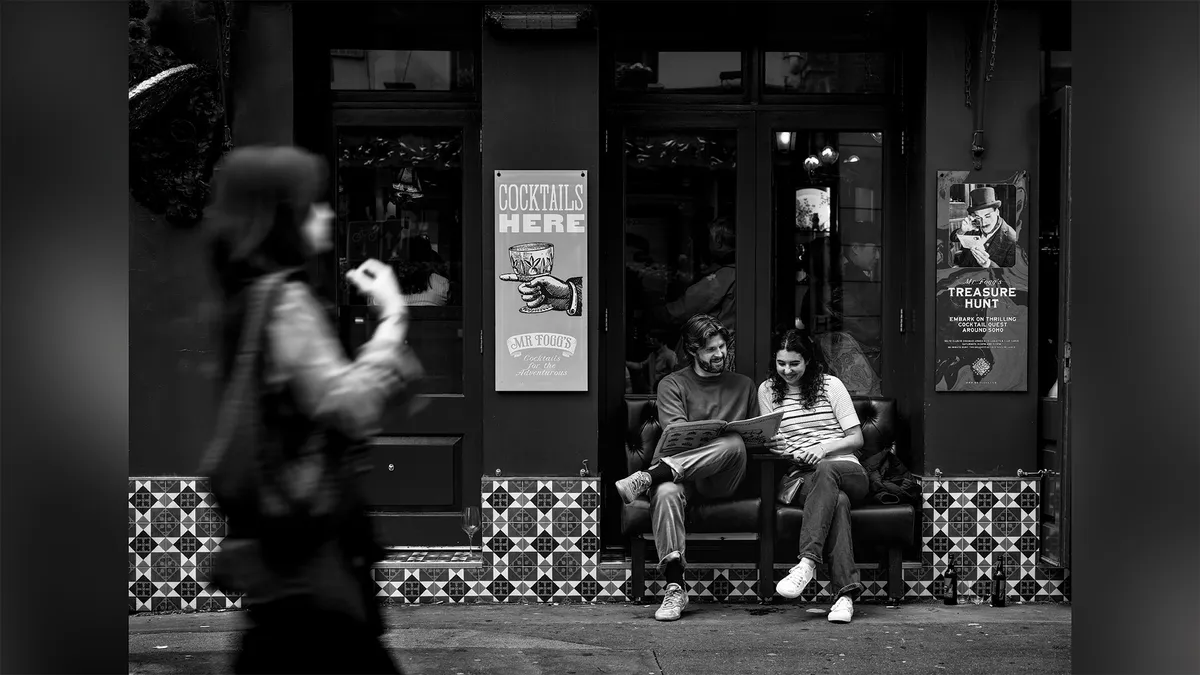
If a photographer’s actions stray into unlawful activities such as harassment, or authorities have reason to suspect said photographer of unlawful activities, then the outcome can most certainly be very different.
It also matters what you intend to do with the images. Editorial and personal usage is one thing, but images intended for commercial use can differ.
And of course, UK law is rarely simple. There are still exceptions to the rule, so it’s always advisable to familiarize yourself with the latest legislation before you head out with your camera.
And to be fair, the pamphlet also covers activities that most certainly are unlawful. The law around private spaces is too nuanced to go into in detail here, but you can’t just walk onto private premises and expect to take photos.
And although it should go without saying, both capturing and sharing explicit imagery without a person’s permission is absolutely unlawful.
Negative effects on photography

I have two major problems with the aforementioned pamphlet. Firstly, it’s misleading. And secondly, it’s not uncommon for photographers to get harassed when out and about with their camera in public anyway.
We don’t need more people walking around ready to pounce on anyone who vaguely points a Fujifilm X100VI or Nikon D3500 in their direction.
Don’t get me wrong, I’m not the sort of photographer who likes to push street photography boundaries. I won’t criticize Bruce Gilden’s work, but I’m no fan of his method. And if I ever took a photograph of somebody and they politely asked me to delete it, I would.
If you’re up to no good, you’re not going to be using a slick retro camera or a pro mirrorless body that screams, 'Look at me I'm a photographer'"
But when I’m out and about capturing travel, street and architecture photos, people inevitably stray into the frame. And that’s the whole point of street photography, right?
Documenting the human element. Using a tiny figure against a huge building to emphasize the sense of scale. Capturing a person with a bright red coat amongst a sea of suited morning commuters. Or capturing the very moment a person walks through a single band of light.
And what about personal surveillance? Dash cams and doorbell cameras capture public footage of people…
What really annoys me is that the pamphlet singles out photographers specifically. Because I can tell you now, phone photographers don’t get approached half as much as actual photographers.
And let’s face it, if you’re up to no good, you’re not going to be using a slick retro camera or a pro mirrorless body that screams, ‘Look at me, I’m a photographer.’ You’re going to be using the most inconspicuous everyday camera available to you – a phone! Or a pair of camera glasses (double ick, as far as I’m concerned).
So, to Andy Burnham, the Home Office and the UK government, please – either change this misleading pamphlet or change the law.
You might also like...
Are you into street photography? Check out the best cameras for street photography and the best compact cameras. Plus, here's how to get started in street photography.

