At first glance, this looks like sci-fi: a bulbous, gravity-defying tree stretching its twisted limbs towards a sky streaked with pinks, purples and cosmic dust. But nothing here is imagined. The tree is real. The sky is real. And the place is Socotra; an isolated Yemeni island in the Arabian Sea where Earth masquerades as somewhere else entirely.
Swiss photographer Benjamin Barakat’s image, Queen Bottle Tree, won the Lone Tree Award at this year's International Landscape Photographer of the Year contest, and for good reason.
The image captures one of Socotra’s most iconic endemic species silhouetted beneath the Milky Way. Shot under a Bortle Class 1 sky – the darkest classification possible – it reveals the night as it once appeared to people everywhere: richly coloured, densely packed with stars, and utterly untouched by light pollution.
Technical approach
The bottle tree is a defining feature of Socotra’s strange botanical ecosystem. With its swollen trunk, exposed roots and contorted branches, it appears more sculpted rather than grown. Photographed from a low vantage point, the tree takes on an almost sentient presence, its limbs arcing outward as if in dialogue with the sky above.
This is not, as you might think, digital trickery. Socotra is a UNESCO World Heritage Site precisely because of its extreme isolation and biological uniqueness; more than a third of its plant life exists nowhere else on Earth. Here, that evolutionary oddness is amplified by the celestial backdrop, making the scene feel close to an alien planet.
To render both the sky and the foreground with clarity, Barakat employed a carefully planned two-exposure technique. One exposure was made at midnight to capture the Milky Way in full force (120 seconds, f/2.0, ISO 400), while a second exposure was taken during late blue hour for the foreground (60 seconds, f/5.6, ISO 400).
This approach reflects a core truth of astrophotography: the settings that reveal faint galactic colour are fundamentally different from those that preserve detail and depth in the landscape. Rather than forcing a compromise, Barakat allowed each element its ideal conditions, later blending the exposures to produce a seamless, natural-looking result.
The sky’s magenta and violet tones aren’t exaggerated; they’re what emerges when the galactic core is photographed from a location free of artificial light. Likewise, the tree’s form isn’t enhanced for drama; it is simply what grows when evolution is left alone for long enough.
Socotra’s Bortle Class 1 rating is central to the image’s success. In such darkness, the Milky Way doesn’t merely appear as a pale band but as a complex, colorful structure, with nebulae and dust lanes clearly visible to the naked eye. These conditions are now vanishingly rare, making images like this as much documents of environmental absence as they are aesthetic achievements.
Barakat’s photograph quietly underscores that reality. The scene feels extraterrestrial, not because it is unfamiliar, but because most people have never experienced a truly dark sky. What looks like another planet is, in fact, our own… seen without the veil of modern illumination.
Camera and lens
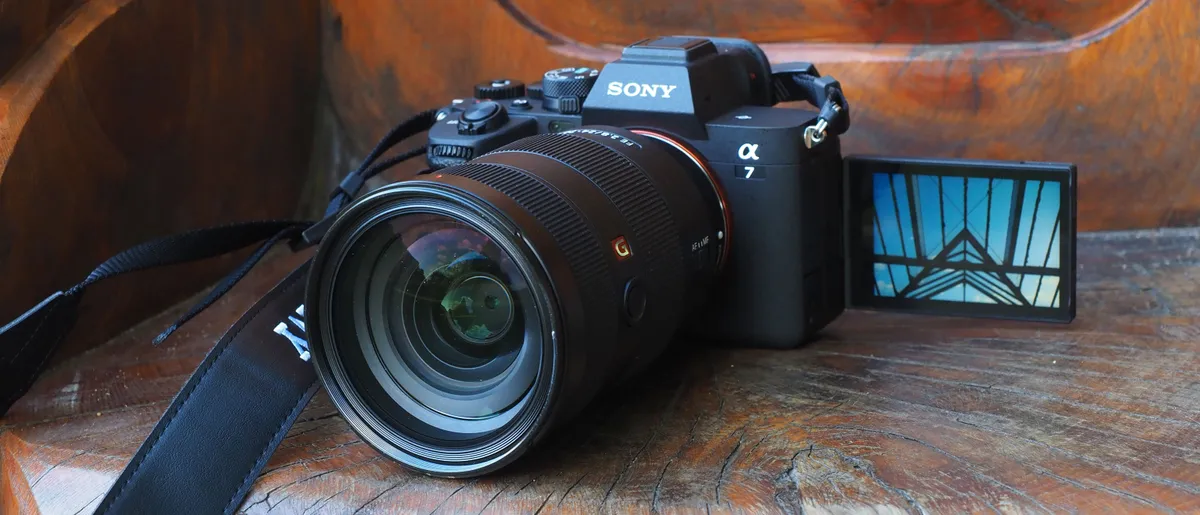
Barakat's image was captured using a Sony A7 IV paired with the Sony FE 14mm f/1.8 G Master lens. The 14mm focal length delivers a sweeping 114-degree field of view, wide enough to embrace the Milky Way while allowing the bottle tree to dominate the foreground. This exaggeration of scale heightens the tree’s already unusual form, reinforcing the sense that it belongs to another world.
Optically, the lens’s advanced design minimizes coma and edge distortion. This is critical for astrophotography, where even slight aberrations can deform stars. At just 460g, it’s also a practical choice for such a remote location.

Barakat, who leads photography tours to Socotra, continues to explore new compositions across the island. His work reflects a broader truth about contemporary astrophotography: technical mastery alone is no longer enough. Access to genuinely dark skies has become one of the most valuable (and fragile) ingredients.
Queen Bottle Tree succeeds because it needs no fictional framing. It is a record of a real organism beneath a real sky, captured in one of the few places left where both can still be seen in their raw state. The image feels like it belongs to another planet precisely because it shows our own as it once was… and, in rare corners of the world, still is.
You might like...
Browse the best cameras for landscape photography and the best lenses for landscapes.
Looking for competitions to enter? Here are 10 photo contests now open for entries from December to May.