





ISO is a complicated subject that’s often contorted into an overly simple solution: keep it as low as possible.
But many mirrorless camera sensors feature something called dual-gain, dual-native or dual-base ISO – and if that doesn’t sound particularly familiar, it could change the way you shoot forever.
How low can you go? The ISO myth

I personally think that photography journalists (*ahem* like me…) are to blame for the oversimplification of ISO.
Back in print publishing’s heyday, landscape photography was the magic sauce. Stick a stunning vista on the front cover of a magazine with a tasty landscape-themed coverline and the issue would sell like hotcakes.
As such, a lot of beginner photography techniques are biased toward landscape photography. And when you’re set up on a tripod it makes absolute sense to keep your ISO as low as possible, because you’re less bothered about your shutter speed.
But if you’re capturing street snaps or fast-moving wildlife, suddenly a low ISO becomes impractical.
I wouldn’t be surprised if I’ve judged over a hundred photography competitions, and the number one mistake that I see again and again is soft images from photographers who evidently think that noise is more egregious than camera shake. It’s not.
Dual-native ISO

There’s another reason why you shouldn’t fear raising your ISO. Many modern mirrorless cameras feature dual ISO technologies, often referred to as dual gain, dual native or dual base. Let’s get some jargon out of the way first…
- Native ISO: A camera’s ISO range in which the analog signal is boosted.
- Expanded ISO: Sits either side of the native ISO range, expanding the signal digitally beyond analog means, making noise much more apparent.
- Base ISO: At the bottom value of the native ISO range, this is an unboosted ISO value that creates the cleanest images. In a dual or triple-base ISO setting, it acts as a baseline in which to provide the best image quality possible but will still be amplified to a degree.
A conventional camera features one analog circuit, which is boosted to increase light sensitivity. Dual-native ISO features two analog circuits. The idea behind this is that it allows for two base ISOs. For example, you might have a base ISO at ISO64 and ISO800.
This can even mean that shooting at the second base ISO will provide better image clarity than some lower ISOs. For example, if you’re shooting at ISO640, you might as well bump it up to ISO800 so you can benefit from a faster shutter speed and still end up with no noticeable drop in image quality – and possibly end up with even better results.
Different cameras have different circuits and can even differ from stills to video or between video formats. For example, the Nikon Z9 has base ISOs of ISO64 and ISO500 for stills, and ISO800 and ISO4000 for video when shooting in N-Log.
Some manufacturers aren’t particularly good at promoting their cameras’ dual-native ISO capabilities – and Nikon is one such manufacturer. A recent article on Nikon Rumors highlights this. I was well aware of the Nikon Z9, Nikon Z8, Nikon Z6 III and Nikon Zf, but had no idea that the Nikon Z6 II, Nikon Z7 II, Nikon Z7 and Nikon Z6 had dual-gain sensors.
This is likely because the technology is much more prevalent within the video sphere, which makes sense.
Videographers are more exposed when it comes to noise-reduction techniques. Photographers can capture long exposures, exposure stack to capture more dynamic range, implement flash, and noise-reduction is much easier for photographers.
Not to be confused with DGO
There’s another technology called Dual Gain Output [DGO], but this operates differently to dual-gain or dual-native ISO by essentially using the dual circuit simultaneously.
This means that the camera captures two images, one on the low-gain circuit and one on the high-gain circuit, before blending them into one image. The theory is that by using the low-gain circuit to capture the highlights and the high-gain circuit to capture the shadows, you end up with better image quality.
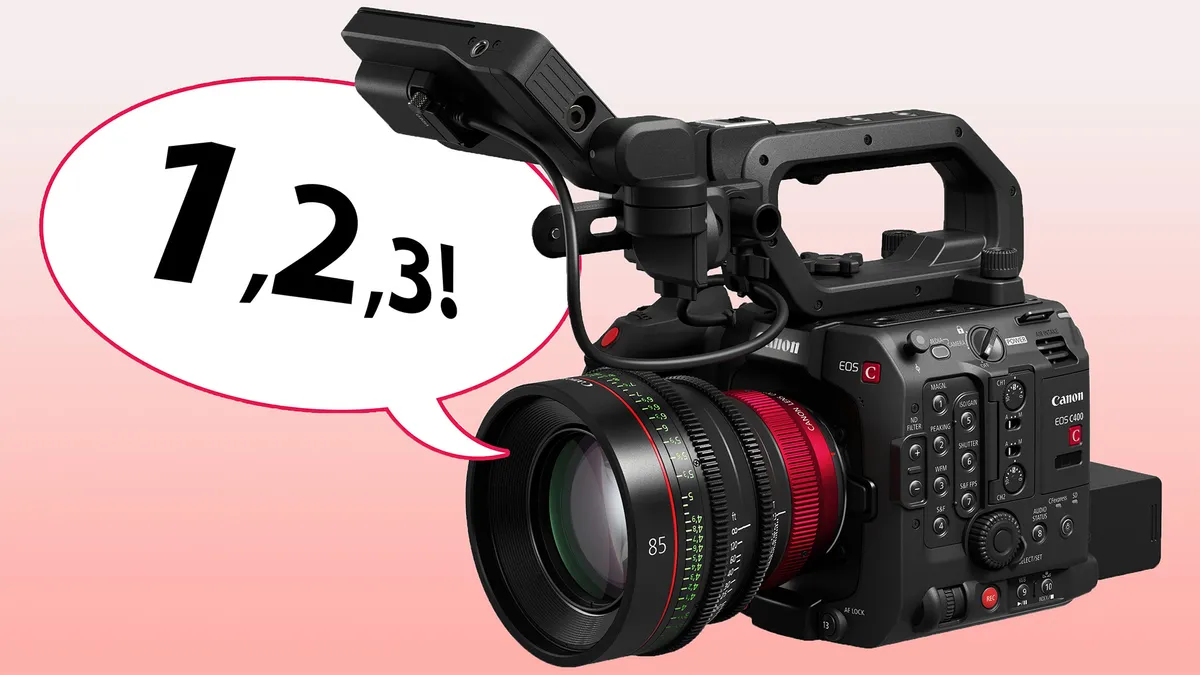
And that’s not all; the Canon EOS C400 cinema camera introduced the world to triple-base ISO, which works exactly like the aforementioned dual-base ISO, but features three analog circuits for even greater noise-reducing capabilities.
So, as always, for besty results you need to really familiarize yourself with your camera and its capabilities. Look up what your sensor can actually do and you might be astonished at how you can use it in the real world, not just abiding by "old magazine logic"!
You might also like...
What I want is more dynamic range in my photos. That's all. How hard can it be? What is triple-base ISO – and why should you care about it? Auto ISO on cameras is not as smart as I thought it was.

