
"Practice makes perfect" is a phrase most photographers know well – but in this award-winning image, the saying does not apply to the photographer, but to the subject in front of his lens.
The image, titled "Practice makes perfect", has been awarded first place in the Other Animals category of the GDT Nature Photographer of the Year competition, recognizing both its technical execution and its compelling wildlife moment.
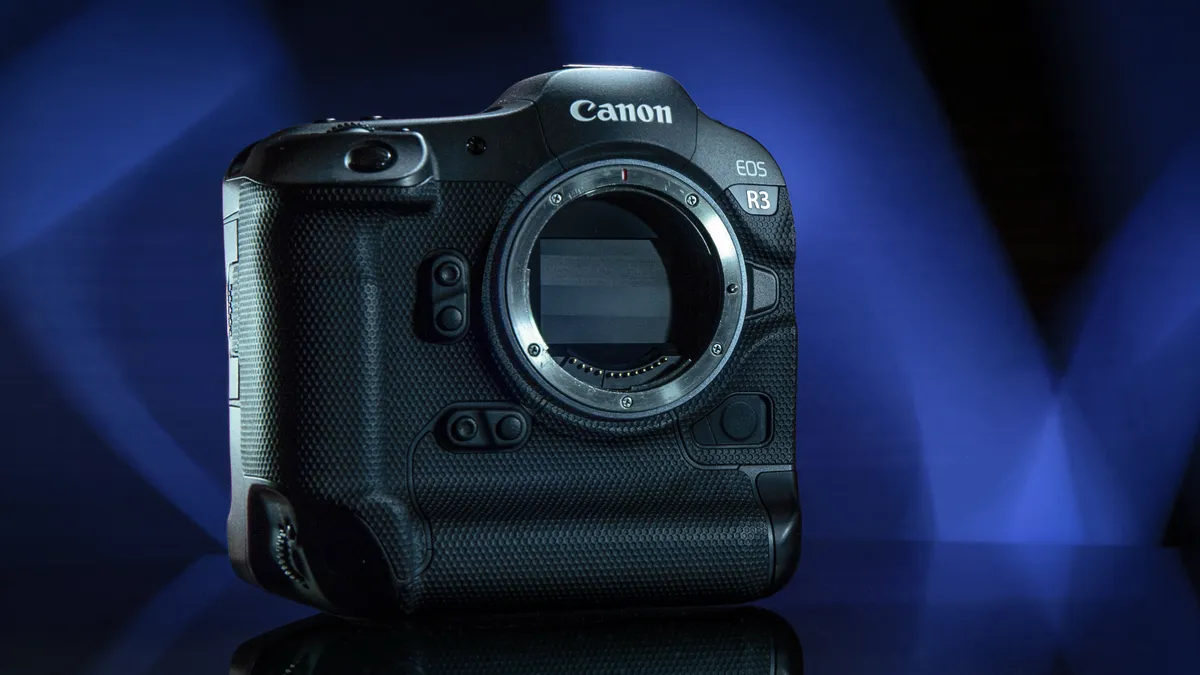
Photographer Jens Cullmann captured the striking scene at 1/4000sec, f/9, and ISO 2500, balancing extreme shutter speed with controlled depth of field. Shot from a low, eye-to-eye perspective with the frog, the frog struggles to catch its prey. Cullmann used the Canon EOS R3 – a professional-grade mirrorless camera built for high-speed action and wildlife photography – paired with the RF 100-300mm f/2.8L IS USM lens.
What makes the image stand out
Technical mastery
The strength of this image lies first in its technical precision. The decisive moment is captured at the exact peak of action, with the frog's tongue fully extended and the butterfly still within the frame. This split-second timing is critical – miss it by milliseconds and the impact is lost entirely.
Cullmann also controlled the depth of field carefully. Shooting at f/9, he creates a balance between clarity and isolation, ensuring the action remains in focus behind the blurred background. The use of a high shutter speed at 1/4000sec is key to freezing the frog's rapid motion, particularly the tongue strike.
Visual strength
What makes the image effective visually is the immediacy of the interaction. You don't need context – the relationship between predator and prey is clear.
The background is kept soft and unobstrusive, with muted tones that make the subject stand out. This separation is important because it avoids competing elements and keeps attention on the action.
The butterfly plays a dual role in the composition. While it is part of the narrative, it also adds scale, helping the viewer understand the size relationship between the subjects.
Overall, the image stands out due to timing, perspective, and detail – qualities that were recognized by the GDT Nature Photographer of the Year jury. To see more winning images and for more information, visit the GDT website.
You might like...
Browse the best cameras for wildlife photography and the best lenses for bird and wildlife photography.

