
I am a sucker for a retro-looking camera, and Fujifilm cameras are perhaps best known to photographers who want a stylish retro body that takes inspiration from some of the best film cameras – but there is so much more to the Fujifilm range than looks alone.
Sure you have stunning cameras like the uber-popular and perpetually sold-out Fujifilm X100VI (my personal fave) or the fully featured Fujifilm X-T5, but Fujifilm also makes some of the best professional cameras around with powerhouses like the Fujifilm X-H2S or medium format options like the GFX 100 II.
There are two different lens mounts I will cover in this guide. The Fujifilm X Series is made up of APS-C mirrorless cameras – Fujifilm's APS-C cameras use Fuji's X-mount lenses and you can find our top picks in my guide for the best Fujifilm lenses. The Fujifilm GFX series – high-end medium format cameras that have large sensors and large pixel counts – use the Fujifilm GF lenses these are big lenses, but with big image quality!
I am going to focus this list on Fujifilm's digital cameras – but Fujifilm might be better known to some for its Instax range of instant cameras, check out our best instant camera guide for more on these.

Gareth is the Reviews Editor at Digital Camera World and the person in charge of approving all the latest camera-related tech. He is a self-confessed Fuji fanboy and owns several of the cameras on this list – including a limited edition X100VI.
The best Fujifilm camera
Why you can trust Digital Camera World Our expert reviewers spend hours testing and comparing products and services so you can choose the best for you. Find out how we test.
Best Fujifilm camera overall
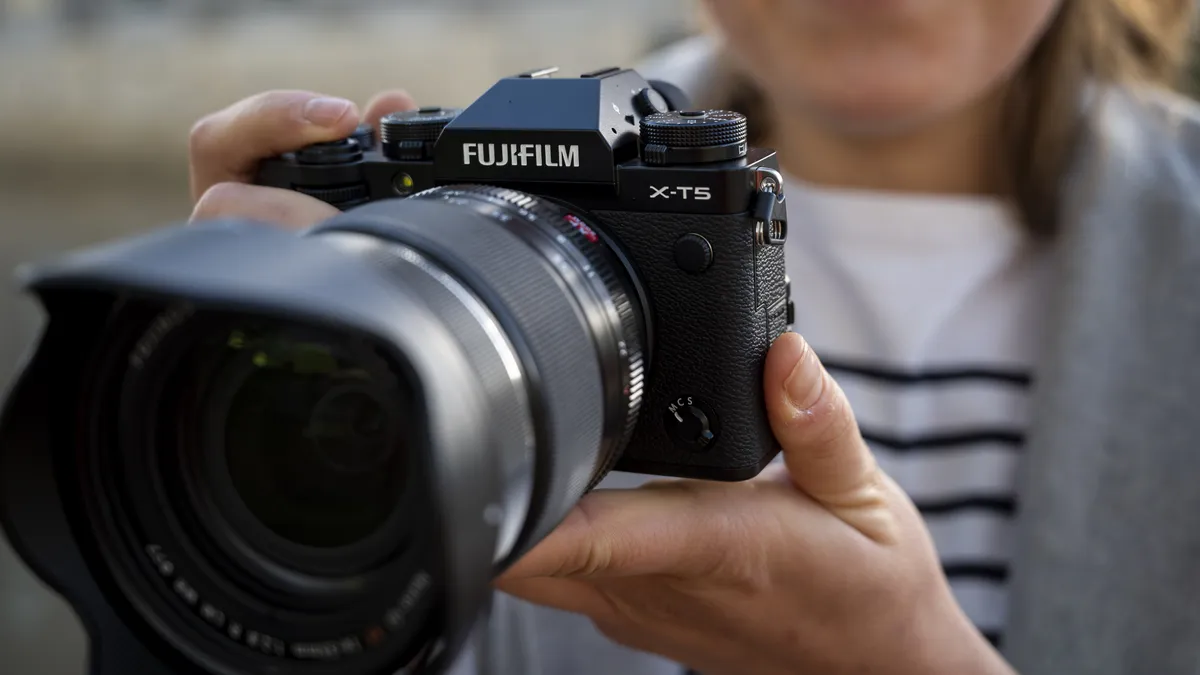


The Fujifilm X-T5 is the company's latest camera in its hugely popular X-T range. Now I am someone who owns just a few too many vintage film cameras – so naturally I love Fujifilm's X-T range for its incredible classic style, which takes influence from classic cameras from the days of film. The X-T5 features traditional dials on the top of the camera which will help you change ISO and shutter speed settings quickly. But don't let the retro looks fool you, under the hood, the X-T5 is also at the cutting edge for digital camera tech.
Like all X Series cameras, the Fujifilm X-T5 has an APC-C sensor with a massive 40.2MP resolution, which is also capable of recording 10-bit 4:2:2 video at 6.2K/30P, has in-body stabilization for steady shooting, and a 3-way tilting touchscreen for flexible image composition – this is a camera that is ideal for professionals or serious enthusiasts alike. If anyone says that APS-C sensors are fundamentally worse than full-frame, then I would counter with this camera.
After testing the X-T5, I was so blown away by the image quality, video, design, and build of such a compact and lightweight camera that I ended up buying one for myself!
If you are not convinced by the classic body and dials, then I would recommend checking out the similarly specced Fujifilm X-H2 (further down this list). It features the same sensor and processor as the X-T5, but a more modern body without the retro dials which might suit busy pros. You can see our Fujifilm X-T5 vs X-H2 if you're not sure which is right for you.
Features ★★★★★ |
High-resoltion, IBIS, 6K video, what more could you want? |
Design ★★★★☆ |
Beautiful styling, but the manual dials aren't for everyone |
Performance ★★★★★ |
Fantastic image quality and exceptional subject detect autofocus |
Value ★★★★★ |
Excellent value for the design and features on offer |
Read more: Fujifilm X-T5 review
Best hybrid Fujifilm camera


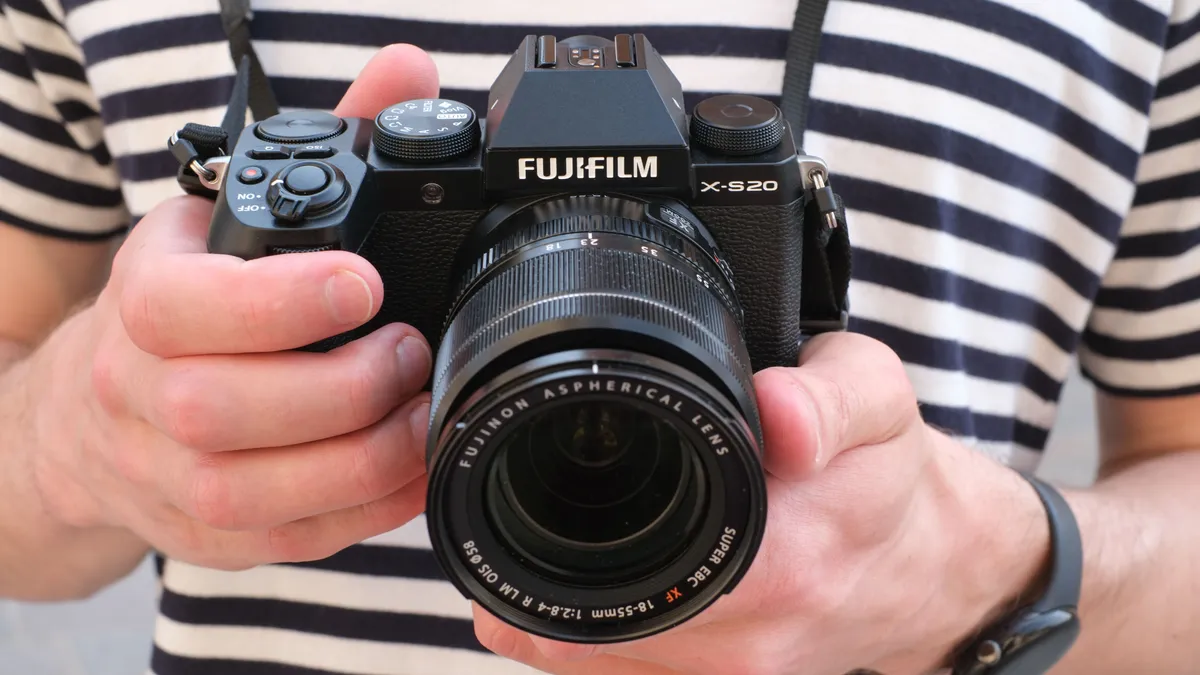
I fell hard for the Fujifilm X-S20 when I tested it. I was just so impressed at the amount of features that Fujifilm had managed to squeeze into its little body – and how little they were charging for it. It's a video camera, it's a stills camera, it is good for travel, or the streets – I think this is probably one of the best cameras on the market right now for a lot of people.
The X-Trans IV sensor might be the same as the X-S10, but this is no bad thing, as I am still very impressed with the photos today. However, the X-S20 sets itself apart with a big bump from Fuji's new X-Processor 5, which not only brings the best of Fujifilm's pinpoint autofocus recognition and tracking but also video processing that belongs in a more premium-priced camera.
Despite its small and compact size, the X-S20 is a deceptively powerful video camera capable of 6K video with open-gate and numerous codecs for those filmmakers who like to get in-depth with video editing. With subject recognition and tracking in videos including face recognition, and dedicated vlogging features – content creators especially will find a lot to love in the X-S20.
While the camera isn't in Fujifilm's popular classic retro style like the X-T5 or X-T30 II, I still think the camera looks very good, and I found it a joy to use with excellent handling, and it offers more straightforward controls than those two cameras with their all manual dials.
The introductory price is a little higher than the previous X-S20, which might put some people off, although, I think the price bump is justified as for the cost, you are getting a considerably capable camera that punches above its status.
Features ★★★★★ |
6K open-gate video and the latest subject detection |
Design ★★★★★ |
Solid build quality although does miss out of weather sealing |
Performance ★★★★★ |
Subject detect autofocus is pinpoint and video quality is excellent |
Value ★★★★★ |
Arguably the best value APS-C cameras right now |
Read more: Fujifilm X-S20 review
Best Fujifilm camera for speed
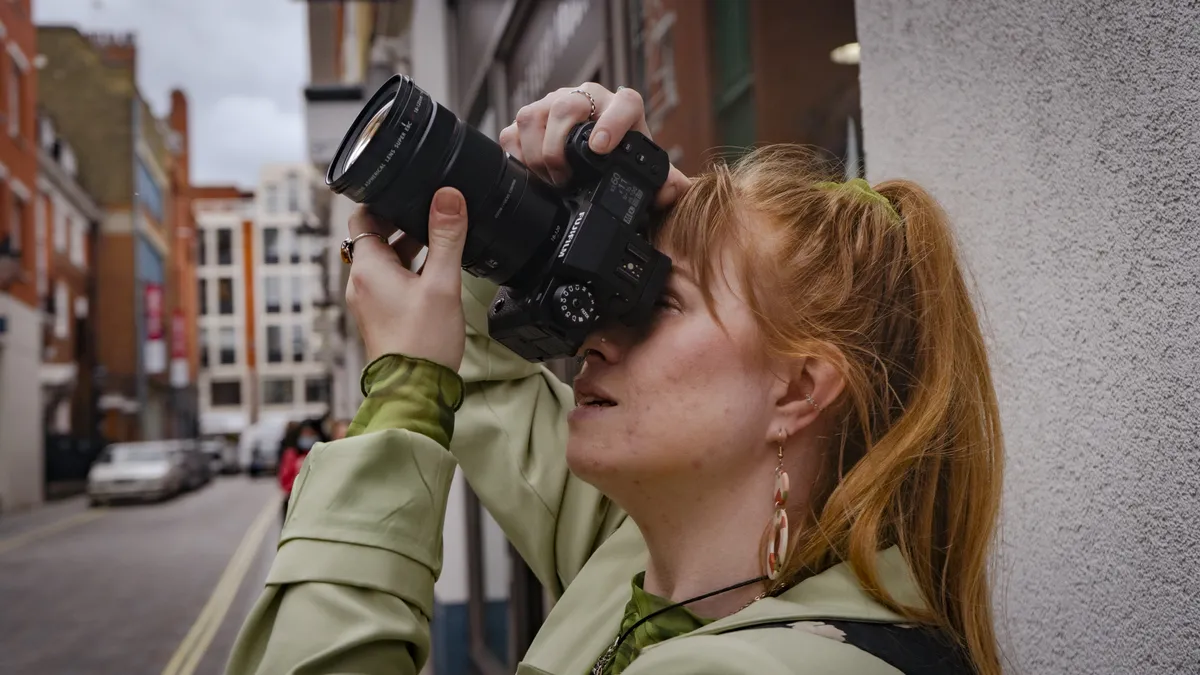


The Fujifilm X-H2S is in our reviewer's opinion "one of the best APS-C hybrid cameras ever made", which is high praise indeed, and an opinion I am inclined to agree with as each time I have used this camera I have left very impressed by the speed and power.
The X-H2S is the fastest camera in the Fujifilm X-mount range, made for professional and enthusiast sports and wildlife photographers where keeping up with the action is paramount. The X-H2S can shoot at 40fps with minimal screen blackout, alongside its in-body image stabilization to keep those big telephoto lenses even steadier.
Not just for stills though – the X-H2S can also capture 6K video or 4K at up to 120p, and has a flip-out vari-angle screen, and a 5.76m dot electronic viewfinder.
I love the 1.5x crop factor of APS-C sensors for their ability to get a little closer to the action with smaller-sized optics, and Fujifilm has a well-built-out lens collection with options for every situation from wide to tele, as well as a choice of zooms and primes, so no matter how and what you like to shoot, you're covered.
The X-H2S body is also built for professional handling, with a big chunky grip to easily hold on to while shooting with larger lenses. The X-H2S also has a comfortable button and dial layout for quick controls, with none of the retro dials from Fuji's "cooler" cameras to be found here.
All this additional power however comes at a price, with the X-H2S being the most expensive camera in Fujifilm's APS-C lineup, although the X-H2S offers excellent specs that eclipse its closest rivals in the APS-C space like the Canon EOS R7. Compared to similar full-frame cameras, the X-H2S can look like a bargain!
Features ★★★★★ |
Incredible autofocus and shooting speeds for sports and wildlife |
Design ★★★★★ |
Weather-sealed pro build quality with a top screen |
Performance ★★★★★ |
Combination of autofocus and speed is mind-blowing for fast action |
Value ★★★★☆ |
Fujifilm's priciest APS-C camera but is good value compared to full-frame competition |
Read more: Fujifilm X-H2S review
Best Fujifilm medium format camera


To put it plainly, the GFX 100 II is one of my favorite cameras I have reviewed. The image quality from Fujifilm's latest 102MP sensor is simply amazing, and I could not stop pixel-peeping my photos, I was continually amazed by the amount of detail the camera could capture.
Ditching the vertical grip from the previous GFX 100 surprised me with just how easier and more enjoyable the camera is to use, with a body that is the same size as a DSLR or even some larger full-frame mirrorless cameras, and was definitely a smart move by Fuji's design team. Although I am slightly less sold on the new BISHAMON-TEX material replacing the faux leather.
Despite that massive medium format sensor pushing 102MP of quality, it is also somehow able to offer up to 8fps continuous shooting thanks to a ground-up processor and sensor redesign. The sensor is also backed up with up to 8 stops of IBIS – a feature I now struggle to live without.
The latest X-Processor 5 also delivers new autofocus capabilities for a sensor of this size, with the ability to recognize and track faces, eyes, animals, and even vehicles very effectively. In testing this with portraits, I found the eye focus spot on every time.
And let's not forget video, the GFX 100 II can offer a top spec of 8k30p. Fujifilm is definitely set on making medium-format a bigger player in cinema, with compatibility with the image circles of popular cine lenses from numerous manufacturers. Video is excellent, but I am not completely convinced that most people should buy a medium-format camera solely for video.
The GFX 100 II should be the catalyst for every full-frame professional portrait, fashion, product, and landscape photographer wavering on jumping to medium format. Fujifilm has thrown everything and the kitchen sink into the camera. The Fujifilm GFX 100 II is not just the best medium format camera around right now, but I think it is one of the best cameras full-stop for professional photographers.
Features ★★★★★ |
Just about everything – 102MP stills, 8K video, IBIS and somehow 8fps shooting |
Design ★★★★★ |
Losing the inbuilt vertical grip makes the camera much smaller, for a medium format camera anyway |
Performance ★★★★★ |
Stills and videos are simple sublime with latest detection autofocus |
Value ★★★★☆ |
The most expensive medium format camera in Fuji's arsenal, but much cheaper than rivals |
Read more: Fujifilm GFX 100 II review
Best Fujifilm camera for travel
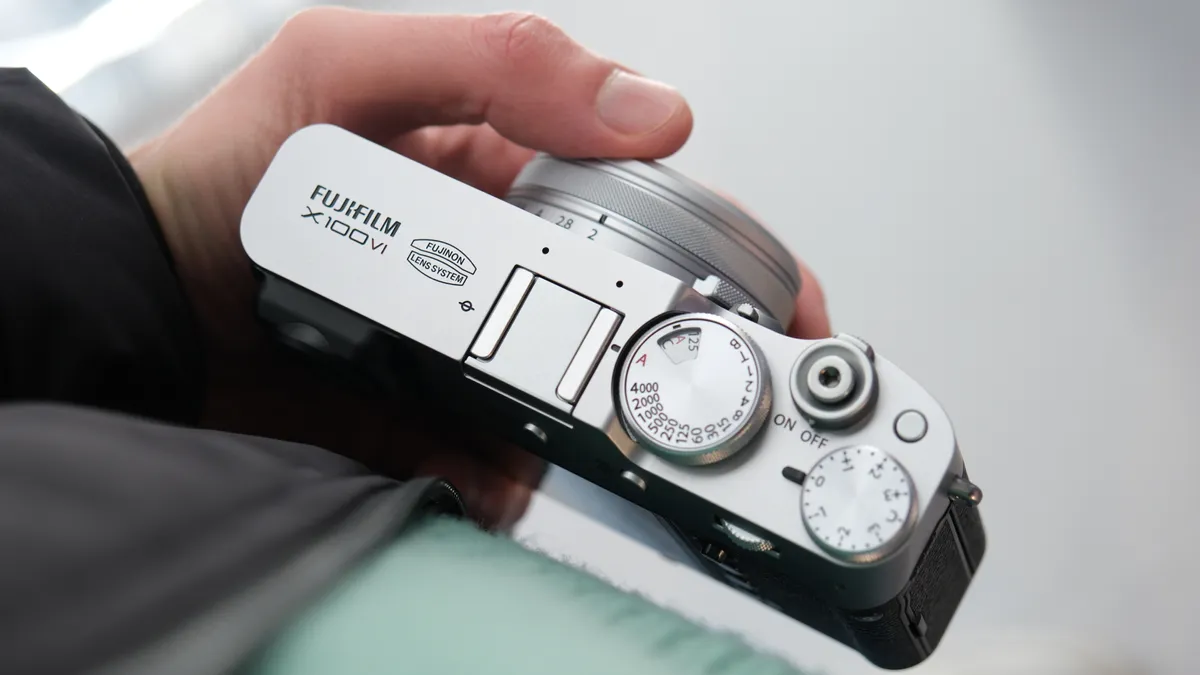


Fujifilm's X100V was the camera that sparked the internet's current obsession with Fujifilm's retro-styled modern cameras. The launch of the Fujifilm X100VI certainly hasn't slowed down that momentum, and according to many sources – the X100VI is the most preordered camera of all time.
Is this all just overhyped? Absolutely not. The Fujifilm X100VI is still my top choice for anyone who wants a beautiful and premium compact camera without the faff of changing lenses.
The X100VI has a fixed lens that is roughly equivalent to 35mm on a full-frame camera – and is my personal focal length of choice for street or travel photography. There are converters available for the X100V to make the lens wide or more tele, but I find these a little overpriced, they can also be hard to find. However, if you want to use screw-in filters there is an additional $50 purchase of a filter ring, but for the price you're paying, I feel this should really come in the box.
When it comes to image quality, the X100V has the same 40.2MP X-Trans sensor as the flagship-level Fujifilm X-T5, which is an exceptional sensor. This is paired with the latest X-Processor 5, which enables autofocus recognition and tracking for even more subjects including animals, birds, and vehicles. The X100VI also adds 6K video, albeit at a slight 1.23x crop, or there is always 4K video with no crop if you don't need that extra resolution. Finally, the X100VI adds in-body stabilization, which makes video a little smoother, and the camera better in low light with slower shutter speeds.
Of course, you get access to Fujifilm's beloved film simulations and recipes, taking some of the work out of editing, and are what have made this camera so popular. The wonderful hybrid optical viewfinder is also a major highlight and one of the reasons I am still obsessed with rangefinder cameras as my last-ditch attempt to keep an optical viewfinder in an increasingly mirrorless EVF world.
The main downside is the Fujifilm X100VI's slick design doesn't come cheap, although the premium quality and cool features like the hybrid viewfinder are about justified. But that's if you can get your hands on one in the first place. The Fujifilm X100V was notorious for being perpetually out of stock around the world, with a months-long waiting list, so I am keenly watching to see if Fujifilm has resolved its manufacturing hiccups with this model.
Features ★★★★★ |
40MP sensor backed up by Fuji's film simulations, 6.2k video, and IBIS all improve on the previous model |
Design ★★★★★ |
Gorgeous and well constructed retro inspired body with an incredible hybrid viewfinder |
Performance ★★★★★ |
Excellent photo performance with photos from the 40MP sensor and fixed lens looking stunning |
Value ★★★★☆ |
The quality is top notch, but you will have to pay top dollar which might be too much for some |
Read more: Fujifilm X100VI review
Best Fujifilm camera for vlogging
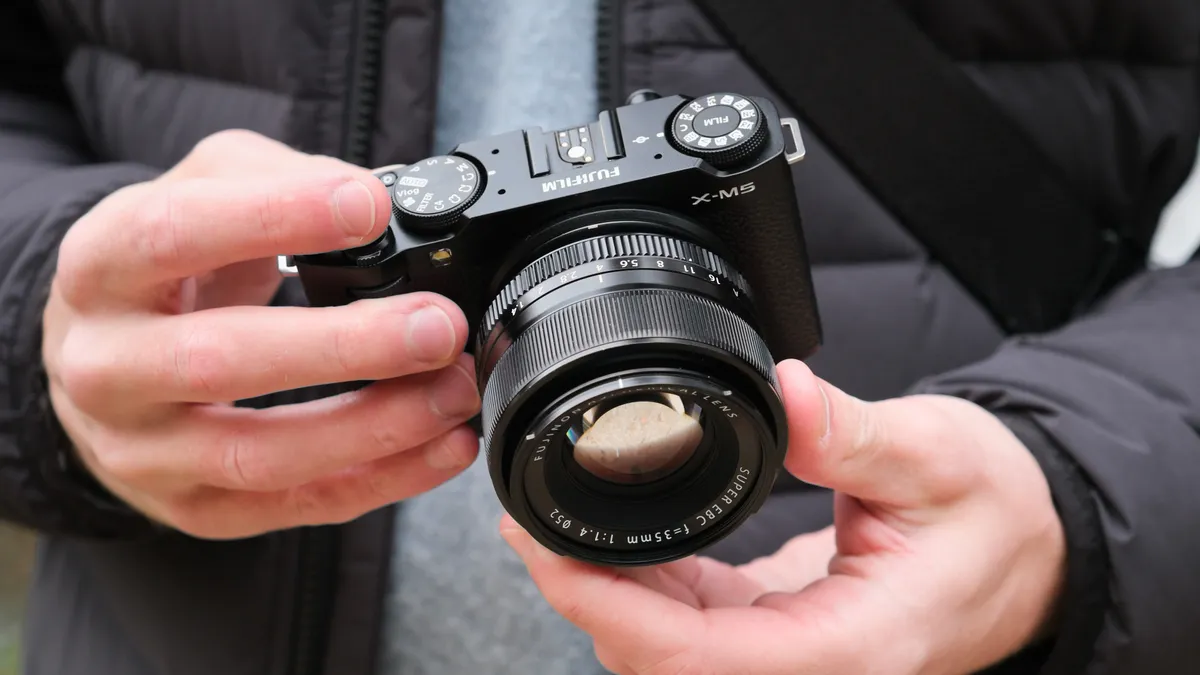


The Fujifilm X-M5 is an impressively compact and stylish camera that feels perfectly tailored for vloggers and content creators. Its 26.1MP X-Trans CMOS 4 APS-C sensor and X-Processor 5 deliver stunning image quality, and I was particularly impressed with its 6.2K open-gate video recording. This feature opens up creative possibilities, especially for those wanting to crop or reframe for different aspect ratios.
While the camera’s small size and top-plate control dials make it highly portable and user-friendly, I missed having a built-in viewfinder. The reliance on digital image stabilization is another compromise, as it introduces a noticeable crop factor, meaning you’ll need to use wider lenses for vlogging. However, the autofocus system is excellent, with reliable subject detection, including animal eye AF, and touch-tracking autofocus for video.
Audio quality is another standout. The X-M5’s internal directional microphones, combined with improved wind filtering, deliver noticeably better sound, which is a big plus for content creators. In lab tests, the camera’s resolution and dynamic range really impressed me, outperforming rivals like the Canon EOS R50 and Nikon Z30, especially with its cleaner images at higher ISOs.
Although it lacks a viewfinder, the 3.0-inch vari-angle touchscreen is bright and responsive, making it easy to compose shots. Overall, the X-M5 offers a compelling mix of portability, power, and features, making it a strong contender for creators who value performance in a compact package.
Features ★★★★★ |
Powerful video specs and the latest AF |
Design ★★★★☆ |
Solid-feeling compact body with small lenses to match. Although no EVF for photographers |
Performance ★★★★★ |
Great quality stills and video, with film simulations offering ready-to-share content |
Value ★★★★★ |
Undercuts rivals on price but not on power |
Read more: Fujifilm X-M5 review
Best affordable Fujifilm medium format camera


Fujifilm is doing something for medium format photography that no other brand has managed. It's made the luxury of having a 100MP+ sensor more affordable while maintaining incredible image quality, fast autofocus, and a high-end build.
The GFX 100S II comes in a few thousand dollars under the new GFX 100 II, you do miss out on a few top-end specs from the newer model in video and sheer speed, but if you won't make use of them, then I think the GFX 100S is the best value high-resolution camera you can currently buy.
Fujifilm continues to shrink down its medium format cameras, and compared to the original GFX 100 model, the GFX100S II has a more compact body while not compromising on sensor resolution or in-body image stabilization. If you are holding out for a smaller camera though, I think this might be the limit to how small Fuji can go while still maintaining the GF image circle.
When it comes to how the camera performs though, I am impressed by the dynamic range, tonality and color depth, sensational resolution, and the ability to crop as much as you need. The GFX 100S's in-body stabilization also enables Pixel-Shift photos of up to a huge 400MP with no false color, which is essential for a lot of professional work.
Somehow, Fujifilm has managed to make a camera that delivers everything the original GFX100 could deliver, only in a smaller body and at not much more than half the price. It's the kind of camera wizardry I live for and there's no surprise it made it into my top picks.
Features ★★★★★ |
Big 102MP resolution sensor with IBIS but the autofocus is eclipsed by the newer GFX 100 II |
Design ★★★★☆ |
Fujifilm continues to shrink down its medium format cameras although not quite enough for one handed shooting |
Performance ★★★★★ |
Image quality is exceptional with the option of 400MP Pixel Shift images |
Value ★★★★★ |
Considerably cheaper than the GFX 100 II the 100S is excellent value for its features |
Read more: Fujifilm GFX 100S II review
Best Fujifilm camera on a budget


Fujifilm has been releasing a smaller version of its flagship X-T camera for the past several generations. The latest – the Fujifilm X-T30 III, is my favorite version they have done yet.
It might be quite easy to get this confused with the Fujifilm X-T5 or the Fujifilm X-T50 with their retro-styled good looks and manual dials. However, these are both more advanced, larger, and more expensive cameras, and I think the X-T30 III is the far better proposition for anyone after a vintage-looking camera at an affordable price.
The X-T30 III is not a huge upgrade on the original X-T30 or X-T30 II. Instead, it's a minor refresh, with a new processor and inherited from the flagship X-T5 that vastly improves autofocus, with new subject tracking modes, as well as video, with the X-T30 III now capable of 6.2K open gate video output.
Despite its older sensor, the X-T30 III is more than capable of creating gorgeous-looking images, especially with the various film simulation modes enabled, or using film recipes you find online. The X-T30 III is a hugely pleasurable camera to use, with clicky manual dials for a vintage touch, although, the camera is a little cramped for those with large hands.
You can also notice where the build quality has been compromised to meet a lower cost, with it just not feeling as good as the main X-T lines of camera, or the similarly retro-inspired X100V or X-Pro range. But the retro-inspired looks still shine through and will inspire a few glances out on the street.
Features ★★★★☆ |
Keeps a lot the same as the previous model, but the upgraded processor gives just enough of a boost to make this a worthwhile upgrade over the previous model. |
Design ★★★★☆ |
A smaller and lighter version of the main X-T series but some quality compromises for the lower price. |
Performance ★★★★★ |
Great image quality for stills with classic Fujifilm film simulations. Video gets a big boost with 6.2K open gate. |
Value ★★★★★ |
One of the most affordable cameras in Fujifilm's lineup. Its a fair price for a beautiful design and quality images. |
Read more: Fujifilm X-T30 III review
Best medium format compact camera


Until now, “everyday carry medium format” was an oxymoron, but the GFX100RF rewrites the rulebook. This is the smallest, lightest GFX body to date, at 90x134x77mm and 735g, it’s only a little larger than an X100VI, yet shoehorns in Fujifilm’s 102 MP 44x33mm sensor.
The camera is also beautifully designed, continuing the classic rangefinder look so beloved with the X100VI. The milled-aluminum top plate is Leica-level luxury, although the void where the optical viewfinder should be does take away from the look slightly. There is no optical/hybrid finder here, but the 5.3 m-dot OLED electronic view is crisp and lag-free.
Image quality is predictably stellar, details are incredibly sharp, and with access to all Fujifilm's 20+ film simulations, you can get perfectly toned photos right out of camera. The new thumb dial lets you jump between 35mm, 45mm, 63mm, and 80mm crops; even the tightest crop still yields a 17 MP JPEG that looks pristine on a screen.
Autofocus inherits Fujifilm’s latest subject-recognition modes (people, animals, vehicles), delivering quick, quiet focus that’s sticky enough for street or travel work, if not quite Sony-level. Battery life is incredible too, with the NP-W235 battery getting me around 500–600 frames per charge.
There are compromises. Shedding IBIS and limiting the lens to f/4 keeps the chassis svelte but does make the camera slightly trickier to use in low light, but I was still able to manage handheld night shots below 1/30s without pushing the ISO above 6400. There is also a file management issue, with RAWs tipping the scales at 100 MB each, so budget for faster cards and bigger drives is required.
Finally, the $4,899 price makes this a serious investment besides an X-Series body, with the Fujifilm X100VI only costing $1,599, but offering much of the same experience – though the GFX100RF is still cheaper than a Leica Q3.
Features ★★★★☆ |
102MP medium format sensor, but middling aperture and lack of IBIS hold it back a little. |
Design ★★★★★ |
Stunning classic looks combined with a remarkably small and compact design makes this the most carry-able medium format camera yet. |
Performance ★★★★☆ |
102MP photos are sublime with so much capacity for cropping. Low light images do suffer a little though. |
Value ★★★★☆ |
A premium but fair price for a medium format camera with this build quality. |
Read more: Fujifilm GFX100RF review
Honorable mentions
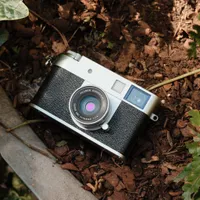
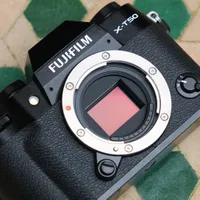
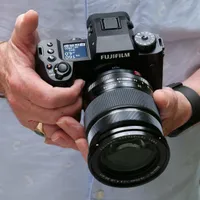
Lab data and comparisons
You can see the lab data below for each Fujifilm camera we test as part of Digital Camera World's review process. You can find out more about what each score means at the bottom of the graph.
From the data, I can see that, perhaps unsurprisingly, as a lot of Fujifilm cameras share the same sensors and underlying technology, there is not a lot of difference between models here. The clear winner when it comes to resolution is Fujifilm's GFX cameras which have either 50 or 100MP medium format sensors, which are far larger than the max 40MP APS-C sensors in X-Series cameras – so if resolution is essential to you, GFX cameras are the ones to pick. There are very marginal differences in noise performance between models, but I'd say these are too insignificant to base your buying decisions around.
How to choose the best Fujifilm camera
Fujifilm cameras come in two distinct varieties, firstly there is the Fujifilm X series, which is Fujifilm's small and compact APS-C sensor series of cameras. These cameras are ideal for anyone looking for the latest technology, but in a package that is easy to move around with. Smaller sensors also mean that X-series cameras fall more on the affordable side of photography, with Fuji cameras offering great value up against other brands.
Fujifilm also offers its series of GFX series of cameras. These are the cameras to consider if you are a professional or serious enthusiast photographer looking for the ultimate image quality. GFX cameras offer medium format sensors with huge megapixel resolutions with the unique properties offered by medium format sensors. The downside to their big sensors (and resolution) is they are large and expensive pieces of kit. Fujifilm's medium format GF lenses are also large and expensive, so getting into the GFX system will be a significant investment.
Are Fujifilm cameras good professional cameras?
Absolutely! Don't be put off by an APS-C sensor, the quality of the images from the latest Fujifilm cameras is indistinguishable from the quality from full frame sensors in rival cameras. The latest cameras including the Fujifilm X-T5 and Fujifilm X-H2 have 40MP resolutions which are beyond many full-frame rivals while also offering video specs that better the competition.
Fujifilm also makes medium format GFX cameras, which offer even larger image sizes than what you can get from the best full frame cameras and for not much more money than some of those high-end models. The image quality from Fujifilm's GFX is some of the best professionals can get and is already used by top photographers around the world.
Are Fujifilm cameras good for beginners?
Fujifilm doesn't currently offer the truly entry-level (~$500) cameras that Canon and Sony push, however, don't let that put you off, Fujifilm has plenty of models that are great for beginners who are keen to learn more about photography. The Fujifilm X-T30 II is a great option for beginner photographers who don't want to spend a lot of money, but are keen to get a very capable camera with the ability to dip into manual controls when needed. The Fujifilm X-S20 is also an affordable way to get into more pro-level video without being overwhelmed.
How we test Fujifilm cameras

☑️ Over two thousand products tested and reviewed
📷 7 years of experience testing camera gear and accessories
👥 Team of knowledgeable and passionate reviewers who love photography
✖️ Reviews and guides are unbiased – and never influenced by brands
Fujifilm cameras come in APS-C and medium format varieties, but we fundamentally test them in the same way – both in real-world shooting scenarios and in carefully controlled lab conditions.
Our real-world testing takes into account the intended use of the camera – we test high-speed cameras on fast-moving subjects or high-resolution cameras on subjects with lots of detail. We also test how Fujifilm cameras perform in everyday shooting situations by shooting with them over several days or weeks.
Our reviewer reports back on their experiences using the camera, how the camera feels and works, any issues they encountered, and their subjective opinion on the camera performance separate from the lab results.
Our lab tests measure resolution, dynamic range, and signal-to-noise ratio. Resolution is measured using ISO resolution charts, dynamic range is measured using DxO Analyzer test equipment and DxO Analyzer is also used for noise analysis across the camera's ISO range.
The real work experience and lab results are combined to inform exactly what we select for inclusion in our buying guides.
Find out more about how we test and review at Digital Camera World.
Deals

