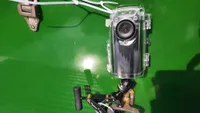
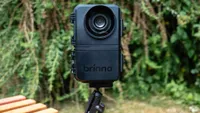
Digital Camera World Verdict
One of the most affordable specialist time-lapse cameras, the Technaxx TX-164 is built for the long-term, with a weatherproof casing and extremely long battery life. However, its image quality isn’t going to win any awards for beauty, and the 5fps video it produces lacks the polished feel of pricier options. Plus, I experienced a technical hiccup that would damage my confidence in the camera if I were using it for a long project.
Reasons to buy
- +
Dustproof, waterproof and freezeproof
- +
Comes with mounting accessories
- +
Affordable price tag
Reasons to avoid
- -
Memory card not included
- -
Video outputs at just 5fps
- -
Middling image quality
Why you can trust Digital Camera World Our expert reviewers spend hours testing and comparing products and services so you can choose the best for you. Find out how we test.
The Technaxx TX-164 is a tough piece of kit. Dustproof, heavily splashproof and able to operate in temperatures ranging from -20°C up to more than 50°C, it’s the kind of time-lapse camera you could mount securely on a construction site in the windiest and rainiest of climates and not worry about leaving it there.
However, unlike some specialist time-lapse cameras, which can carry price tags brushing up towards four figures, the Technaxx TX-164 is also very affordable. If you’re looking to capture the kind of long-term imagery that a smartphone or mirrorless camera simply wouldn’t be suitable for, then it’s a cost-effective means of doing so – and it comes with a range of mounting accessories that allow you to tie it to a tree or pole, or even screw it into a wall.
But of course, none of this is much use if the imagery itself isn’t up to snuff. Unfortunately, I don’t currently have any multi-month construction projects on the go (maybe next year), so instead I took the Technaxx TX-164 out to create some short timelapses to get a better idea of what it can do.

Technaxx TX-164: Specifications
Sensor |
1/2.7-inch CMOS |
Video resolution |
Full HD 1920x1080 |
Photo resolution |
2MP |
Time-lapse modes |
Video and photo |
Time-lapse intervals |
3sec – 24 hours |
Field of view |
110° |
HDR |
No |
Photo format |
JPEG |
Video format |
AVI |
Storage |
MicroSD (not included, max. card supported 512GB) |
Battery |
8 x AA (12 included in box) |
Dimensions |
125 x 80 x 150 mm |
Weight |
378g (without batteries) |
Technaxx TX-164: Price & availability
As mentioned, the Technaxx TX-164 is on the affordable end of the time-lapse camera scale. Its listed price from its (German) manufacturers is €179, and it can be found via third-party sellers like Amazon for around $256 in the US or £101 in the UK. This is cheaper than the entry-level Brinno BCC300, and a similar price to the tiny ATLI Eon.
However, one thing that is both essential and not included is a microSD card, meaning that if you don’t have one already, you’ll need to add the cost of one to that price tag.
Technaxx TX-164: Build & handling
A chunky black box of a thing, the Technaxx TX-164 is not about to win any camera beauty awards, but it earns points for functionality. All the various mounting accessories already mentioned give you enormous flexibility for how you want to set the camera up, and you can use the screws, clamp and rope to make sure it is extremely secure if you plan to leave it for a long period. For quicker, simpler mounting, the TX-164 also has two standard tripod screw threads – one on the base and one on the rear.

You get more than just the camera in the box – it comes with a range of mounting accessories, including a mounting rope, a clamp and a wall-mounting kit with screws and plugs. There are also twelve AA batteries included – a slightly odd choice, given that the camera takes eight. The makers claim that these batteries are enough to keep the camera going for as much as six months, making it a potential good choice for extremely long-term projects.

The camera opens up, lunchbox-style, revealing on one side the battery compartment, and on the other, the controls, screen, card slot and micro USB port. This port allows you to download your files directly rather than taking them off the card, and the makers have included a micro USB to USB cable – which is handy, because I’m not sure if I even own a micro USB cable anymore. Come on, lads – we’re firmly in our USB-C era.

The screen makes the camera completely self-sufficient, with no mucking around with apps required. It provides a real-time image preview for composing your shot, and the buttons below allow for navigating the menus and selecting your shooting mode. It takes a little getting used to – I’d advise spending some time reading the manual and familiarising yourself before you head to your location – but I felt I was up to speed pretty quickly. I recall the menus on the Brinno BCC300 being much more of a headache.
On the front is the lens, which sports a 110° field of view, and above it is an LED to provide a burst of illumination for night-time capture.

Technaxx TX-164: Performance
The shooting options provided by the Technaxx TX-164 are pretty basic. You can capture your timelapse as a video, converted in-camera to an AVI file, in a maximum resolution of Full HD. Or, if you prefer, you can retain the content as a sequence of photos, with a maximum resolution of 2MP.
Recording can be scheduled for set times and days; alternatively, you can simply activate ‘Endless’ mode and the camera will keep recording images at your chosen intervals – if the microSD card fills up, it will simply overwrite the oldest files and keep going. Interval-wise, you can choose from a minimum of 3 seconds to a maximum of 24 hours. There’s not a lot of control you can exercise over the actual look of your images, save for an exposure-compensation function that allows you to dial in +/-3EV, in case it’s needed.
I set the Technaxx TX-164 up next to my local river. With a minimum interval of 3 seconds – other specialist time-lapse cameras will go as fast as 0.5 sec, which is more useful for shorter-term projects – it was going to take some time to capture a video long enough for testing. So, I parked myself next to it and sat by the river reading a book and drinking a Coke Zero while the camera did its thing (reviewing’s a tough gig sometimes). Once sufficient time had elapsed, I retrieved the TX-164 and hit the button to stop recording – only to be confronted with a dead screen and an unresponsive camera. Hmm.

Naturally my first thought was that the video would have failed to capture, and this would necessitate another peaceful forty to fifty minutes sitting by the river (clearly something to avoid at all costs). Fortunately, checking the card revealed that the video had indeed been successfully captured, and removing and reinserting all the batteries was enough to get the camera working again. Still, not ideal – and I can only imagine that kind of heart attack I would have experienced if I’d been retrieving the camera after a six-month project.
As for the video itself: it’s okay. The image quality is about what you’d expect from a small 1/2.7-inch sensor – there’s a decent amount of details with near and far subjects legible, but the dynamic range is poor, with bright skies easily blown out. The final video file that the camera creates also lacks a polished feel, due to the fact that it outputs at just 5fps. There’s none of the smoothness you get from Brinno or ATLI timelapse cameras, which produce video at much higher frame rates. Granted, you could always save the sequence as individual photos and stitch them together yourself in editing software – but part of the point of a time-lapse camera is that it does this leg-work for you.
Technaxx TX-164: Sample video
The sample video was captured over a period of just under an hour, with the TX-164 capturing at 3-second intervals. It was converted to video in-camera.
Technaxx TX-164: Verdict
The Technaxx TX-164 is a cheap time-lapse camera that I would describe as functional. I appreciate its sturdy build and the raft of mounting accessories included in the box, but with video quality that’s adequate at best, the content it creates is serviceable rather than awe-inspiring.
Still, it’s more affordable than many of its competitor time-lapse cameras, and if you are looking for a long-term solution for capturing something like a construction project, it’s a cost-effective choice. It offers robust scheduling functionality, but very limited scope for tweaking the actual image – and the 5fps output of the in-camera converted output makes for a juddery viewing experience.
Features ★★★☆☆ |
Pretty straightforward. A good suite of time-lapse scheduling options, but limited controls over image quality. |
Design ★★★½☆ |
Box-like and functional (complimentary), with plentiful mounting options – though the microUSB port feels antiquated. |
Performance ★★½☆☆ |
It does the job, but the middling quality of footage and low frame rate of video output means it lacks polish – and I experienced some technical issues. |
Value ★★★★☆ |
One of the most affordable specialist time-lapse cameras, though the missing microSD card is a potential extra expense. |

Alternatives