Digital Camera World Verdict
It's cheap, well-built, and has some interesting and unique features to get you started with action camera photography. However, image quality is far from great, and the 8K mode is useless for super-fast subjects. If you want a first action cam or a unit to destroy in the name of interesting footage, the SJ30 might be for you. Otherwise, there are much better options from DJI and GoPro
Reasons to buy
- +
Ultra-low price
- +
Good build quality
- +
Interesting dual-lens design
Reasons to avoid
- -
Only 20p available in 8K mode
- -
Pedestrian image quality
- -
Relatively slow to operate
Why you can trust Digital Camera World Our expert reviewers spend hours testing and comparing products and services so you can choose the best for you. Find out how we test.
Let’s face it, GoPro used to have a monopoly on the action camera market. Until fairly recently, if you went out to buy one, you’d expect one of the GoPro range to be at the top of your list, not least because there simply wasn’t all that much competition. Models like the revered GoPro Hero 13 Black were the go-to choice. Those days are a thing of the past, however, and today there is far more choice for consumers.
In fact, such is the variety of high-quality action camera models that GoPro’s fortunes have severely reversed, and the future of the American manufacturer who kicked off the action cam revolution in general circulation is looking uncertain, even after the recent release of the high-spec GoPro Mission 1 Pro.
Probably the biggest rival today is DJI, which has strayed from its already prime position in the drone market into action cameras, with promising results. In fact, the Osmo Action 6 is often rated as one of the best enthusiast options on the market today.
At the other end of the scale is SJCam. While DJI is already a brand with a pedigree, the Chinese firm is much less well-known and so obviously comes with a greater level of skepticism attached, not least because of the price.
The photography industry has become a little more accustomed to Chinese products being available for a lot less than their Western counterparts – the likes of Thypoch, TTArtisan, and Laowa lenses to name a few, along with Xiaomi on the smartphone side – but the jury is out on whether the same balance of price and performance can be applied to action cameras.
SJCAM SJ30: Specifications

Image sensor |
1/2.0in (daylight), 1/1.8in (starlight) |
Aperture |
ƒ/2.8 (daylight), ƒ/1.8 (starlight) |
Max video resolution |
8K |
Maximum frame rate |
20fps at 8K, 60fs at 4K |
Best Slow-Mo |
240fps at 1080P |
Photo resolution |
8640 x 4864 px |
Waterproof |
5m / 16ft |
Storage |
microSD |
Displays |
2.5-inch flip touchscreen |
Microphones |
2 |
Weight |
162 g |
Dimensions |
74 x 52 x 38mm |
SJCAM SJ30: Price

The SJCAM SJ30's biggest selling point is its specification-to-price balance. As far as action cams go, the SJ30 is cheap, being priced at $259 / £260 / $399.95 AUD in a wireless mic bundle. That's insanely good value for a first action cam, allowing you to get used to how they work and get creative with extreme compositions and action images.
For the basic camera-only option, you pick one up for as little as £199 in the UK.
SJCAM SJ30: Design & Handling
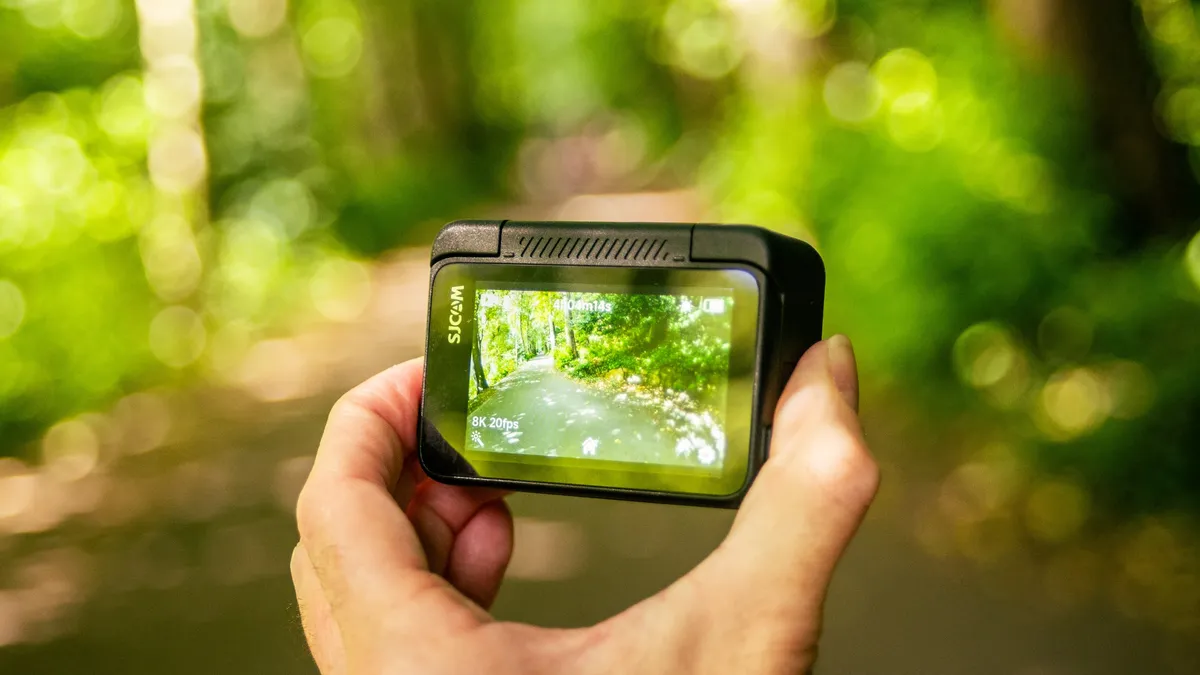
Upon picking up the SJ30, it’s clear that there haven’t been too many compromises on the build quality. I guess there is only so much you can scale back on investment in the construction of a camera designed for extreme sports or underwater use, of course, but the body doesn’t feel any less robust than the DJI Osmo Action 6, for example.
The plastic and polymer composite shell feels like it could take a few knocks and scrapes. The High-strength structural ABS/polycarbonate doesn’t depress when pressure is applied and it seems resistant to light scratching.
I dropped it a few times, from head height, and it was unscathed, which is good news for those who plan to use it for mountain biking purposes or another extreme spot such as skiing or climbing. I’m not saying I’d be happy dropping it off the summit of El Capitan, but it holds its own against the competition.
It also has sealing in all the right places. At the bottom right side of the body you’ll find the microSD card slot and USB-C port, both neatly tucked behind a door that closes flush into the shell. Meanwhile, the power button and record button are both tightly integrated into the chassis to prevent water or dust ingress.
The layout is actually very streamlined. The SJ30 doesn’t have that many physical controls – I just listed all of them – which is potentially attractive to novice users. It’s pretty much set up and ready to go right out of the box, and with two clicks you can start capturing footage. Everything else is consigned to the menu system, which is both a blessing and a curse.
On one hand, it helps keep the body minimalistic, but on the other you need to navigate to the function you want to adjust by swiping across the LCD. Once you get used to the design of the menus, you’ll probably commit much of it to muscle memory, but I found it a little unintuitive across the several days I had with the camera.

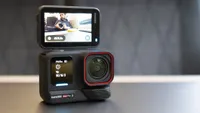
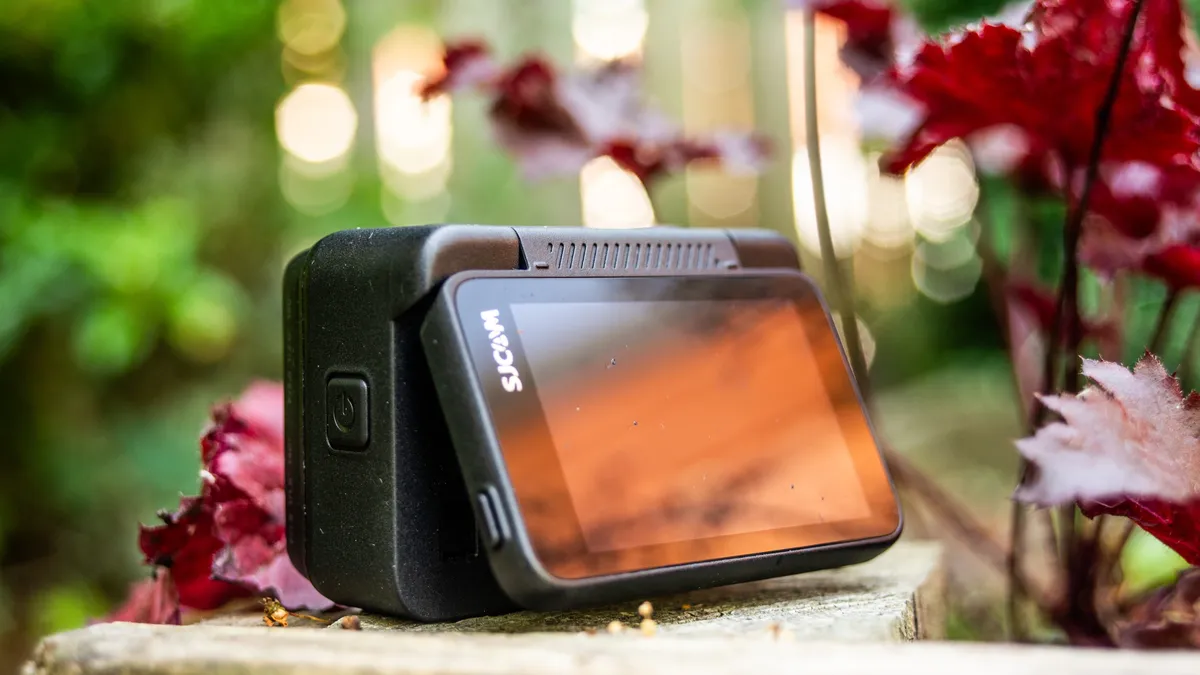
Speaking of the LCD, this is one of the most notable aspects of the SJ30. It lacks a front screen, but instead makes use of an articulated main LCD that flips up through 180 degrees to enable selfie shooting (perhaps the inspiration was the Insta360 AcePro 2). I actually think I prefer this to using the tiny, 1.46-inch forward panel on the Osmo Action 6 or the GoPro Hero 13 Black’s 1.4-in monitor, which are questionably useful beyond roughly assessing video composition on the move.
It’s a neatly integrated feature that is more familiar to vloggers using larger mirrorless camera systems. It also allows a larger preview of the composed frame and at a higher resolution. The downside is potentially degraded rigidity when deployed. Any flippable screen requires a hinge that can prove to be a weak point when subjected to force – the type experienced when falling off a bike or rock wall, for example.
I’ll give the SJ30 its due; the said hinge is nicely reinforced, and you’d likely need to apply a strong twisting force to break it off, but there is no free lunch when it comes to working with technology in harsher conditions, and it’s something to be conscious of.
SJCAM SJ30: Performance
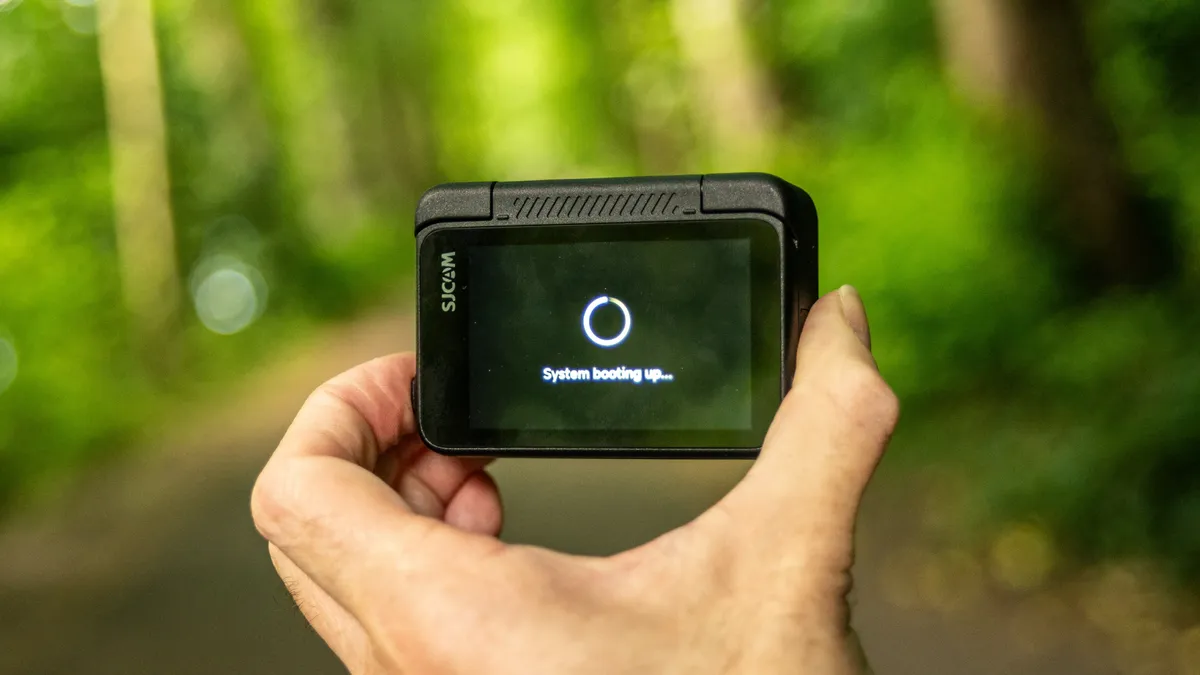
On paper, the specs are impressive, but that doesn’t always say much about how a camera actually performs in the field. The SJCam is not especially quick to boot up, nor is it the speediest in operation. After pressing the power button, there can be up to a ten-second pause before the camera is ready to use. This starts with a momentary black screen, followed by a message saying “System booting up” – not something I’ve seen in a camera since using a basic compact back in around 2008.
It even takes a moment to shut down too. Clearly, processing power is limited, which proves frustrating in the most fast-paced of shooting scenarios. On several occasions, my subject had moved on by the time the SJ30 was up and running. Not that you’d try to shoot wildlife or the Olympics with an action cam, but if you want to start shooting inconspicuously, it’s not ideal having to repeatedly look down at the screen to check if you’re able to start recording.
The same thing happens when moving through the menus. While the LCD itself is quite responsive to the touch, there is a notable hiatus before the next menu screen appears. Again, it’s not a deal breaker for absolute beginners, especially if you are using the camera for casual filming while on vacation, but it can hold you up if precise timing and quick reactions are paramount.
Now, let’s talk about image quality. SJCam was only too keen to shout about the 8K resolution, but I was dubious from the moment I read the press release. Yes, it is an 8K camera, but the big caveat is that, in this mode, you’re limited to a frame rate of 20fps. That’s not going to cut it for many action cam devotees.
Shooting at 20p isn’t sufficient for capturing ultra-fast motion – already a red flag for a camera supposedly designed to do exactly that – and it’s an irregular frame rate for editing purposes. Most cameras shoot at a standardized 24fps or 30fps as their minimum.
This might therefore cause you a headache if you plan to cut footage from the SJ30 into video captured by another model, or your mirrorless camera, on the same timeline in DaVinci Resolve or Premiere Pro. Even moderately ‘stretching’ clips from the SJ30 to fit a faster frame rate has the potential to cause distortion or ugly choppiness.
Thankfully, there is an option to shoot at 6K30p, 4K60p, or even 240p in FHD mode.
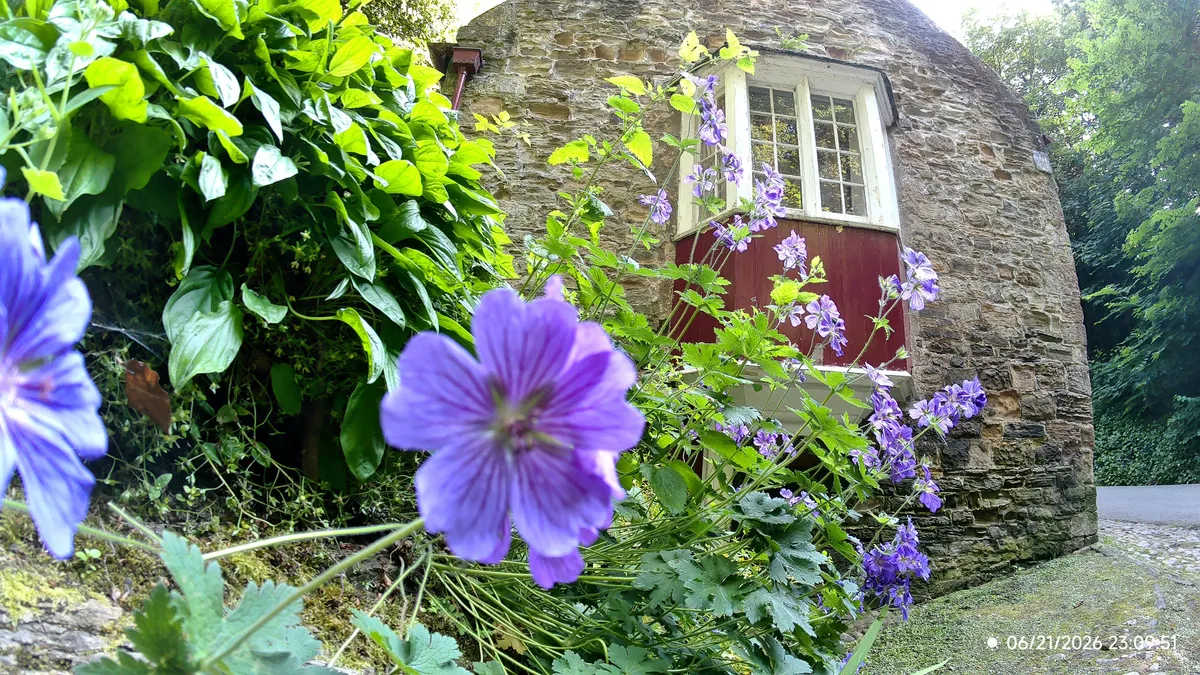
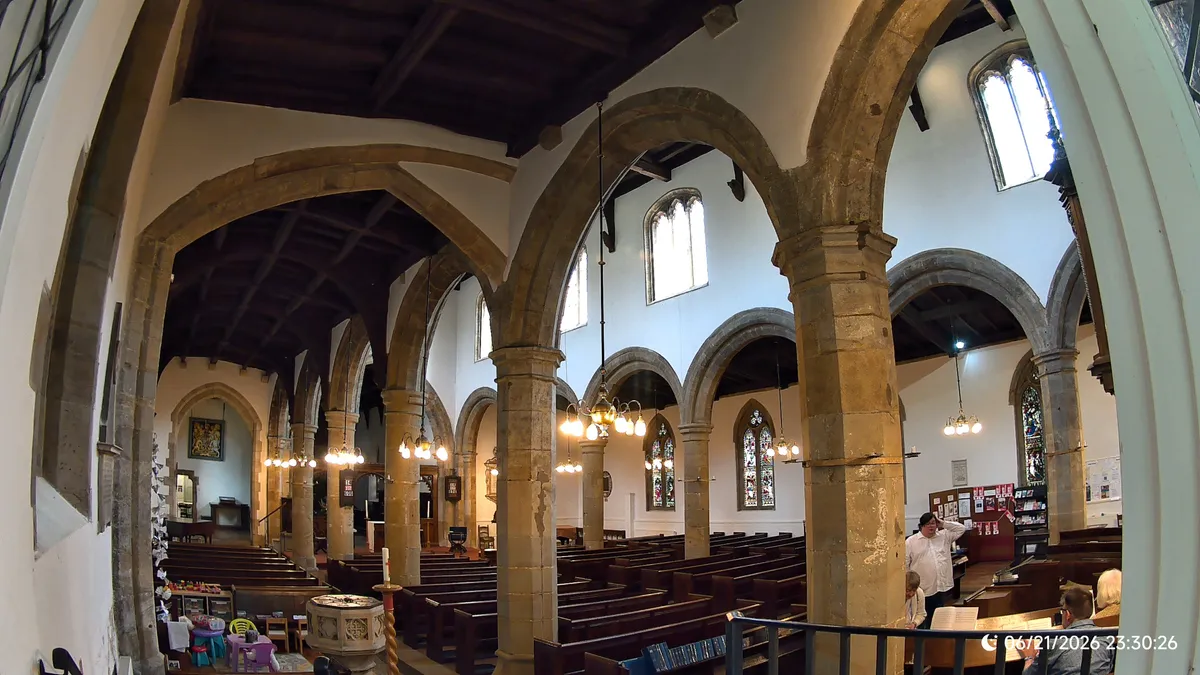
The image quality itself is acceptable in good light, if not spectacular. Footage is a little too processed by default (for my tastes, anyway) and video takes on an oversharpened look. When paused, or when looking at a still image, it almost looks like the detail slider in older versions of Adobe Camera Raw has been dragged too far to the right – that’s a descriptive, if not slightly niche, analogy.
Colours don’t have the organic flavor of the Osmo Action 6 or Hero 13 Black, and video from the SJ30 just looks very….digital. Contrast is too high in the 8K mode, while also suffering from a constricted dynamic range. Highlights are quick to burn out to solid white, and shadow areas block up rapidly, too.
The Dual-Lens System is an interesting approach, and I appreciate what SJCAM was trying to achieve. Having a separate lens with a wider aperture for low-light video is a good idea. However, there isn’t a huge difference in brightness between the two optics, and both sensors are still much smaller than the competition (the Osmo Action 6 has a 1/1.1-inch sensor). The result is comparatively poor low-light performance, not aided by rather aggressive noise reduction.
Battery life isn’t incredible but will be fine for most of the intended users of the camera. I managed around half a day on a single charge, shooting a “standard” mix of video and still images.


SJCAM SJ30: Verdict

The SJ30 isn’t going to win any awards for absolute image quality, and it is no match for the more powerful GoPro Hero 13 Black or DJI Osmo Action 6. The 8K resolution is, regrettably, more of a headline-grabber than a genuinely usable mode for high-end video capture. To be honest, I can’t see why a beginner would need 8K files to begin with, and they’d only serve to eat up storage capacity.
In good light, and when shooting in 4K or even 1080p, video is reasonable for social media use and general recording. It does tend to take on an over-processed, police body cam-like appearance, but for capturing basic B-roll for Instagram Reels or TikTok, it’ll suffice.
Of course, we can’t ignore the price. Starting at around $259, you’re getting a lot of features for the money, so the SJ30 wins quite a few points for value. If you’re looking for your first action cam, or need a sacrificial unit for placing in shooting positions that are almost guaranteed to destroy any imaging equipment, the SJ30 might be your best option. Otherwise, it’s probably better to invest a little more for a more established brand.
✅ Buy it...
- You are on a very tight budget
- You are in the market for your first action cameras
- You need a cheap action cam that you don't mind getting destroyed for a shot
🚫 Don't buy it...
- You need ultra-high 8K frame rates
- Speed of operation is a priority
Alternatives