
Emmy Award–winning cinematographer Bob Poole has taken wildlife filmmaking to an entirely new frontier with the Fujifilm GFX100 II, showing just how far modern camera technology can go when storytelling demands both artistry and rugged durability.
In the compelling behind-the-scenes video shown below, Poole walks viewers through his latest elephant documentary, revealing how a medium-format camera typically associated with stills and controlled shoots became a frontline tool in one of the most unpredictable natural environments on Earth.
What makes this project remarkable isn’t just the beauty of the footage, but the way Poole engineered a custom “elephant-proof” housing that lets the GFX100 II survive direct encounters with bull elephants while capturing once-in-a-lifetime moments.
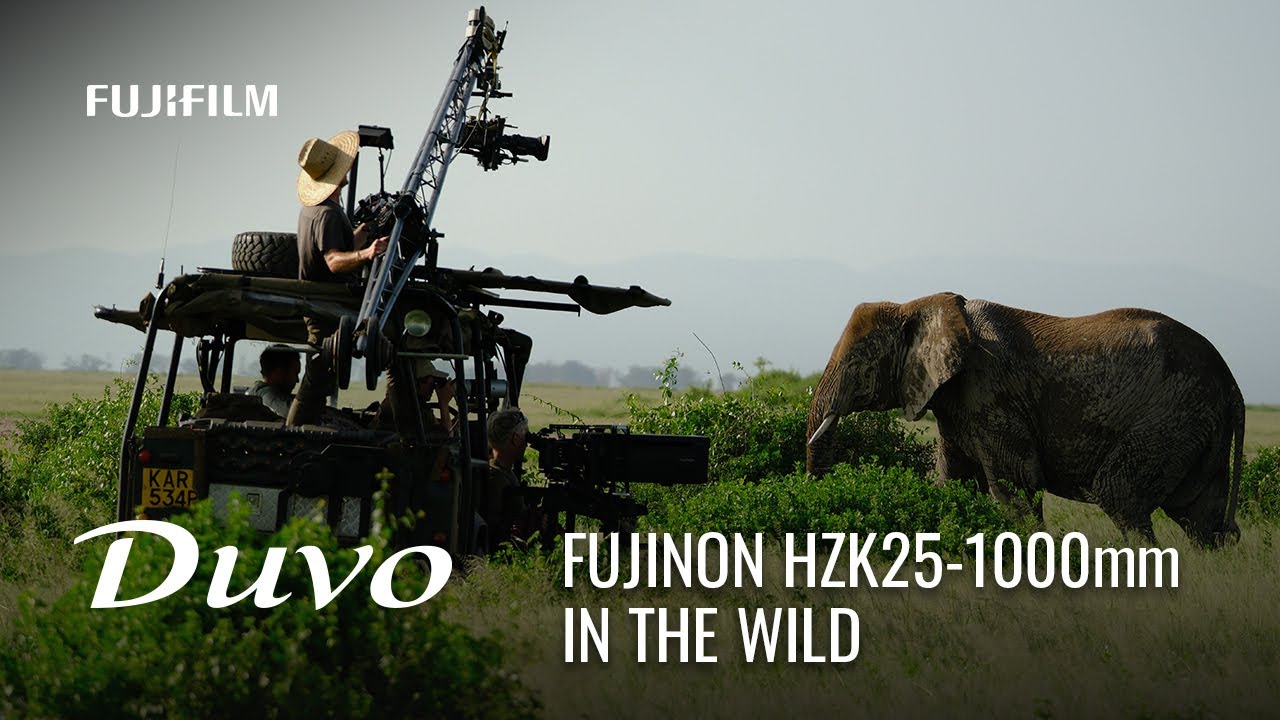
Poole’s passion for elephants is lifelong, and for this project, he needed gear as fearless as his vision. The documentary, shot for PBS’s Nature series and centred on the secret lives of bull elephants, demanded a mix of technical excellence and adaptability that few traditional cinema rigs can offer.
While larger systems remain essential for wide coverage and extended zoom, Poole turned to the Fujifilm GFX 100 II to get close in ways larger cinema cameras simply couldn’t. Its large sensor and high resolution gave him the latitude to pull detailed 4K crops from massive files, an advantage in the unpredictable rhythms of wildlife.
The heart of the story lies in that remarkable custom camera cage. Poole and his crew built a welded-steel protective housing that allowed them to drop the GFX 100 II and a wide-angle GF 23mm prime lens directly onto elephant trails without fear that the next passing bull might stomp it into dust. This was more than a stunt; it was a calculated exploration of how far a camera can be pushed while still delivering cinematic imagery. When the elephant’s foot thunders just in front of the lens and the camera keeps rolling, every frame bursts with the clarity and colour depth you expect from a high-end medium-format sensor.

But this isn’t just about resilience. Poole explained in the video how the GFX 100 II’s combination of image quality and portability opened creative possibilities that traditional cinema cameras couldn’t match. When elephants became comfortable around the crew’s presence, Poole traded down from truck-mounted cinema rigs to the more nimble Fujifilm system, capturing intimate low-angle shots and environmental context with a versatility that paid off throughout the edit. The medium-format file quality also gave the post-production team flexibility when shaping the film’s visual narrative, especially in timelapse sequences where every pixel counts.
What emerges in the documentary is a celebration of both technology and temperament. Poole’s footage doesn’t just show elephants; it immerses you in their world, letting you hear the rumble of a herd’s approach and see the texture of every wrinkle and tusk in astonishing detail.
The GFX 100 II, encased and deployed in ways even its engineers might not have imagined, becomes a character in its own right, a tool shaped by the demands of the wild rather than a camera tucked safely behind a tripod. That it survives encounters with some of Africa’s most powerful animals is a testament not just to Poole’s ingenuity but to the evolving role of camera systems in modern documentary.

As audiences around the world watch Poole’s work unfold, the lesson is clear: great filmmaking is born equally of creative daring and technical excellence. With the GFX100 II at the centre of this project, Poole has shown how medium format cinema tools can redefine what’s possible in the wild, offering both breathtaking imagery and an unflinching approach to storytelling that feels as alive as the subjects it follows.

