Canon’s gear graveyard is growing, with Canon Japan’s official repair services ending support for a handful of cameras and lenses before the end of the year. But while the cameras that Canon will stop repairing soon are all digital, the list of lenses looks quite different. The oldest one? It’s from 1996.
According to Canon Japan, these lenses will no longer be eligible for repair services soon:
- EF 70-200mm F/4L USM
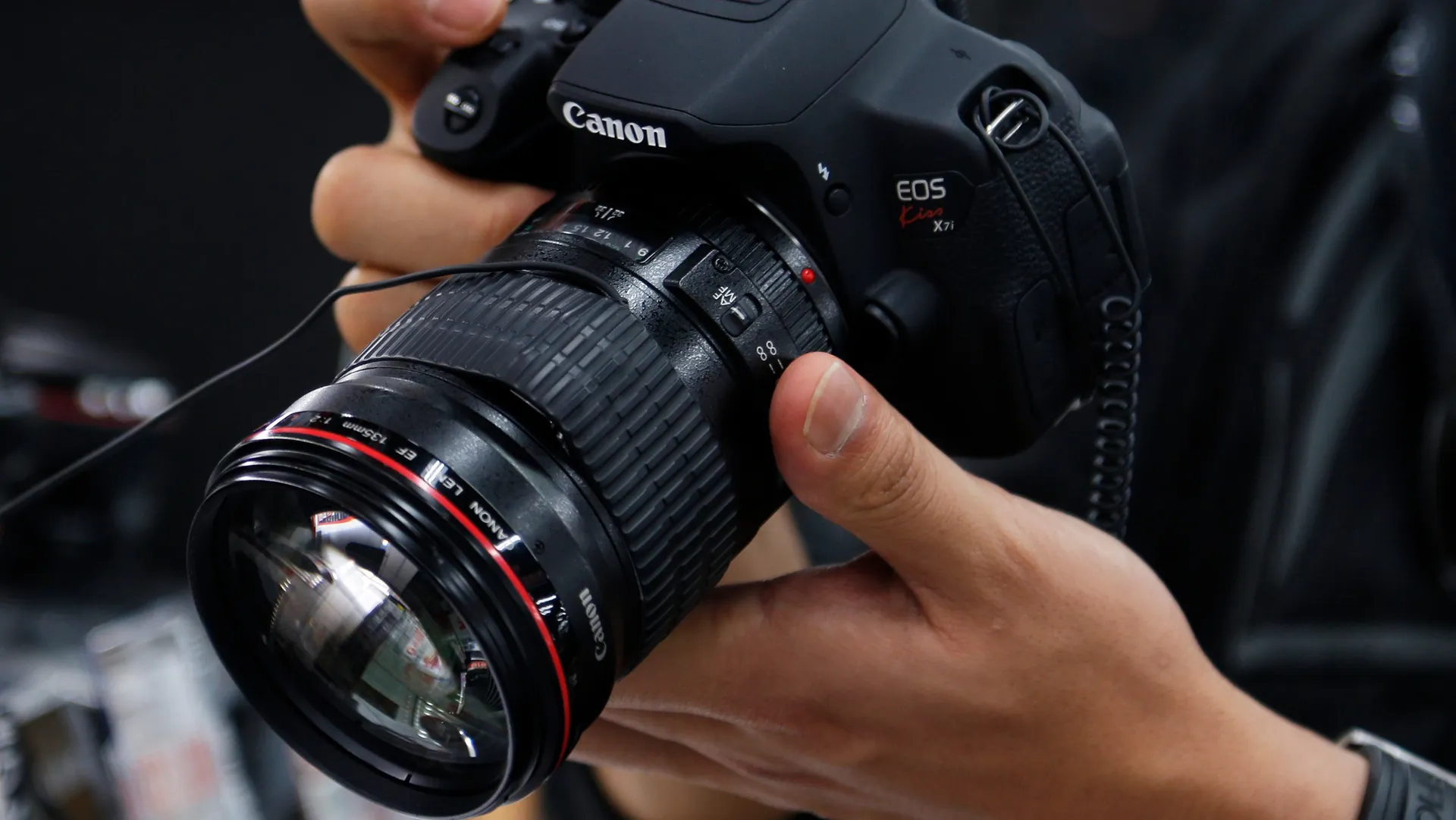
- EF 135mm f/2L USM
- EF300mm F4L IS USM
- EF 85mm f/1.2L II USM
- EF-S 15-85mm F3.5-5.6 IS
The first three lenses reach the end of their support lifespan in November 2026, while the last two only have until the end of October 2026 to be eligible for repair. Canon has already stopped manufacturing these lenses, but the optics will soon no longer be able to be repaired by Canon’s technicians.
But while the cameras that Canon is ending service for were all introduced in 2016 and 2017, the lenses that Canon is killing off are much older, released in the 1990s and early 2000s.
The EF 135mm f/2L USM was introduced in 1996. Camera history buffs will be quick to recognize that was before Canon’s first digital SLR, the EOS D30, which didn’t arrive until 2000.

The fact that Canon’s repair team has been supporting a film lens for 30 years is rather remarkable. Canon has shifted from film, to DSLR, to mirrorless in that same time frame, and now offers the RF 135mm f/1.8 IS USM for mirrorless shooters.
But the age of the EF 135mm f/2L USM raises an interesting question: how long should photographers expect camera lenses to last, really? For digital cameras, Canon tends to continue offering support and repairs for about a decade, as seen with the list of cameras from 2016 and 2017 that will no longer be supported by the end of this year.
Lenses have traditionally outlasted camera bodies, even going back to analog. A camera’s shutter tends to have an expected lifespan much like the mileage on a car. Camera technology also seems to evolve at a much faster pace than glass elements.
As camera resolutions climb above 40MP and even above 60MP (and 100MP for medium format), those high-resolution bodies often need more advanced glass in order to create sharp images across that higher resolution.
Of course, the retro photo look is very on-trend at the moment, and one of the ways to get that look without switching to analog is to adapt older film lenses to a modern mirrorless camera. The result is often a softer image, often with iconic lens flare. But these older lenses often at least need a good cleaning, and Canon technicians have been supporting that for three decades for the 135mm.

Canon’s 135mm f/2 lens is legendary, and many photographers asked for an update for years during the DSLR era. But that’s not the only lens from the 1990s that Canon will no longer repair.
The Canon EF 70-200mm f/4L USM was introduced in 1999. Canon made two more variants before the RF era, adding IS in the second generation in 2006 and updating the lens a third time with the EF 70-200mm f/4L IS II USM in 2018.
Canon launched the EF 300mm F4L IS USM in 1997. Unlike the 70-200mm, it didn’t get a refresh over the years, and even among the RF lens family, Canon doesn’t currently have a 300mm prime.

The Canon EF 85mm f/1.2L II USM, a 2006 launch, is still a beloved focal length, now offered in the RF 85mm f/1.2 L USM.
Canon is also ending support for one crop sensor lens this year, the EF-S 15-85mm F3.5-5.6 IS USM. That lens remains a bit unique in its longer focal-length coverage, where modern kit lenses are typically either shorter, like the RF-S 18-45mm, or longer, like the RF-S 18-150mm.
While Canon is ending official support for those lenses, third-party technicians will likely still be able to clean and, if parts are available, repair those optics.
You may also like
Take a look at the best Canon DSLR lenses or the best Canon mirrorless lenses.

