
One of my friends just asked me an interesting question: should she buy a Nikon Z fc mirrorless camera or a Nikon D7500 DSLR camera?
It's not a comparison I'd have thought anyone would make. They're both entry-level in terms of specs, sure. But aside from being mirrorless, the Nikon Z fc is a very fashion-conscious retro camera; the Nikon D7500 DSLR camera is the furthest thing from fashionable.
Still, this probably says more about my friend than me. She doesn't care about fashion; she's all about function. She wants an affordable but capable photographic tool for a mix of studio and street work.
So, with similar specs and capabilities, I broke down the differences – and I was surprised at the recommendation I made!
Nikon Z fc mirrorless vs Nikon D7500 DSLR camera: Photo

Both cameras have a 20.9MP APS-C sensor, which is DX format in Nikon speak. But beyond the raw resolution, these cameras have some significant differences – and I was surprised that the Nikon D7500 DSLR camera came out on top of its mirrorless stablemate.
The D7500 has more robust stills specs, with a maximum 1/8000 sec shutter speed and a flash sync speed of 1/250 sec. While its burst shooting speed is a modest 8fps, its native ISO100-51200 sensitivity can actually be pushed 5EV to an equivalent ISO1,640,000!
By contrast, the Nikon Z fc maxes out at a 1/4000 sec shutter – still good for most jobs, but for outdoor photography on a bright summer day it's going to be more limited. Similarly, the flash sync is slower at 1/200 sec and the same native ISO100-51200 can "only" be pushed to ISO204,800. Its top continuous shooting speed of 11fps is better for fast action, though.
Amazingly, the Nikon D7500 DSLR camera is actually more capable than the Nikon Z fc mirrorless for what my friend needs. Its shutter is more versatile for strobes and street shooting alike – and while I wouldn't ever use any camera's maximum setting, an ISO of 1.64 million is pretty impressive!
It's worth noting that the Z fc has superior autofocus, particularly with moving subjects, and its fully articulating screen is more versatile than the D7500's tilt-only affair. However, as a viewfinder-only shooter who shoots still subjects, these weren't super relevant to my friend.
Nikon Z fc mirrorless vs Nikon D7500 DSLR camera: Video

This one's closer than you might expect, as both cameras shoot 4K 30p in H.264 with microphone jacks for capturing external audio.
The major difference here is the Nikon Z fc's superior autofocus, which is inherently superior to the technology of the Nikon D7500 DSLR camera thanks to the latter being limited to contrast-detect AF in live view.
The Z fc's mirrorless tech has a different AF pipeline along with eye AF and subject tracking that makes it a far better video option – especially with the fully articulating rather than tilt-only screen. It also boasts FullHD up to 120p, compared to 60p on the DSLR.
Video isn't a consideration for my friend, but this is obviously a clear win for the Z fc.
Nikon Z fc mirrorless vs Nikon D7500 DSLR camera: Body & handling

With everything else being pretty comparable, I think this is really the deciding factor – because these cameras handle completely differently.
For starters, the Nikon D7500 DSLR camera has an optical viewfinder – glass-and-mirror tech that shows you exactly what the lens sees, but does not reflect the exposure values that the sensor sees. In other words, you will need to confirm your exposure on the rear screen after taking a shot (unless you shoot in live view mode).
The Nikon Z fc, as a mirrorless camera, functions 100% in "live view" as it only shows you what the sensor sees, with your exposure settings factored in. This gives you a WYSIWYG form of shooting, where what you see in the electronic viewfinder (EVF) or rear screen is exactly what your picture will look like when you've taken it (external flash notwithstanding).
Personally, I struggle to go back to optical finders these days – the WYSIWYG factor of an EVF makes life so much easier, and is especially useful for newcomers learning photography. However, I know that this is a very divisive issue – and some shooters (like my colleagues Mike, Seb and Rod) feel that optical finders are superior.
As a DSLR user, my friend also falls into the optical finder camp – so I have to concede this point in this particular conversation!

As alluded, the D7500 has a tilt-only rear screen while the Z fc has a fully articulating affair. Conventional wisdom says tilty screens are better for stills while "flippy screens" are for video, but this is a limited way of looking at things; tilt-only screens are fine if all you shoot are horizontal pictures, but for portrait shooting anything other than head-on they're useless.
Again, she doesn't shoot off the rear screen so it's a moot point, but I'd personally take the flippy screen any day.
Perhaps the biggest practical difference, certainly for my friend, is in the ergonomics of these cameras. The Z fc is styled after old film cameras and as such is flat as a bar of soap and eschews any kind of grip. Which again, contrarian that I am, I actually prefer, as I like slim cameras.
However, just about everybody I ever talk to prefers a camera with a grip (even most Z fc owners buy a grip, which I don't understand!). And the Nikon D7500 DSLR camera has a proper chunky grip, so you have plenty of purchase – especially when using big lenses (which, I'll concede, is easier with a grippy body!).
On top of that, the D7500 is extensively weather sealed for all-weather shooting. It's also much more sturdy and robust; the Z fc looks lovely, but it's quite light and plasticky in build. Sealing aside, the DSLR will withstand plenty more knocks and scrapes than the mirrorless – and it certainly doesn't have as much pretty paint to scratch off.
Unsurprisingly, the DSLR is a better fit – quite literally – for my friend's needs here.
Nikon Z fc mirrorless vs Nikon D7500 DSLR camera: Verdict
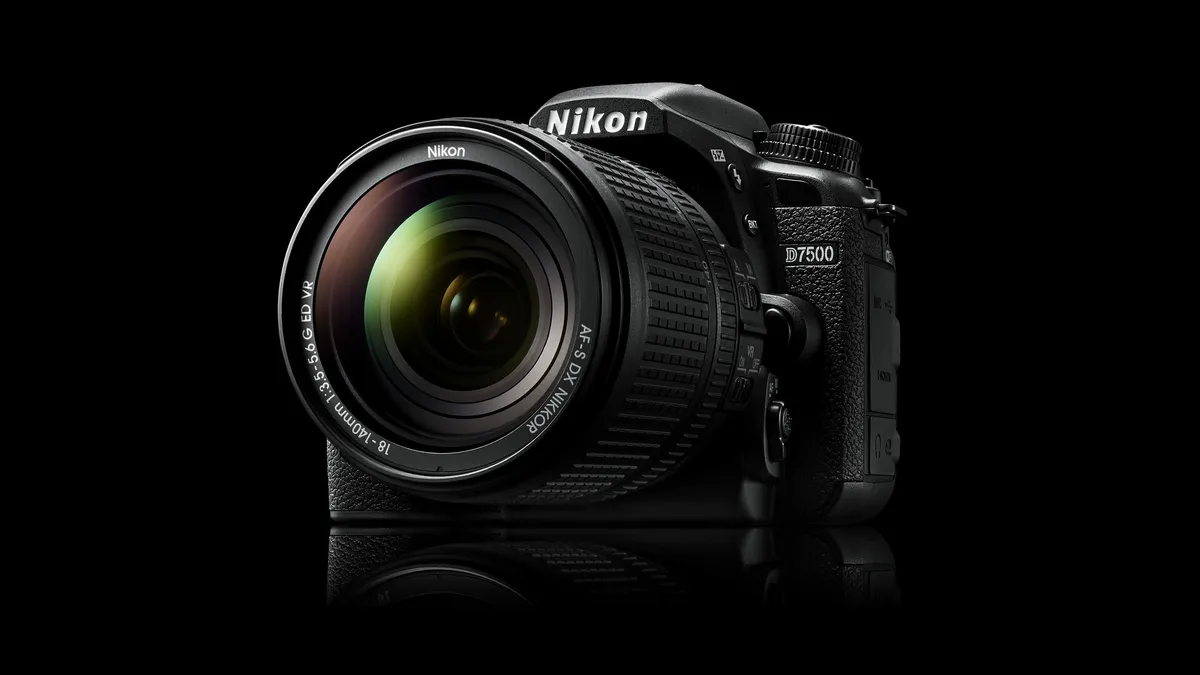
For 90% of people, I'd have recommended the Nikon Z fc. I prefer the EVF, the flippy screen, the superior video and autofocus, and I think it's one of the prettiest cameras around – so I love its looks and its ergonomics.
However, for my friend's needs and proclivities, I'm amazed to say that the Nikon D7500 DSLR camera is the better fit. She prefers an optical finder ("to see what the light is actually doing"), she prefers a camera with a proper grip for sustained shooting sessions, and she doesn't use video but she does use flash and needs the fastest shutter for outdoor use.
So it astonishes me to say that I recommended the D7500 – even though it's an older camera, with more limited tech at a higher price. I actually can't believe it – DSLR beat mirrorless. I need to go and lie down…
You might also like…
Take a look at the best Nikon DSLR lenses for the D7500 and the best lenses for the Nikon Z fc, and check out the best Nikon cameras across all categories

