
I’m constantly moaning that Nikon doesn’t have a true entry-level mirrorless camera in the same vein as the Nikon D3500. The closest you’ll get in the current line-up is the Nikon Z30 and the Nikon Z50 II.
But the Z30’s vlogger-centric design lacks a viewfinder and the Z50 II, as fantastic as it is, will set you back $910 / £849. Don't get me wrong, the specs warrant that price, just like the Fujifilm X-T30 III, the Z50 II is a cut above your average entry-level offering, but it's not a true entry-level camera.
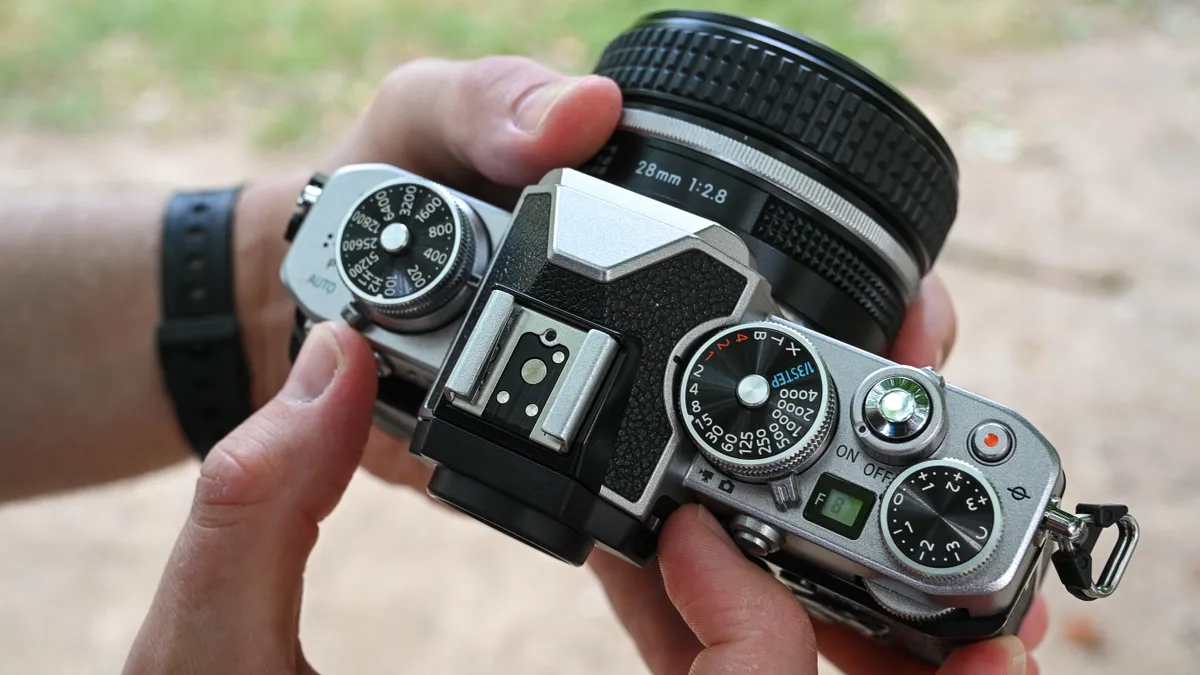
If you’re happy with the Nikon Z50’s specs but want to buy new, then the Nikon Z fc is the answer. You’ll have to pay over the $500 / £500 threshold, but you’ll also end up with one of the sexiest-looking cameras on the market. The Z fc is made to look like the legendary Nikon FM2, but has almost exactly the same innards as the Nikon Z50.
In my mind, an entry-level camera should sit around the $500 / £500 mark. And due to the release of its more powerful successor, that’s exactly where the Nikon Z50 is hovering right now.
At the time of writing, MPB prices start at $479 / £394. You’ll have to buy a lens, of course, but you can find the Nikon Z DX 16-50mm f/2.8 VR or Nikon Z 40mm f/2 cheap enough.
So what does that $500 get you? Well, the Nikon Z50 is a first-generation Z-Series camera. It was released way back in 2019 and is therefore sluggish in comparison to Nikon’s latest wares, but stand it next to the only other true entry-level APS-C mirrorless camera on the market and the story is very different.
Nikon Z50 vs Canon EOS R100
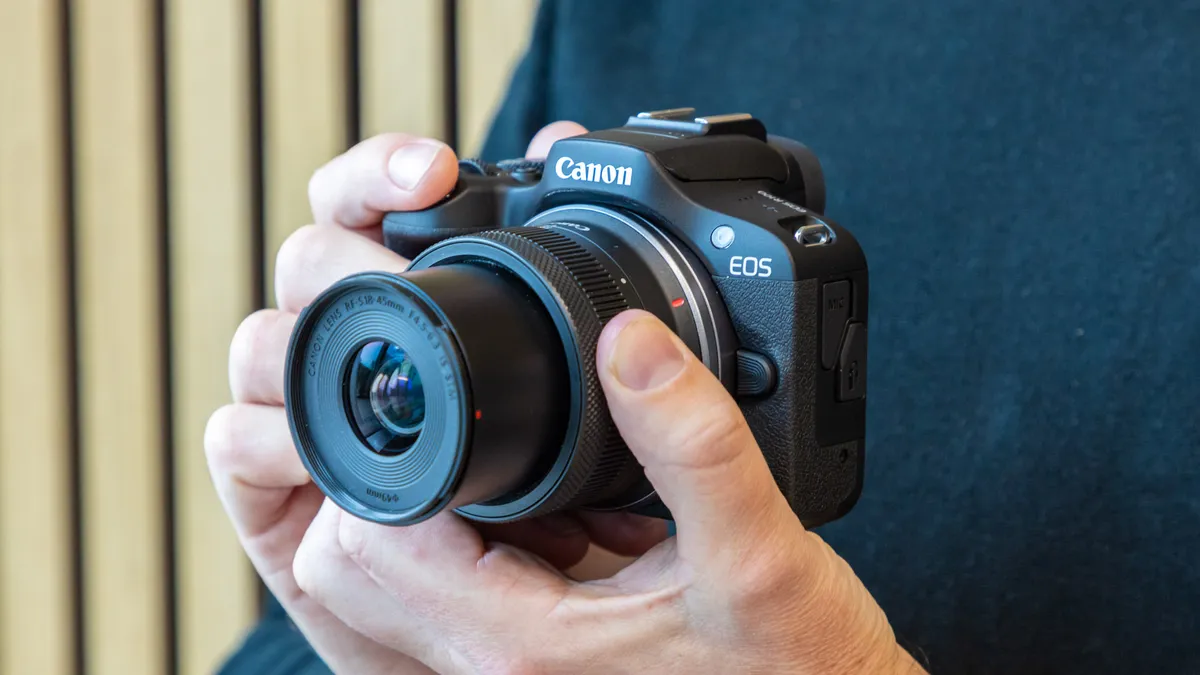
The excellent Canon EOS R100 is a charming little mirrorless camera that is an easy recommendation for beginner photographers on a budget looking to pick up their first interchangeable-lens camera. And of course, that’s the route most photographers will go down.
Beginner cameras are usually purchased as gifts, so I’m well aware they are often bought new. Buying second-hand is also a more daunting prospect for beginners, but reputable camera stores such as MPB and KEH do mitigate the risk.
| Row 0 - Cell 0 | Nikon Z50 |
Canon EOS R100 |
Release date |
2019 |
2023 |
Lens mount |
Nikon Z |
Canon RF-S |
Sensor |
20.9-MP APS-C CMOS |
24.1-MP APS-C CMOS |
Image processor |
Expeed 6 |
Digic 8 |
AF points |
209 (hybrid phase detection) |
143 Dual Pixel CMOS AF (88% coverage) |
ISO range |
100 to 51,200 (Extended: 100 to 204,800) |
100 to 12,800 (exp to 25,600) |
Stabilization |
Digital (Video Only) |
Electronic (Movie Digital IS) |
Video |
4K / 30p (uncropped), full HD /120p |
4K / 25p (1.55x crop), full HD / 60p (uncropped), 720p / 120p |
Viewfinder |
2.36m dots, 1.02x magnification |
2.36m dots, 0.95x magnification |
Memory card |
1x SD card |
1x SD card |
Screen |
Tilting 3.2-inch touch screen, 1.04m dots |
Fixed 3-inch (non-touch) screen, 1.04m dots |
Max burst |
Up to 11fps |
6.5fps (3.5fps with AF) |
Connectivity |
Wi-Fi, Bluetooth, micro HDMI, mic jack |
Wi-Fi, Bluetooth, micro HDMI, mic jack |
Weather sealing |
Basic sealing |
No |
Dimensions |
126.5 x 93.5 x 60 mm |
116.3 x 88.1 x 58.7mm |
Weight |
450g with battery and memory card |
356g with battery and memory card |
But if you don’t mind going the used route or have your heart set on a Nikon, the Nikon Z50 is arguably a better camera than the EOS R100. The elephant in the room is sensor resolution.
A beginner photographer might look at the Nikon Z50’s 20.9MP sensor and assume that the Canon’s 24.1MP sensor makes it the better camera, but the difference between 20 and 24 megapixels is negligible. I’ve used Nikon’s 20.9MP APS-C sensor extensively and I can personally attest that it’s a great-quality sensor that’s pliable in post.
When it comes to autofocus, the Nikon has more AF points. The EOS R100 features the same hybrid AF system that powered Canon's pro DSLRs and the Z50 matched the full-frame Nikon Z6 upon its release. Don’t expect a 2026 whip-fast AF performance from either camera, but both will prove serviceable for beginners.

The Nikon Z50 then pulls away from the EOS R100 with a greater ISO range, faster burst speeds, 4K / 30p, weather sealing and a larger rear LCD that also tilts and is touch sensitive.
Overall, I have no problem recommending the Canon EOS R100 to any beginner. It might not be quite as good as the Nikon Z50, but it's also more affordable. If you look in the right place you can pick up the EOS R100 + kit lens for the same price as a used Nikon Z50.
However, if you’ve only got $500 / £500 to spend and you want that money to go as far as possible, then a used Nikon Z50 is the better camera. The Big N might not have an official mirrorless successor to the hugely popular D3500 in its lineup, but for the time being the Nikon Z50 is more than capable of filling that hole. But if your budget can stretch to a Nikon Z50 II, that’s a whole different ballgame…
You might also like...
If you're not sold on the Nikon Z50 or Canon EOS R100, take a look at the best cameras for beginners. If you're only interested in budget then here are the best cheap cameras. And at the other end of the scale, here are the best professional cameras in the biz.

