
Digital Camera World Verdict
The Instax Pal 2 is the cutest camera that I've ever shot with. This tiny camera still manages to pack in an optical viewfinder and a top-placed screen that can double as a waist-level finder, not to mention a dial and lever. That design makes shooting with the Pal 2 an absolute joy. But, the Pal 2 is designed for the retro low-fi digital camera trend – a smartphone will snap clearer photos. There's some annoying shutter lag to contend with, and the camera has a tendency to overexpose (but thankfully, exposure compensation is included). Like the original Pal, printing on Instax requires the purchase of a separate printer.
Pros
- +
Adorable, tiny size
- +
Retro design
- +
Optical viewfinder and waist-level screen
- +
Built-in retro filters
- +
Easy app connection
- +
No cord needed with built-in USB-C
- +
Storage for up to 100 shots
Cons
- -
Annoying shutter lag
- -
Small sensor makes images sometimes look more like paintings
- -
Tendency to overexpose
- -
No video
- -
Instax printer sold separately
- -
Battery life is under 100 shots
Why you can trust Digital Camera World Our expert reviewers spend hours testing and comparing products and services so you can choose the best for you. Find out how we test.
The compact camera is back with a vengeance – but Fujifilm’s new option redefines “compact” entirely. Weighing just 41g – less than 2 oz – the Fujifilm Instax Mini Pal 2 is a tiny retro camera that fits in the palm of my hand yet comes jam-packed with retro viewfinders and controls.
Looking absolutely nothing like the original Instax Pal, about the only thing that the Pal 2 has in common with the original is that it's tiny – and it doesn’t print out Instax without buying a separate printer.
The Instax Pal 2 feels like a cross between the popular Instax Mini Evo and the Kodak Charmera. I tried out the Pal 2 – and I think this tiny cam may be a fit among fans of retro digicams.
Specs
Sensor |
10MP 1/3.06-inch |
Lens |
28mm equivalent |
Shooting distance |
8cm to infinity |
Flash |
Auto / Off / On |
Battery |
Built-in Li-ion |
Charging |
USB-C |
Dimensions |
37 x 42 x 42.3mm |
Weight |
41g |
Built-in storage |
About 100 images |
Memory card |
MicroSD |
Connectivity |
Bluetooth, built-in cord |
Price
The Instax Pal 2 retails for $169.95 / CA$219.95.
That makes the Pal 2 one of Instax’s more affordable digital options, coming in under the price of options like the Instax LiPlay+ and the Instax Mini Evo.
But, that does put the camera above the price of keychain cameras like the Kodak Charmera – and the Pal 2’s small size is inevitably going to draw a lot of comparisons to the viral keychain camera.
Design

I hate to admit this, but I may have gone into total fangirl mode when I opened a shipping box to find the Instax Mini Pal 2 inside. This camera is tiny; it’s retro and, frankly, it’s adorable.
The second generation of Instax’s Pal series looks nothing like the bubble-shaped original. Instead, the Pal 2 feels like a cross between a retro compact camera and a keychain camera. Weighing just 41 g – that’s less than 1.5 oz – the Pal 2 is small enough to disappear into the palm of my hand.

Despite the tiny size, Fujifilm has managed to cram an abundance of controls and features, including an actual optical viewfinder at the back. As much as I love having a real optical viewfinder, the viewfinder isn’t entirely accurate, catching more on the edges of the frame than what’s shown in the viewfinder.

The top of the camera is oozing with retro goodness. On the right-hand side, there’s a toggle that feels reminiscent of a film wind lever that switches between different Instax framing options, or enters the burst mode to create short photo animations.
On the opposite side, there’s a rotating dial that switches through different film simulations and a button on top of that for accessing the menu options.

Sandwiched between the lever and control wheel is a small LCD screen. By default, this screen displays the film simulation mode, but the screen does have a live view mode in the menu. Placing the screen at the top rather than the back allowed me to shoot with the camera like a waist-level finder when I didn’t want to use the viewfinder. That, to me, is one of the best design features – that the Pal 2 has not one but two shooting styles, and both feel very retro.

At the bottom of the camera, there’s a small toggle, this pops out a USB, so the Pal 2 plugs directly into a smartphone or computer as if it's a thumb drive, no cord needed, and can plug directly into a USB-C block for recharging.
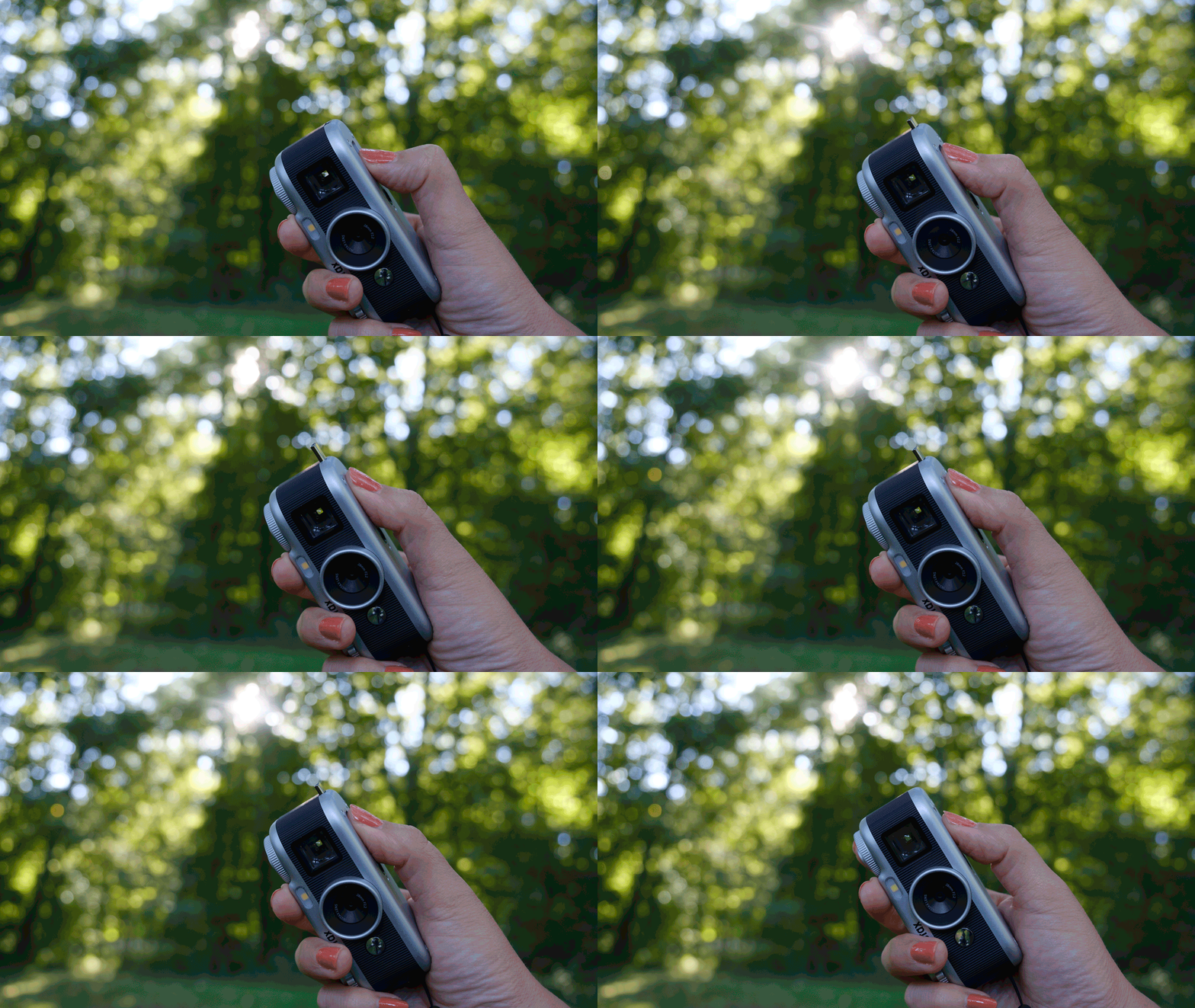
The Pal 2 doesn’t come with a keychain loop like the original, but there’s a small slot for looping in a wrist strap – and one is included in the box.
All of those features are wrapped up in a classic silver-and-black design reminiscent of retro cameras – and other Instax cameras like the Mini Evo.

Naturally, as a tiny camera, the memory card slot is the microSD sort – but there’s enough memory built in for about 100 photos, and considering no cord is needed for a quick smartphone transfer, that’s more than enough for most.
The battery life will last almost until the internal memory fills up. I shot around 70 photos with the red battery life indicator popping up towards the end. That’s not fantastic, but the Pal 2 is a budget cam, and there’s a built-in charger, so it’s easy to charge.
Performance

The Pal 2 is built for style and size rather than high-end specs. The sensor is a small 1/3.06-inch type. But I was surprised to find that the Pal 2 can shoot at 10MP, which gives it an edge over (much, much) cheaper tiny cameras like the Kodak Charmera.
The Pal 2 is a camera that feels purpose-built for the retro camera trend. The camera feels like it would fit right in with the trend of buying up early 2000s compact cameras. The image quality isn’t going to beat out a modern smartphone, not by a long shot, and it’s not going to beat out compacts with larger sensors. I would put the photo quality above the Kodak Charmera, but not as good as the Camp Snap CS-Pro.
While the camera does just hit that two-digit megapixel count, images still feel very much like a low-fi camera. Look too close, and the images feel more like oil paintings than photographs. But, the size is still sufficient for things like sharing on Instagram – where photos get downsized to 1080 pixels anyways.

The resolution is also more than enough for prints from the new Instax Wide 2, announced on the same day – but the small sensor and 10MP resolution isn’t meant to print out oversized wall hangings.
The small sensor suffers in low light conditions, creating noticeable grain and muddled details much faster than cameras with even a 1/2.3-inch sensor.

The lens is a 28mm equivalent that’s not too wide but not too close and should adapt well to basic street and landscape shots to portraits.
The camera shoots in programmed auto, with an exposure compensation option tucked into the menu. I was relieved to see the option to adjust the exposure somewhat, as the camera’s tiny sensor has a limited dynamic range.

The Pal 2 has a tendency to overexpose, particularly outdoors. Frames that include both bright sun and shadowy patches will end up with overexposed highlights without any user intervention, but that exposure control rescued many of my shots.
Naturally, as a camera coming for Fujifilm, there are several built-in film simulations. There are six profiles built in, but the Instax Pal app can swap to another set of six filters. Along with a standard color profile (which Instax dubs “Pure"), there’s a black-and-white mode, one for built-in lens flares, a soft mode with diffusion, a muted tones option, and a cool color profile. That was plenty of options to play with, though I did miss the double exposure mode found on the Instax Mini Evo.


The camera can also shoot with a film frame added, resizing and fitting a classic digital border around for frameless, Mini, Square, and Wide Instax formats. I didn’t use this feature much, as those frames are easy to add in the Instax Pal app later on, so I found myself wishing I could control exposure compensation with the top lever instead.

The Pal 2 also has a “burst mode” but unlike a typical burst setting, this mode creates short animations.
Speed adds to the Pal 2’s retro feel – which is to say that the camera is a bit slow. There’s a noticeable shutter lag between pressing the shutter and when the photo is taken, so there’s an extra challenge for photographing moving subjects like pets and kids.


Like the original, the Instax Pal 2 is one of the few cameras that carry the Instax name – but doesn’t actually have a printer built in. The Instax Pal 2, however, can connect directly to an Instax printer (or hybrid Instax camera) without a smartphone and print directly from the camera.
I tried the Pal 2 with the new Instax Link Wide 2, which is a good fit for the camera’s wide aspect ratio. The resolution is plenty for printing on Instax Wide, and using real film for those prints levels up the retro charm more than the camera’s built-in presets.
Verdict
The Instax Pal 2 is low on tech and high on retro charm. This is hands-down the cutest little retro camera that I’ve ever used.
But beyond the fact that it's tiny enough to nearly disappear in the palm of my hand, I loved the dual viewfinder options with the classic optical viewfinder and the top-placed screen that feels like a waist-level viewfinder. Add in the toggle and dials, and this tiny camera is just oozing with classic vibes.
Built-in film looks add to the charm, and the built-in port means easy smartphone transfers without packing a cord.
The Pal 2, however, is more of a camera for nostalgia than pixel peeping. The small sensor is a challenge in mixed lighting, and details tend to look more like muddled paintings pretty quickly. The camera is definitely one for getting the look of an older digicam rather than the look of a modern camera.
There’s some shutter lag to contend with and a few other minor annoyances, like the optical viewfinder not being quite accurate. I also wish the exposure compensation was built into a physical control rather than the menu. It’s also one of the few Instax cameras that doesn’t actually print on instant film – you need to buy a separate printer for that.
Alternatives
You may also like
Browse the best cheap cameras or the best hybrid instant film cameras.

