Smartphones tend to include more than one camera – but what if dedicated cameras hid more than one sensor inside? Camera maker Canon has patented a camera that has two sensors, but for entirely different reasons than dual-camera smartphones.
A recent Canon patent, published on September 17, describes a camera that has two sensors and lenses. But the invention also has two purposes for that dual design. The first is to fight AI slop and prove that the photograph was created in-camera. The second? To adjust the focus of the image after the photo is taken.
The patent and drawings for the unusual imaging device show a design that uses two different sensors. The patent mentions that these sensors could be CCD or CMOS sensors and that both sensors are exposed at the same time.

Recording two images at the same time creates a parallax reference image that allows the camera to create a certificate of authenticity. The dual sensor design creates a reference image that can help determine if a photograph is edited.
Most current authenticity certificates label a photograph as modified even for minor adjustments to exposure and color. The secondary image could help address a common flaw in authenticity certificates by creating a record of not just whether or not a photograph changed, but by how much. That could help viewers determine if a photo was just color edited, or drastically AI-altered.
For the dual-sensor camera’s second trick, the invention can use that same dual-sensor design in order to adjust the photograph’s focus after the photo is taken. Autofocus misses are notoriously impossible to correct with photo editing, making the ability to adjust focus after rather than before the subject of many camera inventions over the years.
The patent hints that the adjustable focus works because the two sensors capture images at slightly different focus ranges – which can be set by the user in the camera. Combining those two photos allows for a small range of focus adjustment.
Putting the two unusual features together, Canon says that the image authenticity certificate would still be intact if only focus adjustments were made.
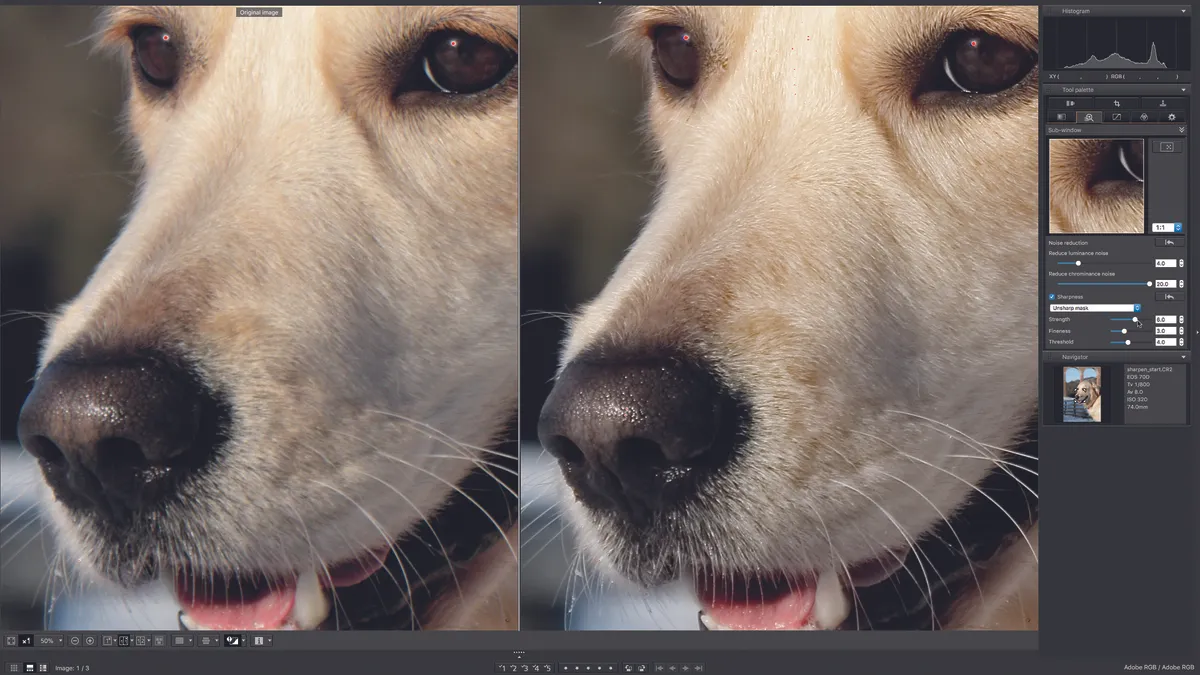
The new patent isn’t the first time Canon has experimented with adjusting the camera’s focus after the fact. Canon’s Dual Pixel RAW has two photodiodes on each pixel at slightly different positions, creating a small parallax. This allows Canon’s specialized software to make micro adjustments for a photo that just barely missed focus on supported Dual Pixel cameras.
The patent drawings don’t offer many hints as to what form such a camera would take. But the patent does mention the device having both a “field lens” and a “secondary coupling lens.” That and the mention of a zoom control on the camera suggests a fixed-lens camera rather than a mirrorless.

While the patent doesn’t detail what shape or form such a dual-sensor camera would take, I think Canon should mix the idea with the retro camera trend and build a digital twin lens reflex using those two lenses to fight AI slop. The hype behind the analog concept camera that Canon displayed earlier this year was big enough that I think such a camera would be legendary.
The existence of a patent doesn’t guarantee that such an invention will ever become an actual camera. Last year alone, Canon filed 2,623 patents in the US and over 10,000 patents globally, so there are a lot of ideas that never actually make it into a product. But the unusual dual-lens design to fight AI slop and play with focus is one that I’d love to actually be able to hold in my hands someday.
You may also like
While Canon's patent is cool, these are the best Canon cameras that you can actually buy. Or browse the best C2PA cameras with Content Credentials.

