Our new winter landscape photography cheat sheet presents four handy flowcharts which take you step-by-step through how to compose for winter landscapes, and then how to fine tune your exposure for snow, extreme contrast and bright skies.
What is resolution? If you want the maximum detail in your images, it’s not just about pixels. We explain why, first by answering some of the common questions people have about camera resolution, and then we’ll show you step-by-step how to change image resolution.
In our latest photography cheat sheet we’ve put together handy flowcharts to take you through shooting four of the most common environments in which you’ll shoot wildlife photography: wildlife parks, wild mammals up close in their habitat, wild birds in sunlight and shade, and garden wildlife.
It’s vital to have an understanding of Photoshop layers to get the best of your digital photography when post-processing images. Our latest photography cheat sheet explains what you need to know.
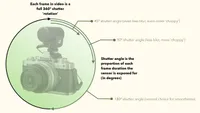
We take it for granted that new DSLRs – and in fact most digital cameras – these days come with the capability of recording HD movies. In this tutorial we’ll start by answering some of the common questions about DSLR video, then explore some of the finer points of making HD movies, such as how to pace your film, understanding frame rates and what direct controls on your camera can make the DSLR video process easier for you.
In our latest photography cheat sheet, we take a closer look at battery grips and explain what they do and how they can double your power, letting you shoot for longer.
Many famous photographers talk about ‘pre-visualising’ your image, but what does that really mean? And how does it apply to landscape photography, when so many elements are beyond your control?
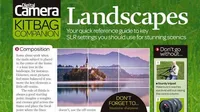
In our latest photography cheat sheet, we explain some of the key ingredients of good landscape photography and how to train yourself to think about them before you take a shot.
Everyone has probably heard of tilt-shift lenses. A tilt-shift lens is named as such because it has a ‘tilt’ mechanism that changes the angle of the lens relative to the body, tilting it to the left or right, or up or down. It also has a ‘shift’ mechanism that shifts the lens up or down or from side to side.
In our latest photography cheat sheet below we’ve illustrated how a tilt-shift lens can be used to correct some of the common photography problems that plague many photographers.
Landscape photographers face all sorts of challenges, and in our latest photography cheat sheet we explain how to shoot at the coast, in woodlands, mountain tops and rural areas.
Are you new to photo editing and trying to make sense of the Photoshop Layers palette? You’re not alone.
To help you along we put together this quick and handy photo editing cheat sheet that identifies what each little box and icon does, and what you might want to use it for!