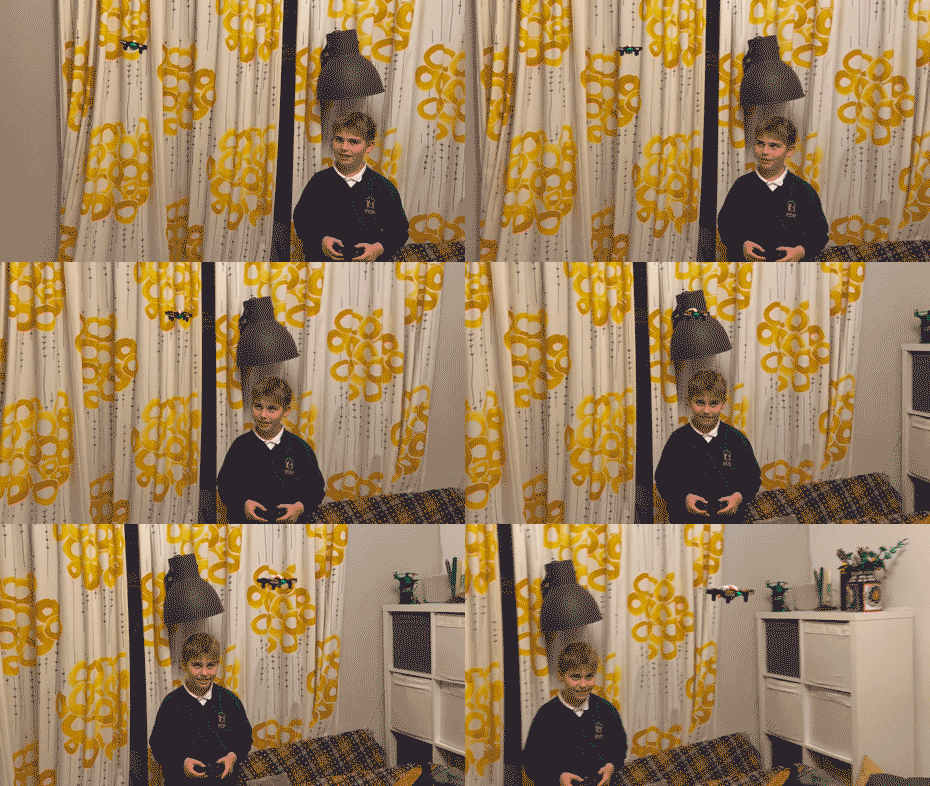
Children and drones go together very well at any time of year – and they make amazing gifts – but do they have the educational value you hope? The answer is a qualified 'yes', but you do need to be a little cautious about which drone you choose, and what you're looking for your kids (and yourself) to learn!
I have freshly updated my guides to the best drones for kids and the best drones for beginners, and as a drone pro and a parent, I think I can fairly explain why they're a good idea:
1: Start with the basics: What every drone teaches
When I was a kid, I'd always tell my parents I needed (yes, I used the word "needed") computer games because they'd improve my "hand-eye coordination". I suspect I'd heard the term on TV. Probably on Gamesmaster, a TV show about video games.
Hand-eye coordination is a good thing, and does come from fast movement, but playing catch is good too. I'd argue that the kind of coordination that drones and games teach is a slightly different one because the brain needs to associate the smaller movement of fingers with more significant movements of the drone.
2: Planning a flight – flight school 101
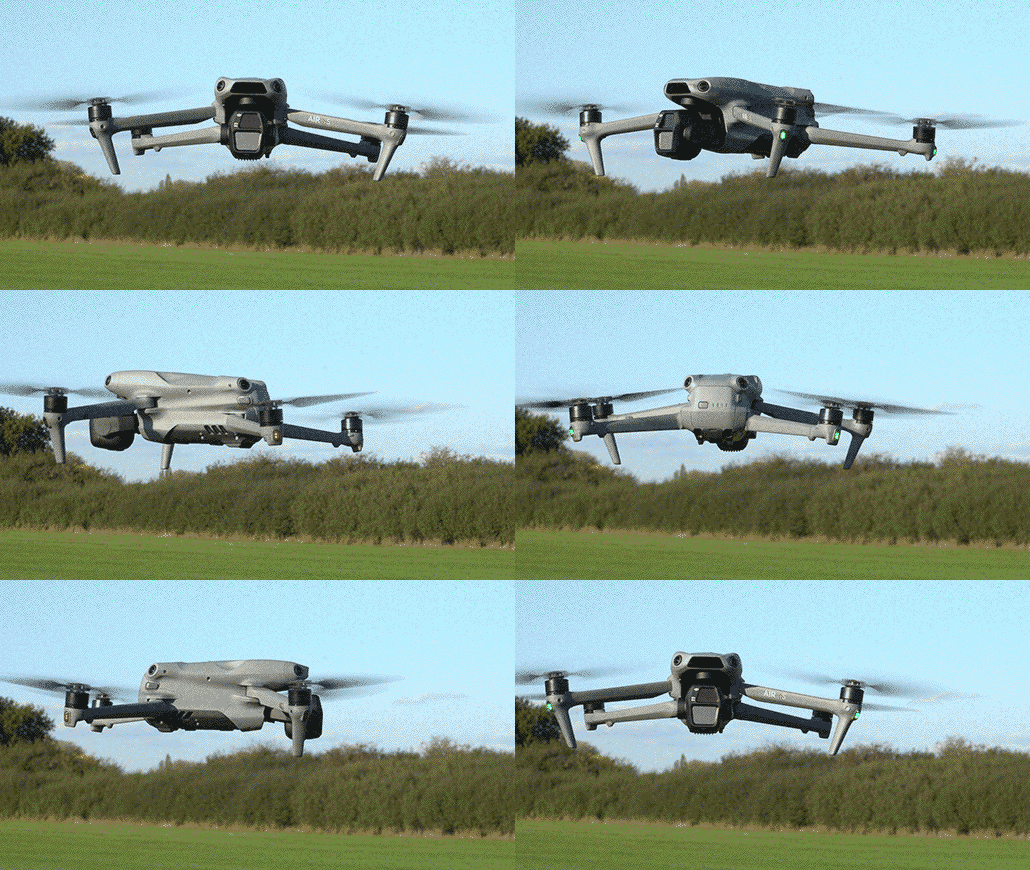
Learning to fly a drone really can be the first step to being a pilot. Flying a drone outdoors means understanding basic regulations. The heavier the drone, and the more risk you incur (essentially the nearer people you are), the more regulations.
Learning to make this kind of assessment is a really good way to develop responsibility, and it starts out with simple things like assessing and estimating distance.
A modern drone will help with this because it won't allow someone to fly it further or higher than set limits – typically legal limits like 120m high and 500m distant, but you can usually set lower limits for extra safety.

3: Going a step further – community of learners
Flying a drone – in fact a lot of tech skills – are often seen as 'a bit nerdy' and as solitary pursuits, but that just isn't true. Drone flying, especially FPV flying, requires going out with friends and family – sometimes for legal reasons.
In many places, like the UK, you're required to be able to see your drone at all times while you're flying, and looking at the view using the screens inside goggles from the drone's built in camera in the 'first person' (that's what FPV flying is) doesn't count according to the aviation authorities (the government).
The workaround long since agreed with fliers is that you can have someone with you – called 'a spotter' to retain true visual contact with the aircraft and inform you of any problems while you're flying using the goggles. That's pretty sociable.
There are also a lot of clubs around the world which organise events and run air fields. These can be great places to share information and – usually for a small membership fee – secure access to safe flying and practice locations.
- Academy of Model Aeronautics (USA)
- BMFA (UK)
4: Photographic & video making skills
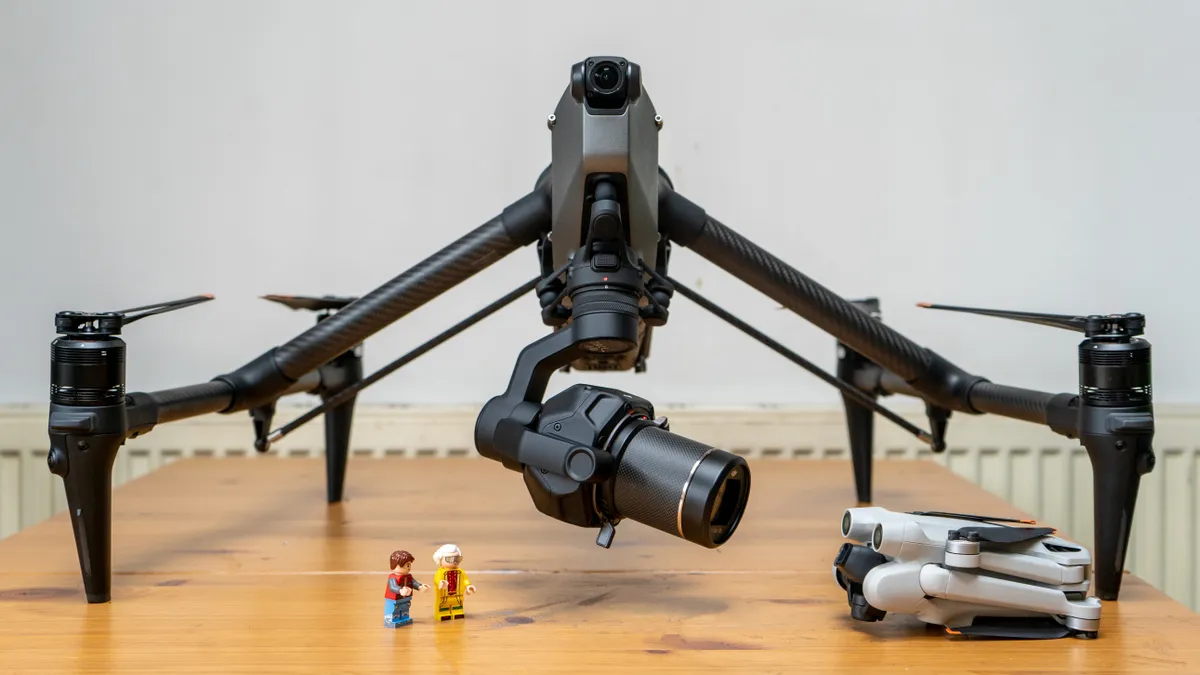
Drones of all different sizes come equipped with cameras, and you can shoot good quality 4K video with no skill and drones as cheap as the DJI Neo or the DJI Neo 2.
There are several things about drones from DJI and competitors like Potensic and HoverAir that encourage kids to create content; all these brands have good apps that work well with the photo and video platforms on iPhone/Android and, realistically, that will be where most people start creating, too.
This will be important, because learning basic cinematography concepts like composition, continuity, movement, and framing – many of which are assisted using smart features in the apps – will help creatives stand out.
Standing out is increasingly important in a world where old-fashioned calculation work is done by AI or better-designed IT systems, so encouraging your kids to understand creativity – and giving them the tools to achieve – is very sensible.
A drone is a relatively cheap way of getting a striking shot into a TikTok or a YouTube.
5: Understanding radio waves
Though finding out the hard way isn't ideal, flying drones does develop an understanding of how control systems work, and what can impact them.
The main issue with a modern drone is range – how far the signal will carry before the drone can't be controlled (or won't send back a signal from its camera).
On the plus side, drones usually return to their take-off point using GPS these days – a great safety feature – but it's still important to understand how control works, what impacts it (dampness in the air, interference etc.) and this is a very practical piece of knowledge that will make physics lessons seems a lot easier to understand than someone waffiling on about the electromagnetic spectrum.
6: Understanding weather
All drone pilots start to develop a bit of an ability to scan the sky and read the clouds. To get more serious qualifications to fly larger drones, eventually a drone operator will be expected to plan for weather conditions and understand the wind, especially, and the limitations of their own craft.

