
There’s a persistent idea floating around in filmmaking circles that Netflix sits behind a kind of technical velvet rope. On one side, Netflix-approved cameras – carefully tested, measure and sanctioned. On the other: everything else.
For many emerging filmmakers, that list stops feeling like guidance and starts looking like a gate. If your camera isn’t on it, you could be forgiven for thinking you’re already out of the running.
That perception isn’t entirely unfounded. Netflix does publish an approved camera list and enforces technical requirements on the productions it commissions. If you are making a Netflix Original under its control, you are expected to work within a tightly defined technical framework.
The reasoning is practical: consistency across global delivery, predictable post-production workflows and a standard that holds up across everything from mobile phones to large-format cinema screens.
But what gets lost in that conversation is that Netflix is not a single system. It operates as both commissioner and distributor and those roles do not always follow the same rules.
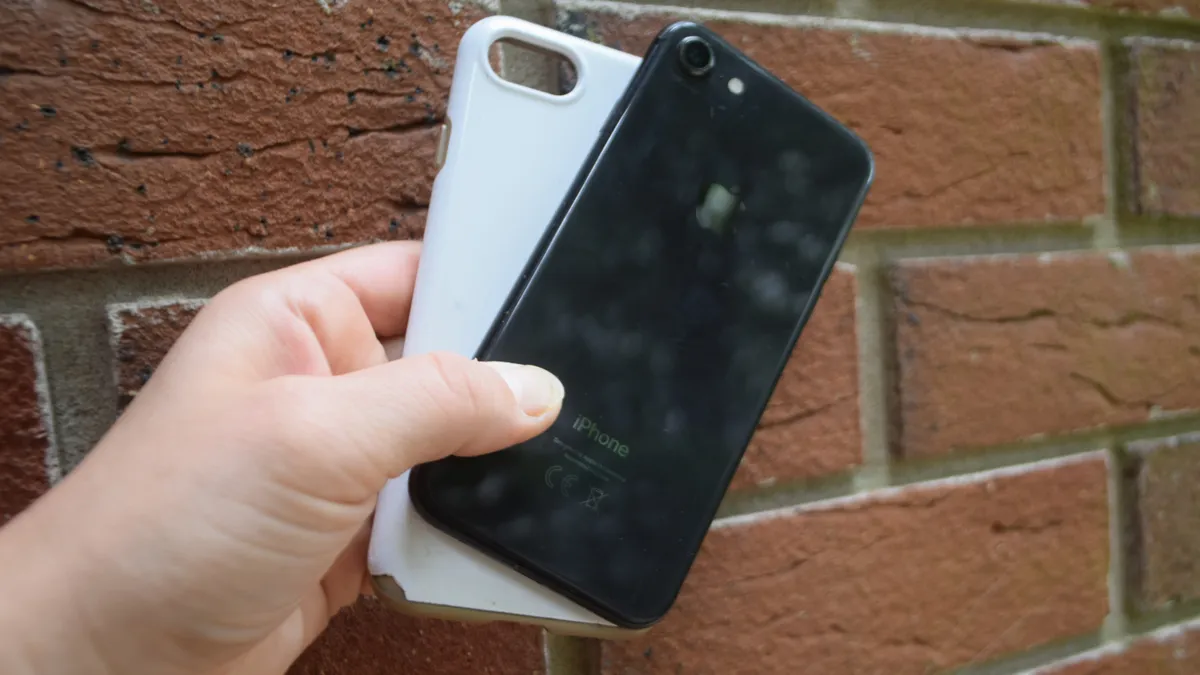
Take a step back and look at what actually ends up on the platform. Steven Soderbergh’s High Flying Bird (2019) was shot entirely on an iPhone 8 – the director’s second iPhone feature after Unsane – and later released globally by Netflix after it acquired distribution rights.
More recently, Left-Handed Girl (2025), directed by Shih-Ching Tsou, was also shot on iPhones and arrived on the service after its festival run.
Neither film fits the familiar image of a “Netflix-approved” production. Apple's phones are not on the approved camera list and they are not designed for the controlled, high-end workflows that Netflix typically requires on commissioned originals. And yet both films sit comfortably in the catalog.
The key point is that neither project began life inside Netflix’s production system. That distinction matters. When Netflix commissions a film or series from development onwards, it controls the process end-to-end.
In those cases, technical requirements are strict and the approved camera list becomes part of the production framework. It is designed to reduce risk on large, complex productions involving VFX, color pipelines, HDR mastering and global delivery standards.
However, when Netflix acquires or licenses a completed film, the situation shifts. It is no longer shaping how the film is made. It is evaluating what already exists. The question moves away from how the film was shot and towards whether the finished deliverable meets technical and quality standards. Process gives way to outcome.
That distinction does a lot of quiet work. It means the approved camera list is not a universal barrier, but a production rule tied to a specific type of engagement. It applies most rigidly to commissioned originals. Outside that, the system becomes more flexible than the headline rules suggest.
This is where comparisons with other platforms often come in. Different streaming services structure technical expectations in different ways, particularly when it comes to independent acquisitions. Rather than enforcing strict pre-production camera mandates, many focus primarily on final delivery specifications once a film is complete.
That difference shapes perception. Netflix can feel formalized and tightly controlled at the production stage, while other platforms appear more open at entry point. But both ultimately converge on the same question: does the finished film work on the platform?
What gets interesting is how these systems are interpreted from the outside. Technical guidelines can easily become shorthand for what “professional” filmmaking looks like. Camera lists, in particular, risk being read as gatekeeping devices rather than production tools. That interpretation can create anxiety, as though equipment alone determines access.
The irony is that some of the clearest counterexamples are not accidents or loopholes, but deliberate creative decisions.
Soderbergh chose the iPhone on High Flying Bird for speed and intimacy, working quickly in real environments and stripping away the weight of traditional production setups. The aesthetic emerges from the constraints and advantages of the tool rather than from imitation of high-end cinema cameras.

Left-Handed Girl follows a similar logic in a different context, using lightweight equipment to work within crowded real-world environments where larger rigs would be impractical. The choice of camera is driven by access and mobility rather than compliance with a technical standard.
Put together, these examples don’t break Netflix’s system. They clarify things.
The rules are strict where Netflix finances and manages production directly, but they do not define every film on the service. There is a second route in and it does not begin with an approved camera list. It begins with a finished film.
For filmmakers looking in from the outside, that distinction is crucial. The assumption is often that the system is closed unless you already have the “right” tools. The reality is more layered.
Tools matter significantly in production, especially under commissioned workflows, but they are not always the deciding factor in whether a film ultimately reaches the platform.
What matters just as much is how technical language becomes symbolic within filmmaking culture. Camera specifications can start to function as perceived borders, when in practise they are workflow standards designed for specific production environments.
Once that is understood, the structure looks less like a single gate and more like overlapping pathways.
Netflix’s standards remain real, particularly for its commissioned originals. But the catalog itself shows something else as well: those standards are not the only route to success.
You might also like...
To see a guide to the best cameras for filmmaking and the best cinema cameras, as well as the best camera phones, check our guides.
