





Ever wonder what the ocean looks like from a shark's perspective? New research on whale sharks is disrupting what science understands about the 20-ton giants – and creating mesmerizing footage in the process.
Whale sharks – filter-feeding sharks that get their name from their whale-like size – have largely been observed from the surface, but researchers from the Australian Institute of Marine Science and Murdoch University asked a key question: what do whale sharks do when no one is watching?
Electronic tags have long been used to study animal behavior, but for this study, researchers used tags with a small camera built in. The tags were designed to fall off after 24 hours, so the researchers could then locate the tag’s signal and retrieve the footage.
The group attached the small tags to the dorsal fin (the top fin) of five juvenile whale sharks near the Ningaloo Reef off Western Australia.
Combining the footage with previous observations, the team built what they’re calling the largest catalog of the shark’s behavior to date – particularly on the animals' feeding patterns.
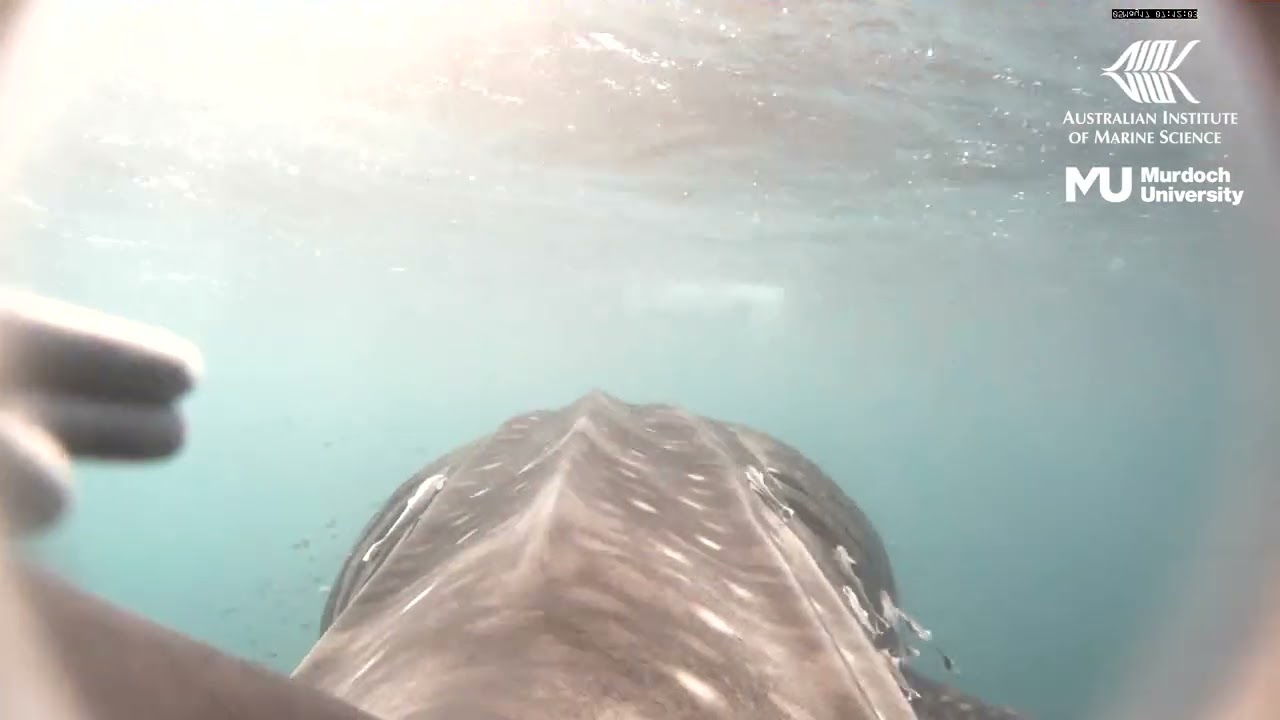
One of the key findings that the cameras uncovered is that whale sharks don’t predominantly feed near the surface as first thought. Cameras showed the creatures sinking with open mouths to catch a snack, as well as feeding towards the surface.
The cameras also demonstrated that whale sharks actually have a wide variety of approaches to feeding. During the 24 hours the researchers watched the whales, they spent most of their time in what the researchers called “low-effort” feeding behaviors before switching to more active feeding when locating a larger swarm of krill. Researchers described the behavior as akin to humans snacking while trying to decide what to cook for dinner.
The data is opening up insight into why whale sharks are able to survive in tropical areas where prey can sometimes be inconsistent. Researchers are hopeful that further similar studies using cameras could shed additional light on the ocean’s gentle giants.
The research was published in the journal Marine Biology.
You may also like...
Going snorkeling? These are the best waterproof cameras, as picked by our panel of expert photographers.

