



Modern flagship phones already have excellent ultrawide cameras, increasingly sophisticated telephotos, and computational processing that can make a fairly convincing attempt at almost anything in between. Where add-on lenses still make sense to me is when they give the phone a genuinely different optical capability.
That might mean putting more distance between a tiny insect and me while still getting proper macro magnification, adding enough optical reach to photograph wildlife without relying entirely on digital zoom, or deliberately embracing something computational photography struggles to fake convincingly, such as the stretched perspective and horizontal flares of an anamorphic lens.
Every lens here does something quite different, so I would choose based on the kind of photographs or video you actually want to make.
Best lenses for iPhone and Android phones
Why you can trust Digital Camera World Our expert reviewers spend hours testing and comparing products and services so you can choose the best for you. Find out how we test.
Best phone lens for macro

The Moment Macro 75mm is the phone lens I would recommend first because it fixes a problem I encounter almost every time I use a smartphone's built-in macro mode.
Most phones achieve macro by switching to the ultrawide camera and forcing me extremely close to the subject. That is fine for a coin sitting on a table, but considerably less helpful if I'm photographing a bee that has absolutely no intention of waiting while I shove an iPhone into its face. I also don't particularly like the ultrawide perspective for macro because it can make subjects look exaggerated and backgrounds unnecessarily busy.
The Macro 75mm takes a much more traditional photographic approach. Its 75mm-equivalent perspective lets me work from roughly 70-100mm away depending on the phone, giving both me and the subject more breathing room. Moment recommends it for photographing things such as flowers, insects and small details, and that longer working distance is precisely why I prefer it to the company's more extreme Macro 10x.
It also attaches over the phone's main camera rather than relying on the usually lower-quality ultrawide module. On an iPhone, that means I am starting with the phone's best sensor and lens before adding the Moment optics, and I think that makes a meaningful difference to fine detail and overall image quality.





What surprised me most in testing was the look of the photographs. The longer focal length naturally compresses perspective and throws the background further out of focus, producing a much more convincing shallow depth of field than the computational blur phones normally try to manufacture. For flowers and other small subjects, the images can start to look much more like they came from a conventional camera and macro lens.
Build quality is excellent. The machined aluminum body and optical glass feel reassuringly substantial, although at 114.5g this is no tiny clip-on accessory. I definitely notice the weight once it is hanging off the back of a phone.
The bigger issue is price. At around $150 / £150 before the mounting hardware, this costs more than plenty of cheap conventional camera lenses. You will also need either a compatible Moment case and T-Series mount or one of the company's universal adapters.
But I think it justifies the cost better than most phone lenses because it creates photographs that are genuinely difficult to reproduce using the phone alone. If close-up photography is something you regularly enjoy, this is the mobile lens I would buy first.
Best telephoto phone lens
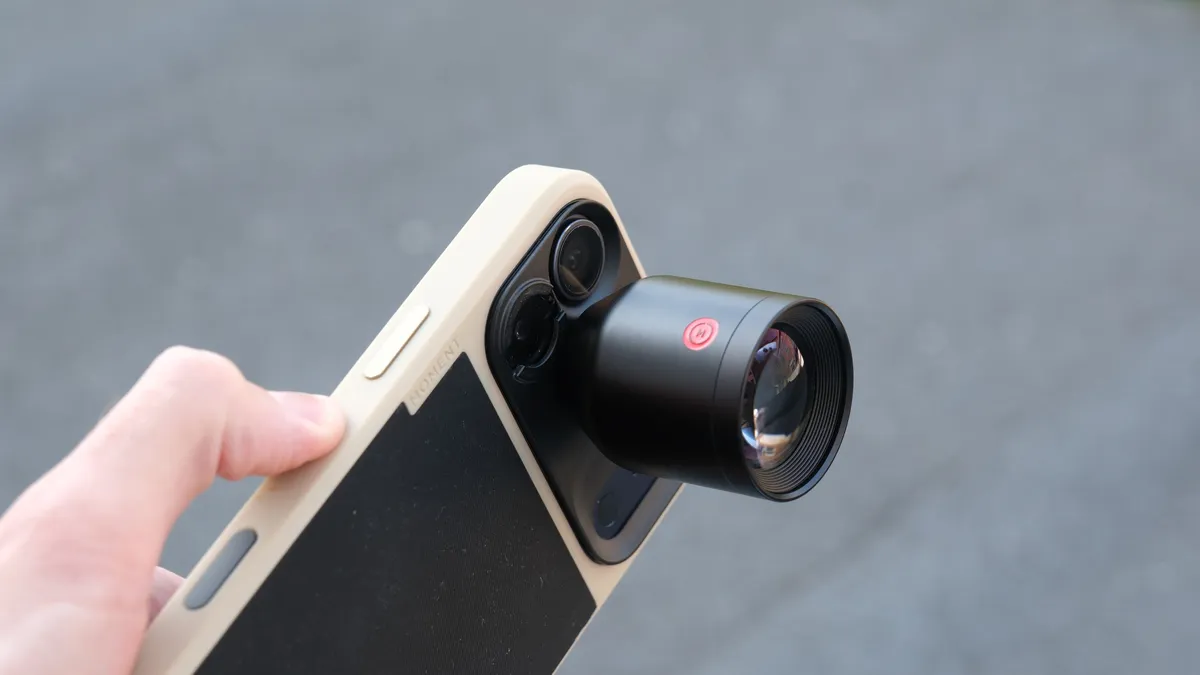
Phone telephotos have improved enormously, but there is only so much optical reach manufacturers can squeeze into something a few millimeters thick. Once I go beyond the native telephoto camera, image quality increasingly relies on cropping, sharpening and computational processing.
Unlike many older phone telephoto lenses, it is designed to sit over a compatible phone's existing telephoto camera rather than the main camera. Combined with the phone's own periscope optics, that produces an approximately 240mm-equivalent field of view, putting it into the sort of territory I would normally associate with a proper telephoto camera lens.
I found that genuinely useful for wildlife, distant landscapes and details I simply couldn't get physically closer to. In the center of the image, the SuperTele produced noticeably sharper results than pushing the iPhone to an equivalent digital zoom. The longer optical focal length also gives images more convincing compression, which contributes to a more camera-like look than simply cropping further into a phone photograph.
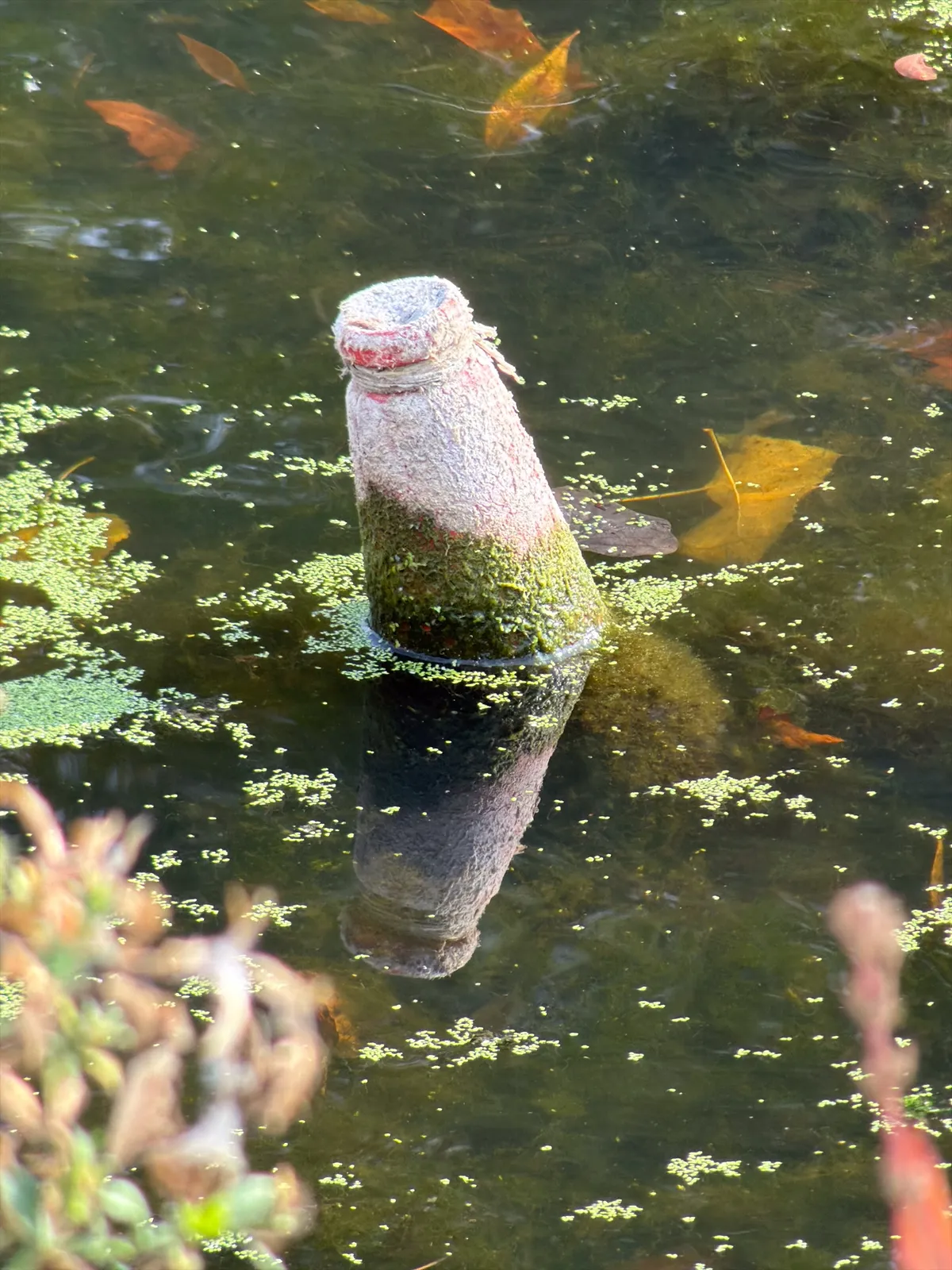



There are compromises. Fine detail becomes softer toward the edges, and using 240mm on a smartphone magnifies every tiny movement of my hands. Apple's stabilization system wasn't designed around a large piece of third-party glass sitting over the telephoto lens, so I found the view could sway considerably. For the sharpest results, I would use a small tripod or brace the phone whenever possible.
The approximately four-meter minimum focusing distance also means this is strictly a lens for distant subjects. It is useless for portraits or anything close to me.
Compatibility needs checking carefully too. Moment specifically designed the SuperTele around phones with suitable periscope telephoto cameras. Recent iPhone Pro Max models are well supported, but Android compatibility depends much more heavily on the exact model and mounting solution. You may also need Moment's paid camera app or another manual app to stop the phone automatically switching cameras.
At around $150 / £149, however, I actually think the SuperTele is very good value. Some manufacturer-branded telephoto accessories cost considerably more, and 86g is incredibly light compared with carrying a dedicated camera and long lens.
If I regularly photograph wildlife, sport, or distant travel subjects on my phone, this is the lens that expands what the camera can actually do most dramatically.
Best budget phone lens

Not everyone wants to spend $150 plus the cost of a case just to find out whether smartphone lenses are something they enjoy using. That is where the Apexel 2-in-1 makes a lot more sense.
You get a 12.5x macro lens and a 0.45x wide-angle adapter in one small kit. Rather than requiring a dedicated phone case, the whole thing attaches with a universal spring clip, so I can use it with most iPhones and Android devices and move it between phones relatively easily.
The macro lens is comfortably the star. It can focus from around 3-6cm away and produces exactly the sort of soft, naturally blurred backgrounds that make add-on macro lenses appealing in the first place. In our testing, it delivered far more character than I would expect from something this inexpensive, particularly for flowers and small objects. The bokeh can become wonderfully abstract, and unlike a phone's computational portrait blur, it is being created optically.


The 0.45x wide-angle attachment is harder for me to recommend as enthusiastically. It does widen the phone's main camera considerably, and that could still be useful with older or less expensive phones that don't have a particularly capable ultrawide camera. On a current flagship phone, though, I would usually just switch to the built-in ultrawide.
There is also visible edge softness and distortion, although that can occasionally become part of the charm if I am deliberately chasing a slightly exaggerated action-camera look.
The mounting system is simple but imperfect. Because camera modules have become so large, aligning a universal clip cleanly over the correct lens can take a little fiddling. Our reviewer had to improvise a small spacer when using an iPhone 16 to get everything correctly centered. If alignment is even slightly off, part of the adapter itself can creep into the frame.
Build quality obviously isn't in the same league as Moment or ShiftCam either. This feels like an inexpensive accessory because it is one.
But I'm much more forgiving at this price. I wouldn't buy the Apexel primarily for its wide-angle lens; I would buy it as an extremely inexpensive macro lens that happens to include another creative option. For someone curious about phone photography who doesn't yet know whether they want to invest in a complete lens ecosystem, I think this is by far the easiest place to start.
Best microscope lens for smartphones

The Apexel PhoneMicro5 sits in a completely different category from the Moment Macro 75mm. The Moment lets me take more attractive conventional close-ups; the Apexel lets me photograph things I can barely see with my own eyes.
The kit contains separate 100x, 150x and 200x microscope modules, all of which slot into an adjustable spring-mounted holder positioned over the phone's main camera. That makes it much more powerful than the usual smartphone macro mode and opens up subjects such as fabric fibers, paper texture, skin, hair, plant structures and tiny surface details.
One of the recurring problems with extreme close-up photography is that I inevitably put the phone between the subject and the available light. When I'm only a few millimeters from something, the phone itself casts a shadow over exactly the area I'm trying to photograph.
Each Apexel microscope incorporates its own LED lighting, with multiple brightness and color settings. That means I can place the lens extremely close to a flat surface and still get even illumination. The built-in battery lasts around 5.5 hours and recharges over USB-C.


The 200x module obviously produces the most spectacular results, and in DCW's testing it revealed textures that the iPhone's native macro system simply couldn't resolve. But I don't think the other lenses are redundant. The 100x option gives me more context and can produce surprisingly attractive shallow depth of field for products, toys and small objects rather than purely scientific-looking close-ups.
I also prefer Apexel's adjustable mount to a basic clothes-peg clip. Once attached, I can loosen a screw and slide the microscope horizontally until it sits directly over the phone's main camera. That makes accurate positioning much easier, particularly on phones with large multi-camera arrays.
It still isn't completely effortless. The clip can overlap physical buttons on some devices, and our reviewer needed the supplied adhesive pad to get the system sitting perfectly level on one phone. At these magnifications, stability becomes important too. Every tiny movement looks enormous, so I would ideally brace the phone or use a small tripod.
At around $90, it also costs much more than Apexel's simple 2-in-1 lens above. But I think the PhoneMicro5 justifies its place because it doesn't merely improve something my phone already does; it lets me photograph a completely different scale of subject.
Best fisheye phone lens

Modern phones already have very capable ultrawide cameras, so I see little reason to spend a significant amount of money simply turning a 24mm main camera into something around 16mm. A 200-degree fisheye, however, gives me an effect that even the widest built-in phone camera doesn't really replicate.
This is deliberately not a corrected architectural lens. Straight lines curve dramatically toward the edge of the frame, perspective stretches and anything close to the camera looks enormous. That makes it especially suited to action sports, skate videos, interiors, exaggerated portraits and any scene where I actively want the optics to announce themselves. Moment currently offers the 14mm in both its older M-Series and newer T-Series ecosystem, with T-Series recommended for current larger-sensor phones.


The optical quality is better than I would expect from the novelty fisheye attachments that fill online marketplaces. Moment uses proper multi-element glass and a substantial metal housing, and the lens is designed to cover the phone camera cleanly without leaving the obvious black circular corners I associate with cheap adapters.
Our original review was of the M-Series version and found it surprisingly crisp across the frame with minimal vignetting. The mounting system also felt extremely secure – an important consideration when I have a chunk of glass hanging over the edge of an expensive phone.
The modern T-Series version weighs 63.1g and has a 0.2x magnification factor. Moment lists a minimum focus distance of around 70mm, so I can get extremely close to subjects and exaggerate perspective even further.
I wouldn't call it versatile. Fisheye images have such a recognizable look that using the effect constantly quickly becomes repetitive, and this certainly wouldn't be the first accessory I bought for conventional travel or portrait photography.
But that is also exactly why I prefer including it over another generic wide-angle lens. If I'm going to go to the trouble of attaching external optics to my phone, I want the result to look meaningfully different.
For skateboarding, music videos, creative architecture, action and just making familiar environments look strange again, the Moment 14mm remains a genuinely fun lens.
Best anamorphic lens for phones

Anamorphic phone lenses are one of the few smartphone accessories that fundamentally change how video looks. The ShiftCam LensUltra 1.33x optically squeezes a wider scene onto the phone's sensor. Straight out of the camera, that footage looks unnaturally tall and narrow, but once it is de-squeezed in an app or editing software, you get a cinematic widescreen image complete with the horizontal flares that have become synonymous with the "cinematic look".
In DCW's LensUltra testing, the 1.33x anamorphic was the standout lens in ShiftCam's entire range. The stretched widescreen composition and horizontal flares encouraged our reviewer to shoot differently, including creating an intentionally cinematic cop-show-style title sequence rather than just taking ordinary smartphone footage with another focal length.
The current version has also moved to ShiftCam's S.Mount system. It twists directly into compatible cases, while the Universal S.Mount means I'm not restricted exclusively to the phone models ShiftCam makes cases for. ShiftCam lists compatibility with smartphones generally, as long as a suitable mounting solution is used.
Optically, the lens uses fluorite crystal with multilayer coatings, weighs only 34g and provides a maximum field of view of around 113 degrees. The minimum focusing distance is 70-90cm, so this isn't something I would choose for extreme close-ups.
The workflow does require more effort than simply pressing record. Anamorphic footage needs to be de-squeezed either while shooting in a compatible app or afterward in editing software. Apps such as Blackmagic Camera can handle anamorphic de-squeeze, while a conventional editor can achieve the same result during post-production.
For filmmakers and creators, I think that makes it one of the most worthwhile specialty phone lenses available.
How to choose the best lenses for iPhone and Android
The world of smartphone lenses is frequently changing, and manufacturers come and go. If you're just looking for a bit of snapping fun, there are plenty of cheap kits on the market that can deliver adequate results, but if the quality is your aim, stick to a serious brand like ShiftCam or Moment.
Besides that, consider what kind of photos you want to take? Wide-angle landscapes, close-up portraits, or magnified objects? Different lenses are suited for different photography styles, as detailed above. Compatibility with your specific phone model is also crucial, so check compatibility lists provided by manufacturers.
Finally, think about attachment type. Clip-on lenses are the most affordable and easy to use, but they can be bulky and inconvenient. Clamp-on lenses offer a more secure fit and better image quality, while lens housings provide the most protection and stability.
Are all lenses universally compatible with both iPhone and Android devices?
In a word, no. While some lenses may claim universal compatibility, it's crucial to check the specific compatibility list provided by the manufacturer. Different phones may have variations in camera placement and size, affecting the fit and performance of the lens.
What factors should I consider when choosing between different lens types?
Consider your photography needs and preferences. For example, if you enjoy capturing landscapes, a wide-angle lens might be ideal. If you're into close-up shots, a macro lens would be more suitable. Assessing your intended use will help you select the most appropriate lens type.
Do I need to invest in expensive lenses for good results?
While higher-priced lenses often offer superior quality and features, there are also affordable options that can yield impressive results. So basically, we'd recommend you balance your budget with your photography aspirations. Find the right balance of affordability and performance for your pocket and needs.
How we test lenses
We test lenses using both real-world sample images and lab tests. Our lab tests are carried out scientifically in controlled conditions using the Imatest testing suite, which consists of custom charts and analysis software that measures resolution in line widths/picture height, a measurement widely used in lens and camera testing. We find the combination of lab and real-world testing works best, as each reveals different qualities and characteristics. Phone lenses are not able to be lab-tested in the same lens but we do put them through some rigorous test shoots.

