




Digital Camera World Verdict
The Oppo Find X9 Ultra is, hands down, the best camera phone currently available. Oppo has built a remarkably complete imaging system here. All the cameras are exceptional, from the main camera, the outstanding 3x telephoto, to the 10x camera, which is a huge step up over digital zoom. I also love the improvements to Hasselblad Master mode. This is the first Oppo phone that produces exactly the kind of more natural, more photographic images I have been asking for. Add in a premium Hasselblad-inspired design, excellent battery life, a gorgeous display, and the X9 Ultra becomes a serious all-around flagship. It is not without a few faults. Standard photo mode can, on occasion, still look a little too sharpened or HDR-heavy, and I wish I could use the teleconverter in Master Mode. But those are frustrations within an otherwise exceptional device. For anyone who wants the most capable phone for photography right now, this is the one to get.
Reasons to buy
- +
Superb telephoto cameras
- +
Brilliant Hasselblad Master mode
- +
Excellent battery life
- +
Outstanding pro video features
Reasons to avoid
- -
Teleconverter can't be used with other camera modes
- -
Canyon Orange
Why you can trust Digital Camera World Our expert reviewers spend hours testing and comparing products and services so you can choose the best for you. Find out how we test.
Oppo’s Ultra phones have been on a steady march toward replacing a camera for a while now. I will often grab my Find X8 Ultra on the way out of the house instead of my Fujifilm X100VI.
Ultras aren't your everyday flagships. From the outset, Oppo's Ultra series has been clearly aimed at photographers, videographers, and enthusiasts who care more about optics, character, and control. Yes, a novice can still take beautiful images with these phones, but it's a phone designed for someone who will really appreciate what the cameras can do.
The Find X9 Ultra is the latest in the line, arriving not only looking like the compact camera version of the Hasselblad X2D II, but with a new-generation Hasselblad Master Camera system inside.
That means a 200MP main camera, a 200MP 3x telephoto, a 50MP 10x optical camera, pro-level video recording features, an optional camera grip, and a 300mm teleconverter to make this the most ambitious camera phone I have ever used. And, after using it, I think that ambition has paid off – Oppo has just built the best camera phone you can buy right now.

Specifications
Processor |
Snapdragon 8 Elite Gen 5 |
RAM + Storage |
12GB / 512GB, 16GB / 1TB |
Display |
6.82-inch LTPO AMOLED, 3168 x 1440, 1-144Hz, 510ppi |
Main Camera |
200MP, 23mm, 1/1.12-inch, f/1.5, OIS |
Ultrawide Camera |
50MP, 14mm, 1/1.95-inch, f/2.0, autofocus |
Telephoto Camera |
200MP, 70mm, 1/1.28-inch, f/2.2, OIS 50MP, 230mm, 1/2.75-inch, f/3.5, sensor-shift stabilization |
Front Camera |
50MP, 21mm, 1/2.75-inch, f/2.4, autofocus |
Video |
Up to 8K 30p, 4K 120p on 1x and 3x, 4K 60p Dolby Vision on all cameras |
Battery & Charging |
7050mAh, 100W wired, 50W wireless, up to 55W USB-PD |
Operating System |
ColorOS 16 based on Android 16 |
Size |
163.16 x 76.97 x 9.10mm (Tundra Umber), 163.16 x 76.97 x 8.65mm (Canyon Orange) |
Weight |
236g (Tundra Umber), 235g (Canyon Orange) |
Price & Availability
The Oppo Find X9 Ultra is launching in the UK for £1,449 for the 12GB+512GB version, with the 16GB+1TB exclusive to China alongside the Arctic White colorway. Currently there is no confirmed price for the Hasselblad Explorer Kit with the telephoto adapter.
Design
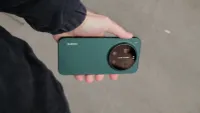
The Find X9 Ultra is one of the coolest-looking phones I’ve used in a long time. In Europe, the phone comes in two colors, although the hero is Tundra Umber, which is the version I have. It looks like a mini Hasselblad X2D camera, and I absolutely love it.
Oppo has really nailed the details, from the vegan leather two-tone back that feels soft and warm in the hand, to the horizontally aligned Oppo and Hasselblad branding. The camera housing has a knurled ring that echoes a lens focus ring, and the orange accent on the camera button adds just enough playful contrast without ruining the look. Overall finish is just really premium, and it's a phone I genuinely enjoy picking up and using.
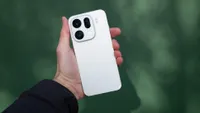
I am much less convinced by Canyon Orange. It does look better in person than in the press shots, but next to Tundra Umber, it loses all the understated Hasselblad chic. It is bold, bright, and far more attention-grabbing, which I'm sure some people will like, but for me, only one of these colorways really looks like a photography tool.

In the hand, this is a big, hefty flagship at 235-236g, which is around 30g heavier than a Samsung S26 Ultra, but if you want this sort of camera capabilities, you roll with the punches.
Like most modern flagships, the X9 Ultra has IP66, IP68, and IP69 ratings for dust and water resistance, plus Armour Shield drop-protection architecture. Despite a few minor drops and being thrown in and out of bags while I'm travelling, I've found that after a couple of weeks, there's no obvious wear, especially on the soft leather back. There is also a factory-applied screen protector, love them or hate them, but this has already taken the hit on a few minor scratches, so I'm grateful for it.
The usual power and volume buttons are present, alongside Oppo’s customizable action button, which replaced the old alert slider a few generations ago and can be assigned to functions like alerts, flashlight, Do Not Disturb, AI features, and more.
There is also Oppo’s dedicated camera button, finished in orange on the Tundra model, and I like the visual pop. The camera button supports swiping to zoom, and a half-press for focus and exposure lock, but I still found myself preferring the on-screen controls most of the time, as, for me, they are just far faster and easier to use, as I find camera buttons so fiddly. It also does not work in Portrait mode, which is my default orientation.


The Find X9 Ultra is also launching alongside an optional Hasselblad Earth Explorer Kit – also inspired by the Hasselblad X2D – and no, there is no orange version, thank god. The case adds a small grip, a two-stage shutter button, a zoom rocker, and interchangeable rings for 67mm filters or Oppo’s 300mm teleconverter.
It feels really well-made and really premium, and it really does make the whole package feel more like a compact camera. It's the best-looking and feeling camera photography kit I have used, and it puts Vivo's slightly plastic-y kit to shame. The design matches the phone itself, with the same vegan leather across the back, while the adapter rings are all solid metal, which feel very sturdy.
The zoom rocker works well, and the shutter button is excellent, but I still wish Oppo had either added an exposure compensation dial or let me remap the zoom control for exposure compensation, which, for me, feels far more useful in fast shooting. Oppo might have the prettiest photography case, but Xiaomi's and Vivo's are still the more practical.
There is also an optional 300mm teleconverter. It is a big lens, it's all-metal with 16 glass elements in 11 groups, including four ED elements, and it mounts to the optional camera case. Frustratingly, the lens mount is different from the teleconverter for the Find X9 Pro, so the two lenses/phones are not interchangeable. I really hope that, going forward, Oppo has thought about a standardized lens mount, as buying a new lens for each new phone is going to get expensive and wasteful.
The lens is not discreet in the slightest, still, I actually prefer the design here to some rival approaches because the all-black finish is a little more discreet than the shinier silver alternatives we are now seeing elsewhere. But the lens is big and bulky enough that once you have it attached, the phone basically becomes a real camera rather than anything you would casually slip into a pocket.


The display is another stunning panel. It has a 6.82-inch QHD+ LTPO AMOLED panel with a 1-144Hz refresh rate, 510ppi, up to 1800 nits full-screen brightness, and 3600 nits peak HDR brightness.
In use, it is superb, with sharp details and clear text, and the refresh rate also keeps everything smooth when switching in and out of apps or scrubbing video. Colors are fantastic – bright and rich. Oppo gives some control over screen colors with Standard, Natural, and Vivid modes, and I found Natural the most pleasing for accurate photo and video work, though I still wish Oppo offered a little more granular control over saturation, as I think my perfect level is somewhere between Natural and Vivid.
I didn't struggle to use the screen outdoors, even in bright sunshine. The feature I find more useful is that it can also drop to 1 nit for comfortable nighttime viewing, helping with late-night eye strain, or without disturbing others in the room. Oppo has also added 2160Hz PWM dimming for better eye health, plus circular polarization for better visibility with polarized sunglasses.
Camera Performance
The Find X9 Ultra’s camera setup is kind of outrageous. Five cameras and no filler. Too many phones still have one genuinely great camera, and then some others to tick boxes.
You get a 50MP ultrawide with a 1/1.95-inch sensor, a 200MP 1/1.12-inch main camera, a 200MP 3x telephoto with a 1/1.28-inch sensor, a 50MP 10x telephoto, and a new True Color camera for more accurate color information. Oppo calls this the Hasselblad Master Camera System, and the focal length coverage stretches from 14mm to 230mm optically, while sensor crops extend that even further to a whopping 460mm equivalent. And for once, I didn’t really care which lens I was using, rather than sticking stubbornly to the main sensor.
Main camera
The main camera is built around a 200MP Sony LYT-901 sensor measuring 1/1.12-inch, which is the largest 200MP sensor yet used in a phone. It’s a size reduction from the 50MP 1-inch sensor in the previous Ultra, but it is now a higher resolution for combining pixels, and paired with a wider f/1.5 aperture, Oppo claims gives it the same light intake. The main sensor also benefits from Oppo’s Real-Time Triple Exposure HDR processing, which combines several photos into one to improve dynamic range.
In use, it is a very very good main camera. Detail is excellent, dynamic range is strong, and colors in the standard mode are generally very accurate. I suspect some users may think the default color is a little understated, but for my taste, it is pretty spot on.
The default processing in regular photo mode can push sharpening a bit too far, and in some scenes, the HDR had a slightly overdone look. It is not bad by any stretch, and it will probably please plenty of people who just want “perfect-looking” images straight from the camera, but it is not my preferred rendering style. Coming off the back of testing the Xiaomi 17 Ultra, I think Xiaomi’s LOFIC sensor tech just produces some cleaner HDR that looks more natural rather than processed.
That said, Oppo’s answer to this issue is also one of the best reasons to buy the phone at all: Hasselblad Master mode. I absolutely love it. This strips away a lot of the more obvious phone-style processing and gives you images with more natural sharpness, more believable shadow handling, and a more camera-like overall feel. I found it especially effective at night, where the standard mode can lean too hard on processing, while Master mode gives you deeper shadows and more natural highlights.


3x telephoto
If I had to pick just one camera on the X9 Ultra, it would be the 3x telephoto. It's a 200MP periscope camera with a 70mm equivalent focal length, a huge 1/1.28-inch sensor, and an f/2.2 aperture. In other words, it is absurdly over-specced by the standards of most phone telephotos, with a bigger sensor than other flagships’ main camera.
Image quality at 70mm is absolutely superb. Photos are super sharp, and there is good falloff around the subject, and images have a genuinely photographic quality to them that makes them feel closer to a proper camera than most phone telephoto shots do. This is the lens I kept gravitating back to because it looks so good, and because 70mm is such a useful focal length for portraits, detail shots, travel scenes, and more compressed street images.
It also crops brilliantly. Because of the 200MP resolution, Oppo can offer a 6x in-sensor crop that still produces 50MP images with what it describes as optical quality. In good light, I found there was no perceptible dip in quality. Once you get into darker conditions, the crop starts to look a little grainier, with some detail becoming slightly oversharpened. But even then, it remains incredibly usable, and I was genuinely shocked by how much detail I could pull from very low light at a relatively long focal length. For me, this is easily one of the best telephoto cameras I have used on any phone.


Macro
Macro performance is superb; you can get in as close as 15cm. The camera isn't quite enough to pull out microscopic details; you'll still need a proper macro lens and some focus stacking, but for most things you'll want to shoot day to day, you can get some excellent macro shots.


10x telephoto
As the world’s first 50MP 10x camera, it's by far the most interesting camera of the X9 Ultra because it is just such an ambitious focal length to squeeze into this size, while still giving it a decent-sized sensor. It is a 50MP 230mm-equivalent telephoto with an f/3.5 aperture, a 1/2.75-inch sensor, and sensor-shift stabilization.
And there is an obvious jump in quality compared to normal digital zoom, and even once you start cropping further, at 460mm equivalent focal lengths, I was getting such remarkable results. I am also so impressed by how capable this camera is in lower light. It’s not the largest sensor in the system, but it held up much better than I anticipated.
The 10x just wipes the floor with some other mainstream zooms. Take a look below at the Oppo versus the Google Pixel 10 Pro XL, which really shows the limits of computational photography versus good hardware.

Oppo Find X9 Ultra
Image credit: Future

Google Pixel 10 Pro XL
Image credit: Future
Ultrawide
The ultrawide is probably the least special camera in the lineup, but that says more about the strength of the other lenses than any weaknesses. It uses a 50MP sensor with autofocus, and in good light, it is very good indeed. It captures a strong amount of detail, colors remain nicely in line with the rest of the system, and it performs better at night than I expected. That said, it is still the camera where I saw the most noise, the most oversharpening, and the longest exposures compared to the others.

Master Mode
Hasselblad Master mode is easily my favorite feature on the phone. Beyond the more natural default rendering, Oppo has also expanded it with a selection of new filters, which it has referred to as film simulations. They are not really simulations in the Fujifilm sense, as they are not based on Fujifilm’s library of film emulations as a starting point to build on. They are closer to a photo LUT, but they do offer a level of deeper customization or tonal control I love. I particularly like Oppo’s take on Portra. It is not going to fool anybody into thinking they are looking at film, but it gives images a pleasant warmth and softness in the shadows that makes for very nice results.


I still think Oppo could go further. There is no way to shoot a stylized JPG and keep a RAW backup at the same time; you have to shoot in RAW and then convert it to a JPG after, which just adds an unnecessary step to the process, and is annoying if I want a fast, stylized shot for social media but also a clean file to work on later. There also seems to be a slight film grain applied to some of Oppo’s presets, but I can’t find anywhere in the custom settings to do this. Maybe I am just seeing the film grain when it’s not there, but I’d love to see the app update to add this, as it's a key element of emulating film photos.
Finally, this goes for all photo modes, but as Master Mode is the most “Pro” mode, I would love finer control over the autofocus reticle, as it’s just one size, which is reasonably big, so quite often when trying to focus through a crowded scene, the autofocus couldn’t pick out the exact thing I was tapping on. You can switch to manual focus, but I feel a single point autofocus option is the easiest solution.
Hasselblad Teleconverter
I love this teleconverter. There is such an obvious quality improvement over digital zoom, and the results can look genuinely photographic in a way that I don’t think you could tell that this was a phone and not a dedicated camera.
The problem is that Oppo separates it into its own mode, which means you cannot use it in Master mode, so you can’t use any of your presets. That is just such a frustrating limitation on a device this good. I want a simple toggle to enable the lens from within the regular shooting modes, which is how it is done on Vivo phones. I am hoping that this can be fixed with a software update, rather than having to wait for the next generation.


Video
Oppo has gone properly big on video in the X9 Ultra. Every rear and front camera supports 4K 60p Dolby Vision, while the main and 3x cameras can also shoot 4K 120p Dolby Vision and 8K 30p. Oppo has also added O-Log 2, ACES support, real-time LUT preview, and the ability to burn in LUTs from standard .cube files.
Video quality is fantastic, autofocus is quick, and video stabilization is very good. There are a few minor quirks. I can’t find anywhere in the video app that tells me what microphone I am using, so plugging in a receiver, there is no indication in the video app that it's actually using my external mic to record. The autofocus is also just a little bit too jumpy. I can manually lock on to subjects, but I would love to see more subject detection and tracking similar to a digital camera to make the whole process a little easier.
Phone Performance
Like most 2026 flagships, the Find X9 Ultra is powered by the Snapdragon 8 Elite Gen 5, and in day-to-day use, it feels incredibly speedy, and I did not notice a single stutter in normal use. More importantly, I had no issue editing 4K 120p or 8K footage shot on the phone in CapCut, and exports were quick. For photos, snapping 200MP images in the Hasselblad high-res mode was far quicker than on the X9 Pro, and there was none of the mosaic style capturing requiring me to hold the camera steady.
Thermals also seem reasonably well managed, with Oppo saying the phone has a new Encapsulated Thermal Unit, vapor chamber cooling, and graphite layers designed to deal with heat spikes. I am not a gamer, but for tasks like capturing 8K and 4K120 video, while the phone got a little warm, I certainly did not run into alarming heat problems in my use.
| Row 0 - Cell 0 | Oppo Find X9 Ultra (Snapdragon 8 Elite Gen 5) |
Oppo Find X8 Ultra (Qualcomm Snapdragon 8 Elite) |
Xiaomi 17 Ultra (Snapdragon 8 Elite Gen 5) |
Vivo X300 Ultra (Snapdragon 8 Elite Gen 5) |
GeekBench 6 CPU (Single Core) |
3548 |
3086 |
3560 |
3632 |
GeekBench 6 CPU (Multi Core) |
10701 |
9389 |
10512 |
10619 |
3DMark (Wildlife Extreme) High |
7246 |
6462 |
6609 |
6620 |
3DMark (Wildlife Extreme) Low |
4255 |
3244 |
4556 |
4299 |
The battery isn't quite the monster squeezed into the Find X9 Pro, with a slightly smaller 7050mAh cell. Although the silicon-carbon battery is pretty enormous for a flagship camera phone, and in my own use, I was getting around a day of heavy shooting, and a day and a half of mixed use from a charge.
Wired charging tops out at 100W, wireless at 50W, and while you need the right SuperVOOC or AirVOOC charger to hit the headline figures, you can still get 55W charging with USB-PD, and I managed to charge to around 34% in 15 minutes and 63% in 30 minutes from empty, which is enough to relieve any battery anxiety.
The software is ColorOS 16 based on Android 16, and I am a big fan, and, in fact, it is my favorite Android skin. It looks clean, feels fluid, and adds genuinely useful features without becoming irritating. This time around, Oppo has added a cleaner lock screen, which can hide notifications in a notification drawer at the bottom of the screen, removing them as a distraction. Oppo is also promising that Apple Airdrop support via Google's QuickShare will be coming soon.
The software has Oppo's usual suite of AI photo editing tools. There is nothing new on the Ultra that we haven't seen before, but then Oppo already had one of the most well-rounded groups of tools. There are options to AI erasers, reflection removal, perfect shot to change expressions or open blinking eyes, enhance clarity, or change the lighting in portraits.

Before AI reflection removal
Image credit: Future

After AI reflection removal
Image credit: Future
The tools generally work well, or at least as well as I have seen gen-AI on other devices. For small fixes with easy-to-replicate backgrounds, the results are usually very good, but more complicated generations do tend to trip it up, and occasionally, there are some interesting hallucinations. The less gen-AI heavy tools are better, the reflection removal tool is usually pretty solid, and the unblur has saved my shaky hands a couple of times.

Before AI eraser
Image credit: Future

After AI eraser
Image credit: Future
Final Verdict
For me, the Oppo Find X9 Ultra is hands down the best camera phone I’ve used yet. Does a phone need four cameras? It depends on who you ask, but now that I have spent a few weeks with the phone, my resounding answer is yes. The 3x camera is phenomenal, the 10x camera zoom range is incredibly useful, and the quality far exceeds any digital zoom. Hasselblad Master mode is also a standout; it finally gives me exactly the kind of less-processed, more camera-like images with custom film recipes I've been wanting from a flagship phone. Add in superb video, excellent battery life, a gorgeous screen, and a design in Tundra Umber that I absolutely love, and Oppo has made my perfect camera phone.
It is not completely flawless. Standard mode can still look too processed for my taste, the teleconverter integration is more limited than it should be, and there are still some minor settings tweaks I'd love to see. But if your priority is having the most capable, most versatile, most photography-focused phone possible, the Find X9 Ultra is exceptionally hard to argue against.
Design ★★★★★ |
A very cool camera-inspired flagship in Tundra Umber. The optional grip case also makes it feel closer than ever to a real compact camera replacement. |
Camera Performance ★★★★★ |
The most complete and convincing camera system I’ve used on a phone, with exceptional telephotos and a brilliant Master mode. |
Phone Performance ★★★★★ |
Blisteringly fast, long-lasting, and fully capable of handling serious photo and video workloads without fuss. |
Value ★★★★½ |
A pricey phone, but for a flagship with this amount of camera hardware, the price is better than expected. |
Overall |
★★★★★ |

Alternatives