




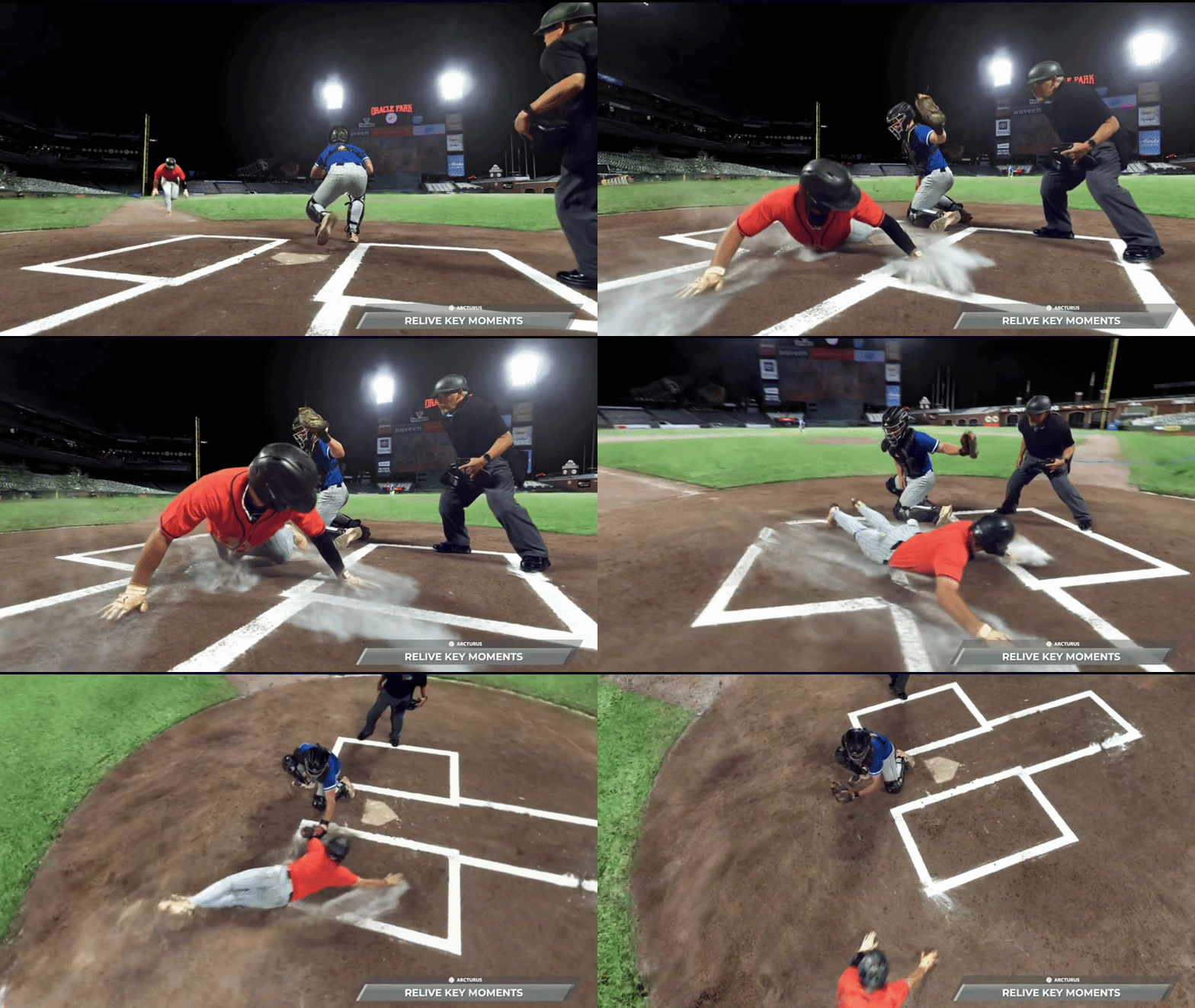
I’ve just seen an Instagram video that’s left me with mixed feelings about the future of videography, photography and sports.
Jason Fisher, former head of production at Disney, Paramount and AMC, calls Arcturus' admittedly impressive ‘Stage’ technology as “the future of sports production”.
As the video demonstrates, by positioning specialist cameras around a sports arena, Stage creates a web of imagery with which to create a full 3D render using AI to produce a “3D digital twin” of the action in real time.
The camera’s point of view can then be moved anywhere around the map, allowing for a huge range of previously impossible camera angles.
If you’ve ever played a sports game such as EA’s Madden NFL or FC (formerly FIFA), this would appear to function very similarly to the instant-replay feature that enables you to move a camera around the pitch at almost any angle.
Jason finishes the video by stating: “we’re no longer constrained by the physics of where you can place a camera, so the question now, it isn’t about tech, it’s about creative.”

As is often the case with emerging tech, I don’t have anything against the tech itself. It looks extremely impressive! But I am worried about the application and the ramifications that this could have on content creators and sports fans in general.
I can see something like Stage working very well in-studio for in-game or halftime analysis. But if the technology becomes realistic enough to start creeping its way into the broadcast itself, I would warn that no limitations and an abundance of information aren't always a good thing.
Firstly, all creatives understand that limitations can empower creativity. Break down those limitations – for example, no camera angle being beyond limits – and you risk having an adverse effect. I’ll talk more about this in due course, but sports are inherently human, and human camera operators and photographers play a key role in that human element.
Finding the best angle and choosing what to frame is a very human decision that's empowered by limitations. Shaky cameras, moments that aren't perfectly focused, celebrating players obscuring the view – these ‘imperfections’ all contribute to the emotional quality of the traditional broadcast viewing experience.
Secondly, I’m of the mind that too much information can negatively impact a sport. I’ll turn to the introduction of VAR technology in soccer to bolster my case. On paper, it should have been fantastic; no team would ever have to suffer the injustice of an incorrect refereeing decision again.
However, VAR has proven somewhat controversial among sports fans. Not only has it been unable to completely stamp out unfair decisions, there’s an argument that it ruins the flow of a game as the referee takes time out to review potential violations.
This is perhaps most noticeable when a goal is scored, with fan celebrations often put on hold to check the legality of the goal, thus sullying the immediate passion and energy of the experience. You could argue that what we don't see or know, as well as human error, all add to the emotional rollercoaster that makes sports so engrossing.
Last year I wrote an article about how boxing spectacle Eubank Jr vs Benn reminded me why sports photography must never be fully AI-automated. And that’s because sports are fundamentally human, and the misuse of emerging technology, risks diminishing that human element.
Let’s face it: the biggest draw of sports isn’t what’s happening on the field of play, it’s how it makes you and those around you feel. It’s about the discussion, the arguments, the passion, the emotion.
Too much information and too much creative freedom risks impacting the vital human element of sports negatively. I don’t think technology like Stage is inherently bad, I think it’s extremely exciting, but only if it’s used properly and doesn’t impact the human element in the process.
You might also like...
If you're into sports photography, check out the best cameras for sports and the best sports lenses. Plus, here's how to photograph soccer.

