
Wildlife is one of the most popular forms of photography. It’s also a genre where having the latest and greatest camera gear, while not essential, really does help. And yet fast autofocus, zippy burst speeds, and high-resolution sensors mean nothing if you’re wrestling with your setup.
You see, we live in a world where photography has increasingly become about making things smaller, lighter, more compact. That was the whole point of the mirrorless era after all. But when it comes to wildlife photography, small cameras are often more of a hindrance than a help.
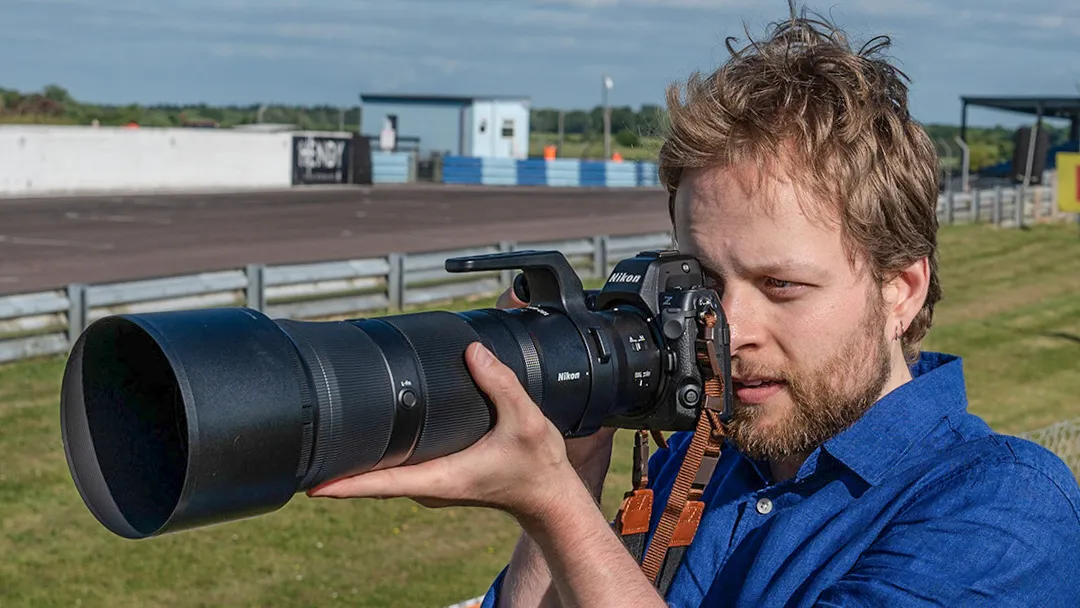
If you put even a moderately sized telephoto lens on a Nikon Zf, Panasonic Lumix S9, or Fujifilm X-E5, you’re going to struggle because the setup will be both too top-heavy and lacking enough grip. Controls might be an issue, too; wildlife photography is about reacting immediately, and if your camera doesn’t have enough physical controls to adjust your exposure settings in an instant, you’ll struggle.
That’s not to say you can’t use any of the aforementioned cameras for wildlife photography. But if you spend any amount of time capturing wildlife, unsuitable ergonomics will become an increasing problem.
What makes a good wildlife camera?

Obviously, every photographer is different. But generally, good wildlife ergonomics will include a camera that’s heavy enough to balance big lenses so they don’t feel top-heavy, along with a deep grip allowing for plenty of purchase. How big the camera is will depend on the size of your hands.
Some photographers may prefer a smaller, solid camera with a deep grip like the OM System OM-1 Mark II or the Fujifilm X-H2S, while those with larger hands may prefer a chunkier Canon EOS R5 Mark II or Nikon Z8, or an even chunkier Canon EOS R1 or Nikon Z9.
All of the aforementioned cameras also sport really well-placed physical dials and buttons, as well as plenty of customizable buttons so you can set up your camera in the most comfortable way possible.
You might also like...
Check out the best cameras for wildlife photography and the best lenses for bird photography. Plus, here's the latest camera news.

