





The compact cinema camera market has become increasingly competitive in recent years, with manufacturers finding new ways to squeeze professional filmmaking features into smaller, lighter, and more affordable bodies. However, one camera that continues to catch my attention is the Nikon ZR.
Priced at $2,199.95 in the US at Adorama, or B&H, and currently available for just £1,999 in the UK from Wex, or Park Cameras, down from £2,199, Nikon's first cinema camera developed with RED represents a particularly interesting proposition.
We're talking about a full-frame cinema camera with some genuinely impressive filmmaking credentials, yet it costs considerably less than many of the established professional alternatives. For independent filmmakers, content creators, and even photographers looking to explore filmmaking, I think that's a pretty compelling starting point.
But what exactly are you getting for your money? Well, underneath that rather understated exterior sits a 24.5MP partially stacked full-frame sensor capable of recording 6K video at up to 60fps, including internal 12-bit RAW recording using Nikon's R3D NE format, developed with RED.
That's a pretty serious specification for a camera at this price point, especially when you consider the RED color science, dual-base ISO settings of 800 and 6400, and Nikon's claimed dynamic range of more than 15 stops. There's also support for N-RAW and ProRes RAW, giving filmmakers considerable flexibility when it comes to editing and color grading. To me, this is arguably the ZR's biggest selling point. You're getting access to a genuinely sophisticated RAW video workflow without having to invest in a much larger, more expensive cinema system.
However, it's not just the image quality that makes the Nikon ZR interesting. Nikon has clearly understood that modern filmmakers want equipment that works just as well when shooting independently as it does on a professional production. The ZR features a large 4-inch vari-angle touchscreen, in-body image stabilization, intelligent subject-detection autofocus, and perhaps one of its most impressive features, internal 32-bit float audio recording.
Being able to capture high-quality audio directly into the camera, with greater flexibility to adjust levels in post-production, is a huge advantage for anyone recording interviews, documentaries, or spontaneous content. Better still, the entire body weighs approximately 540g, making it incredibly portable and ideal for handheld shooting or mounting on a compact gimbal. For someone who appreciates smaller cameras that don't compromise on their creative potential, there's a lot here to get excited about.
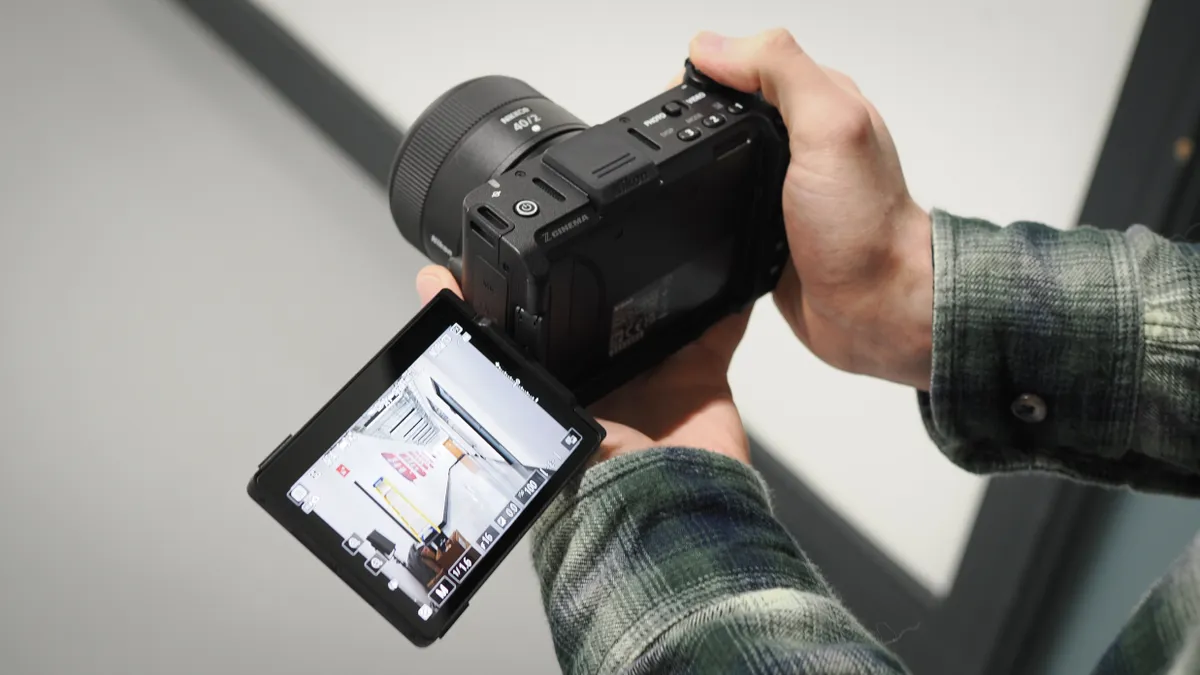
Of course, Nikon isn't operating in an empty market. Cameras such as the Sony FX3, Sony FX30, Canon EOS C50, and Blackmagic Cinema Camera 6K have already demonstrated just how much demand there is for compact filmmaking systems. Yet I think Nikon has approached things slightly differently with the ZR, combining the familiarity and versatility of its Z-mount mirrorless ecosystem with the filmmaking heritage of RED. It isn't perfect, of course.
There's no built-in electronic viewfinder, no internal ND filters, and the inclusion of micro HDMI rather than a full-size connection might frustrate filmmakers who rely on external monitoring equipment. You also only get one CFexpress Type B slot alongside a slower microSD slot, which limits your options for redundant high-bitrate recording. Nevertheless, these are compromises I can understand when you consider the camera's size, price, and overall capabilities.
So, is the Nikon ZR worth its asking price? Personally, I think it's one of the more interesting compact cinema cameras currently available, particularly when you consider what Nikon has managed to offer for around $2,200 or less than £2,000. Naturally, you'll still need to factor in lenses, memory cards, and potentially some additional accessories, but the foundations of a remarkably capable filmmaking setup are already there.
What excites me most, however, is what the ZR represents for the wider camera industry. Professional filmmaking technology is becoming increasingly accessible, and cameras like this are challenging the idea that you need to spend thousands more to produce genuinely cinematic results. The market might be crowded, but if Nikon can continue delivering this level of performance at such competitive prices, I have a feeling the ZR could be just the beginning of something much bigger.

