
Having a great camera phone is essential for taking amazing photos wherever you are, whenever you’d like. After all, not everyone can carry around a big DSLR at all times. I love a good camera phone because it’s simply convenient. As technology continues to progress, the best camera phones have powerful image sensors, incredible features, and the ability to process and edit images with the touch of a button.
☑️ Over two thousand products tested and reviewed
📷 7 years of experience testing phones, camera gear, and accessories
👥 Team of knowledgeable and passionate reviewers who love photography
✖️ Reviews and guides are unbiased – and never influenced by brands
With all that technology out there, though, it can be hard to make a decision on what phone is best for you. That’s where I come in. At DCW, we’ve tested all of these camera phones firsthand so you can be sure that I know which ones truly take the best photos. And since I am also a photographer, I really do know how to distinguish a good photo from a bad one.
If you want to get right into it, my favorite overall pick for both photo and video is the Apple iPhone 17 Pro Max with stunning quality and ease of use. If you’re just a photo enthusiast, then the Google Pixel 10 Pro / 10 Pro XL is the way to go, as I love their cameras for photography and AI editing smarts.
Finally, this guide is a mix of phones from all manufacturers, but if you are specifically team Apple or team Android, then you might want to check out my specific best iPhone or best Android phone for photography guides.

Gareth is the Reviews Editor at Digital Camera World – and the person in charge of approving all the latest camera-related tech. As an experienced photographer, he is always on the lookout for top camera phone quality to rival his mirrorless cameras, and always jumping between Android and iOS, he knows each system's strengths and weaknesses when it comes to photo and video.
The best camera phones
Why you can trust Digital Camera World Our expert reviewers spend hours testing and comparing products and services so you can choose the best for you. Find out how we test.
The best phone for photography
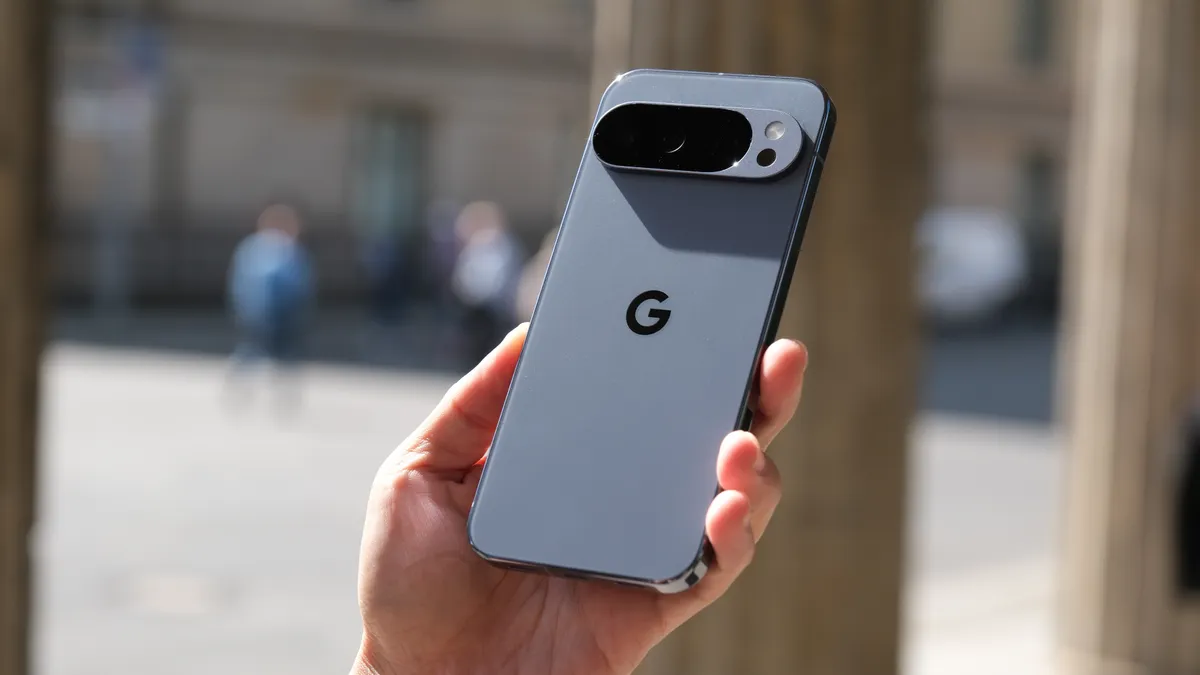
Again, Google has released its flagship in two sizes, but has equipped both sizes of phone with identical camera setups and other specs. With no trade-offs to make between the two – you just need to decide if a 6.3-inch Pixel 10 Pro or 6.8-inch Pixel 10 Pro XL screen suits your hands and pockets more comfortably.
The Pixel 10 Pros have seen a very modest update in cameras from last year's models, with the same trio of sensors in the rear. But that really doesn't matter, as just as the Pixel 9 Pro sat atop our list of best camera phones, with the Pixel 10 Pros, Google is keeping the good times rolling.
The quality and consistency of its cameras are sublime, with the phones particularly excelling in night-time photography. But where Google is improving is with its ever-increasing stable of AI-enhanced modes like blur reduction, which uses machine learning to unblur images, and 'Best Take', which lets you swap the expressions of photo participants so everyone looks their best. Google has also introduced a new AI-assisted Pro Res Zoom that provides brilliantly sharp results beyond the phone's usual optical limits.


For anyone who wants to get a bit more serious with their photography, the Pixel 10 Pros also have a RAW capture, letting you take full advantage of the megapixel-packed sensor, as well as a new pro controls mode giving you manual control over the look of your images, just like you might get with a mirrorless camera.
Although when it comes to video, it still can't quite compete with the iPhone 16 Pro Max. Google has added a neat new Video Boost, though, which uses AI in the cloud to clean up dark video to improve clarity, which works nicely but is not a make-or-break feature, although this doesn't work on the ultra-wide camera.
With a sleek new design that flattens out the sides and the screen, this is also the best-looking Pixel yet. The screen is beautiful to use and gives Apple a run for its money in clarity and color. Google is also now future-proofing its phones by way of continued software support for up to 7 years. You do get a lot for your money here, as well as some peace of mind, as yet again the Pixel range has gone up in price.
Design ★★★★★ |
The Pixel 10 Pro is beautifully built, feels superb in the hand, and its display is a genuine standout feature. |
Camera Performance ★★★★½ |
Still photography remains Google’s strongest suit, with reliable results time after time, now improved by a sharper 100x super-res zoom, the helpful camera coach, and powerful AI editing tools. |
Phone Performance ★★★½☆ |
The latest Tensor chip might not win benchmark races, but in daily use it feels smooth and responsive, with enough stamina from the battery to just about last a full day. |
Value ★★★★☆ |
Its a pricey phone, but with an excellent design, build, screen and triple camera setup, the Pixel 10 Pro offers value that goes head to head with Apple and Samsung. |
Overall |
★★★★½ |
Read more: Google Pixel 10 Pro & 10 Pro XL review
The best phone for video

The iPhone 17 Pro series represents Apple’s most capable camera phone push to date. At 6.9″ for the Pro Max, the screen still delivers 120Hz ProMotion and now peaks at around 3,000 nits with an anti-reflective coating, making it easier to use outdoors. Inside, the A19 Pro chip is paired with a vapour-chamber cooling system to sustain high performance and long battery life, even under heavy use.
The camera system is the headline upgrade: all three rear lenses (wide, ultra-wide, and telephoto) are now 48 MP sensors, and the telephoto now supports 4x optical zoom (and up to 8x hybrid). This gives the phone a broader focal-length reach – approaching 70-200 mm equivalent – something we’ve rarely seen in an iPhone before. The front camera also gets a significant overhaul: an 18 MP “Center Stage” unit uses a larger sensor and smarter framing to make selfies and group shots easier to capture.


In terms of design, Apple switches back to an aluminium unibody instead of titanium, allowing for bold new finishes (including Cosmic Orange) and a full-width camera “plateau”. The phone is slightly larger/heavier than last year’s model, but that seems part of the trade-off for the bigger camera and battery upgrades.
For users who prioritise photography – especially zoom and content creation – this is arguably the most complete iPhone yet. The improvements across screen brightness, camera versatility, battery life, and performance feel like a proper “pro” step up.
Features ★★★★½ |
This time Apple has got the cameras right (48MP x 3 + 18MP Center Stage) and the battery right (comfortably lasting all day). 5 |
Design ★★★★☆ |
I can't give all the stars because not everyone where I'm reviewing loves it, but I think it was about time we saw a new look for the iPhone. I just hope that the orange still looks good when comes time to trade in. 4 |
Performance ★★★★★ |
Imaging performance across the range is impressive, both in terms of detail and handling of light. 5 |
Value ★★★★☆ |
The number of stars you see here depends a bit on your perception of iPhone, but I'd argue that the option to get everything in a single box could be more efficient than you expect (and I had braced for bigger price rises!). 4 |
Overall |
★★★★½ |
Read more: Apple iPhone 17 Pro Max review
The best camera phone for pros

Hasselblad Master Camera System gives you a 200MP main camera, a 200MP 3x telephoto, a 50MP 10x telephoto, a 50MP ultrawide, and a dedicated True Color camera, covering everything from 14mm to 230mm optically, with sensor crops pushing that reach even further.
The standout is the telephoto performance. The 3x camera is superb, with a huge 1/1.28-inch sensor, excellent detail, and a genuinely photographic look, while the 10x camera just gives the Find X9 Ultra a level of long-range reach that digital zoom in other phones simply cannot match. It is a proper 230mm-equivalent optical camera, and even when pushed further, the results remain far more convincing than most rivals can manage.


Hasselblad’s involvement extends to the look of images. The phone’s Master Mode is one of its best features, giving images a more natural, less processed look than the standard mode, along with film-style presets and deeper tonal control for anyone who wants a more deliberate photographic finish. It is not perfect, and I would still like Oppo to improve RAW/JPEG handling and make the optional teleconverter work more seamlessly across modes, but this is the closest a phone has come to replacing a compact camera for me.
Add in excellent video, strong battery life, a gorgeous display, and an optional Hasselblad-inspired camera grip and teleconverter kit, and the Find X9 Ultra becomes much more than another flagship phone with a big camera bump. It is expensive, but if you want the most versatile and photography-focused camera phone around, this is currently the one to beat.
Design ★★★★★ |
A very cool camera-inspired flagship in Tundra Umber. The optional grip case also makes it feel closer than ever to a real compact camera replacement. |
Camera Performance ★★★★★ |
The most complete and convincing camera system I’ve used on a phone, with exceptional telephotos and a brilliant Master mode. |
Phone Performance ★★★★★ |
Blisteringly fast, long-lasting, and fully capable of handling serious photo and video workloads without fuss. |
Value ★★★★½ |
A pricey phone, but for a flagship with this amount of camera hardware, the price is better than expected. |
Overall |
★★★★★ |
Read more: Oppo Find X9 Ultra review
The best phone for Galaxy fans

The Samsung Galaxy S26 Ultra still delivers the most premium Samsung phone experience, pairing a huge, gorgeous display with top-tier flagship performance and Samsung’s familiar quad-camera setup. This year’s biggest camera changes are more subtle than revolutionary, but the upgraded 200MP main camera now gets a faster f/1.4 lens, while the ultra-wide and 5x telephoto continue to make this one of the most versatile camera systems on any mainstream flagship.


In use, the S26 Ultra is a very capable all-round camera phone. The 200MP main sensor remains the star, producing reliably sharp 12MP shots with plenty of detail and flexibility for cropping, while the ultra-wide performs well in lower light and the 5x zoom still holds up nicely against the iPhone and Pixel. Night photography is also improved, with darker skies and less overblown processing than previous Galaxy Ultras.
That said, Samsung’s familiar weaknesses are still here. Color can be too warm and saturated, processing is still a little heavy-handed, and the 3x camera remains the weak link of the setup. So while the S26 Ultra is another formidable Galaxy camera phone, it still feels more like a refinement than a true leap forward.
Read more: Samsung Galaxy S26 Ultra hands-on review
The best value camera phone

The Nothing Phone (4a) Pro is not trying to outgun the very best flagship camera phones, but for its price, it is a surprisingly capable and enjoyable phone to shoot with. Its main camera uses a 50MP sensor, which is a step up over the regular Phone (4a), and it produces sharp, clean images with particularly good results in lower light. Detail is not quite at true flagship level, but Nothing wisely avoids forcing too much oversharpening, so images still look fairly natural.
The big reason to choose the Pro model, though, is the telephoto camera. You get a 50MP periscope camera with 3.5x optical zoom, equivalent to 80mm, and this quickly becomes the most useful lens on the phone. It is great for tighter framing, portraits, details, and travel shots, and it also handles macro duties, giving close-up images a more flattering perspective than the usual ultrawide macro mode. The 7x in-sensor zoom also holds up well, and I found results usable up to around 10x.


Where the Phone (4a) Pro is less convincing is at the extreme end of its zoom range. Nothing advertises up to 140x ultra zoom, but I would not recommend getting anywhere near that if you want images you might actually use. AI zoom does improve the raw capture, but the results quickly become synthetic and overprocessed. The ultrawide is also the weakest of the three rear cameras, and there can be some color and white balance inconsistencies when switching lenses.
What gives the Nothing Phone (4a) Pro its charm is the shooting experience. Nothing’s custom LUT support is one of the best creative camera features on any phone at this price, letting you create, import, and save camera presets a bit like Fujifilm film recipes. Combined with the distinctive design, Glyph Matrix, and solid everyday camera performance, this is a very easy phone to like. It will not replace an Ultra flagship, but if you want a mid-range camera phone with personality and a genuinely useful telephoto lens, it is a strong choice.
Design ★★★★★ |
Feels more premium and more grown-up than earlier Nothing devices, while still keeping the brand’s quirky personality intact. |
Camera Performance ★★★★☆ |
A very capable mid-range camera setup with a strong main camera and genuinely useful telephoto, though colors and AI zoom could be stonger. |
Camera Performance ★★★★☆ |
Smooth and responsive in everyday use, but struggles a little under heavier editing workloads. |
Value ★★★★☆ |
Competitive with the vast field of mid-range Android phone, but the design helps set it apart. |
Overall |
★★★★☆ |
Read more: Nothing Phone (4a) Pro review
The best camera phone processing

The Xiaomi 17 Ultra is a standout contender in the premium camera phone category, thanks to its Leica co-engineering, huge 1-inch main sensor, and unusually ambitious approach to zoom. It pairs a 50MP 23mm main camera with a 50MP ultra-wide and a new 200MP telephoto that uses a mechanical optical zoom covering roughly 75-100mm, giving it a distinctive mix of classic focal lengths in one device.
Leica’s involvement again gives the phone a strong photographic identity, and that is a big part of the appeal here. In testing, the main camera proved excellent, with particularly strong low-light performance, while Xiaomi’s Leica color profiles help images look more deliberate and camera-like than many rival flagships. The phone also supports optical-quality in-sensor zoom up to 400mm, adding even more reach for photographers who like to experiment.


Image quality is excellent overall, and the 1-inch sensor remains one of the biggest reasons to consider this phone over more mainstream rivals. The Xiaomi 17 Ultra is also fast enough to feel like a true flagship in everyday use, with Snapdragon 8 Elite Gen 5 power and a large 6,000mAh battery backing up its camera ambitions.
There are a few drawbacks, though. Lens-to-lens color consistency is not perfect, the mechanically clever zoom is more impressive technically than transformational in practice, and macro performance is a little weaker than before because of the longer minimum focusing distance.
Overall, the Xiaomi 17 Ultra is an exceptional choice for serious mobile photographers who want one of the boldest, most camera-like phones on the market right now
Design ★★★★½ |
It looks and feels premium, and I quite like the Starlit Green finish, although the camera bump is still very large. Excellent quality screen, now with flat edges. |
Camera Performance ★★★★½ |
The camera quality is outstanding, and the Leica tones make it feel more like a real camera, but lens inconsistencies really frustrate me. |
Phone Performance ★★★★½ |
It’s incredibly fast and great for editing, though battery life is a little disappointing, and HyperOS could still use a little polishing. |
Value ★★★★½ |
Pricey, but I think it earns its price for photographers, but if you're not that bothered about cameras, you can get flagship specs for less. |
Overall |
★★★★☆ |
Read more: Xiaomi 17 Ultra review
The best value iPhone

The iPhone 17 introduces a number of meaningful upgrades while maintaining a familiar overall design. The 6.3" Super Retina display now benefits from 120 Hz ProMotion and an Always On mode, delivering smoother visuals and enhanced usability compared with the previous model.
Under the hood, the A19 chip powers a new generation of image-processing features thanks to its expanded Neural Accelerator core, bringing improved photographic styles and smarter algorithms.


On the camera front, the main sensor is now 48 MP with a quad-pixel architecture, at once enabling high-resolution detail and solid low-light capture. The ultra-wide lens gets a bump too, allowing up to 48 MP captures, which means greater freedom for expansive scenes and creative framing. The front camera undergoes its biggest leap: an 18 MP square sensor paired with the new Centre Stage framing system. This lets the phone intelligently reorient between portrait and landscape selfies, making the process of capturing group shots or switching orientations seamless.
However, if you were hoping for major gains in optical zoom reach, this model sticks with a 2x optical zoom (based on the central portion of the sensor), meaning it doesn’t deliver the extended reach of higher-end models.
In practical use, the iPhone 17 performs reliably for everyday photography and video creation: low-light stills are improved with sharper outcomes and more background detail than its predecessor, and handheld video modes benefit from enhanced stabilisation.
Read more: Apple iPhone 17 review
The best foldable camera phone

The Honor Magic V5 arrives as a sleek and ambitious foldable, delivering one of the most refined “book-style” folds available. It is impressively thin and light for its class, making it feel closer to a standard smartphone than many bulkier rivals.
Internally, it’s powered by the latest Snapdragon 8 Elite chipset paired with a large 5,820 mAh “silicon-carbon” battery, offering strong performance and stamina for a foldable form. The screen experience is excellent: both the outer cover display and the inner fold-out panel deliver smooth 120 Hz refresh rates and minimal visible crease, and almost tablet-like when open.


Camera-wise, the Magic V5 houses a capable triple-lens array: a 50 MP main shooter, a 50 MP ultra-wide, and a 64 MP telephoto with 3x optical zoom and solid performance in low light and tricky lighting conditions.
For those seeking a premium foldable that feels refined, performs well, and offers serious flexibility, the Magic V5 is a strong contender – but if flawless photography is your top priority, there are still much better non-folding options.
Design |
Super slim and lightweight for a foldable, with a robust hinge and excellent displays. The oversized camera bump spoils the otherwise refined design. 5 |
Cameras |
A reliable triple camera system with a standout telephoto. Processing can be a little heavy-handed, but results are solid across the board, even in tricky light. 4 |
Performance |
Snapdragon 8 Elite and 16GB RAM deliver flagship-level speed, with useful (if occasionally gimmicky) AI editing tools. Battery life is excellent, with fast wired and wireless charging. 5 |
Value |
Competitive against rival foldables, but you can get stronger cameras for less if you don’t need a folding design. Long software support adds real longevity. 4 |
Overall |
★★★★½ |
Read more: Honor Magic V5 review
The best value flagship

The OnePlus 15 delivers top-tier performance, a sleek new design, and outstanding battery life, making it one of the more compelling flagship Android phones this year. Powered by the latest Snapdragon 8 Elite Gen 5 chip combined with LPDDR5X Ultra+ RAM, it handles demanding apps and gaming with ease.
Its 6.78-inch flat AMOLED display supports up to a 165 Hz refresh rate, offering smooth scrolling and responsiveness whether you’re navigating the interface or playing fast-paced games. Design-wise, OnePlus has evolved from the “fun” textures of the previous generation to a more refined aesthetic – you’ll find matte finishes like Sand Storm, Infinite Black, and Ultra Violet, combined with a frosted glass or fiberglass rear and a slim square camera island that improves grip and keeps fingerprints away from the lenses.


On the camera front, the triple-50 MP setup (wide, ultrawide, and telephoto) is solid and reliable with crisp detail and accurate colour rendition in good light. However, despite launching the new “DetailMax” engine – marking OnePlus’ departure from its previous partnership with Hasselblad – the improvements are more incremental than revolutionary.
Battery life is a standout: the 7,300 mAh cell comfortably lasts a full day of heavy use and can stretch into a second day on lighter use, and the SuperVOOC charging technology (120 W wired / 50 W wireless) keeps downtime minimal.
Features |
New design language looks much cleaner with great color choices. The decision to move the cameras into a square island looks a little familiar, but it makes a big difference for holding the phone without getting fingerprints on the lenses. 4.5 |
Design |
Solid camera system with great sharpness, colors, and consistency between the lenses – although there is not the generational leap I hoped to see from the hyped-up new DetailMax image engine. 4 |
Performance |
Blazingly fast, you might not feel the full benefits as a photographer, but if you also like to game, then the OnePlus 15 has you covered. Battery life is also outstanding, with over a day’s power, you won’t be rushing to the charger every evening. 5 |
Value |
For the latest processing power, long-running battery, and solid camera system – it's great value. Undercuts the launch prices of flagships from rival brands, but older rival Pro and Ultra phones are starting to see discounts. 4.5 |
Overall |
★★★★☆ |
Read more: OnePlus 15 review
How to choose the best camera phone
First things first, you need to pick if you prefer an Android or an Apple phone.
This will depend on how much you currently rely on Apple services like iMessage, iCloud, or even Apple's Notes app. If you can't give them up, then you are best sticking with the iPhone, and which one you get depends on whether you want a big or a medium-sized phone, how advanced you need the cameras to be, and how much you are willing to spend. We rate all of Apple's cameras very highly, going from the iPhone 17 Pro Max at the top end to the more affordable iPhone 16e model.
If you aren't locked into Apple services (or can live without them), then you might want to take a look at an Android phone. Your choices are far broader here and include new devices like the best flip and folding phones.
The best Android phones for photography at the moment include entries from household names like the Google Pixel 10 Pro / 10 Pro XL and Samsung Galaxy S25 Ultra. Google includes more of its own services as standard, like Google Photos and the amazing Google Pixel camera. Samsung also has its own set of Samsung apps that fulfill the same purposes in their own style. There are also lesser-known brands in the West that still pack powerful camera systems like the Oppo Find X9 Pro, Xiaomi 15 Ultra, or the Honor Magic 8 Pro. There are also more budget-friendly options that don't skimp on cameras, like the Google Pixel 9a.

What's the best camera phone?
If you're looking for the best camera phone for stills, it has to be the Google Pixel 9 Pro / 10 Pro XL, but if video is more your thing, then the Apple iPhone 17 Pro Max is still the absolute best you can get.
Which is better, Apple iOS or Android?
Well, this is a question that has been and will be debated perpetually. Let's be real, they are both fantastic operating systems, that provide nearly all of the exact same functionality, just in slightly different ways – and both have all the major apps you are likely to use. It comes down to a matter of looks, the one to pick is just the one that you think looks better, and would enjoy using day-to-day.
How we test camera phones
As a Reviews Editor for a photography website, I pay special attention to the photo and video quality of camera phones. I rate resolution, noise, and color rendition in the context of what rival phone cameras can do, and where there are any special features, such as ‘night modes’ or ‘portrait modes’, we check that these perform as the makers describe. We also take a look at what features the phone might include for viewing and editing photos and videos.
Camera phones are all-around digital assistants, too, of course, so we also check out how smart the operating system is at handling general day-to-day usage. Finally, we look at phone usability and practicality – such as design, screen, ports, and battery life.


