
Early Verdict
The Tamron 12-20mm f/2.8 cuts a few mm off the standard 12-24mm, but slides into the competition with a lighter design and a more affordable price point. The lens captures lovely colors with limited flare and aberration, with well-controlled distortion. Sharpness at the center is excellent and only lightly smudged towards the edges.
Reasons to buy
- +
Lightweight design
- +
More affordable than first-party
- +
Well-controlled distortion
- +
Excellent colors and flare
Reasons to avoid
- -
Some light softening at the corners
- -
Competing lenses go up to 24mm
Why you can trust Digital Camera World Our expert reviewers spend hours testing and comparing products and services so you can choose the best for you. Find out how we test.
The ultra-wide zoom doesn’t just cover wide perspectives – the category also tends to be “ultra” pricey, not to mention oversized. But the new Tamron 12-20mm f/2.8, available in full-frame E-Mount and Z-Mount, slides into the category with not just a competitive third-party price but a lightweight design.
Beyond offering a tantalizingly more affordable ultra-wide zoom, Tamron's lens also marks a new era for the brand. The Tamron 12-20mm f/2.8 is its full name, dropping the usual “Di III VXD G2” jumble of letters at the end. (Tamron tells me the designation for APS-C and stabilization will remain, but this lens doesn’t fall in either category.)
The lens also features a new design that’s somehow full of sleek, clean lines yet packed with extra controls. I spent a week with the Tamron 12-20mm f/2.8 shooting the stars and landscapes – including getting photobombed by lightning bugs. This is how well the new optic holds up.
Tamron 12-20mm f/2.8 review: Specifications
Model |
A084 |
Mounts |
Sony E, Nikon Z |
Angle of view (diagonal) |
121°58′- 94°30′(for full-frame mirrorless format) |
Optical design |
7 elements in 12 groups |
Minimum object distance |
7.1” / 0.18m (WIDE), 11.1” / 0.28m (TELE) |
Maximum Magnification Ratio |
1:5.8 (WIDE) / 1:9.1 (TELE) |
Filters |
Integrated rear filter holder |
Maximum diamter |
Ø90mm
|
Length |
4.7” (119.3mm) for Sony E-mount 4.8” (121.3mm) for Nikon Z mount |
Weight |
20.2oz (570g) for Sony E-mount 20.7oz (585g) for Nikon Z mount |
Aperture blades |
12 |
Minimum aperture |
f/16 |
Included accessories |
Front cap, Rear cap, Wrapping cloth |
Tamron 12-20mm f/2.8 review: Price
The Tamron 12-20mm f/2.8 retails for $1,699 / £1,449 / CA$2,299 for E-Mount and $1,799 / £1,529 / CA$2,399 for Nikon Z Mount.
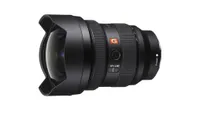
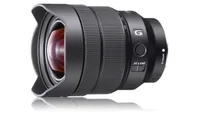
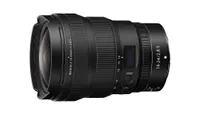
While that’s still a four-figure price, it puts the lens at around half the cost of Sony’s 12-24mm f/2.8 GM and around $600-700 less than the Sony 12-24mm f/4 G and Nikon 14-24mm f/2.8 S in the US.
Tamron 12-20mm f/2.8 review: Design and Handling

The Tamron 12-20mm f/2.8 doesn’t look like a typical Tamron, as the lens marks the beginning of a new look for the popular third-party optics maker. The design is all clean lines and shiny black surface that, outside of the wealth of different controls, gives the lens a streamlined, minimalistic feel.
When I first picked up the lens, I was surprised at how light it is, as it looks like it should be heavier. That’s due in part to the new finish that looks almost metallic, though Tamron sticks with plastic for the lighter profile.

The lens weighs 20.2 oz / 570g for the E-Mount variant and slightly more for the Z mount.
In comparison, Sony’s 12-24mm f/2.8 GM reaches farther, but comes in at a heavier 1.86 lb / 847g – and the Tamron is only five grams heavier than Sony’s 12-24mm f/4 G. Nikon’s native ultra-wide zoom is 14mm at the widest and still slightly heavier at 1.4 lbs / 650g.
While the design of the lens feels more minimal, the lens barrel actually houses a ton of controls. The first ring out from the mount is a control ring, which controls aperture on the Sony E-Mount version and can swap between aperture and exposure compensation on the Nikon Z Mount.

The Z Mount option has a control lock that prevents an accidental bump from throwing off the exposure settings, and both variants have a switch to click or declick the aperture or control ring.
That bank of control switches also includes a customizable lens function button, a custom switch, an auto-to-manual focus switch, a manual focus lock and a zoom lock.
That focus lock was excellent for shooting astrophotography and keeping the stars in focus between frames – though the number of switches meant I had to turn on a flashlight to make sure I flipped the right one.

After that bank of controls is the zoom ring, followed by the focus ring. Both rings have a slightly different grip pattern to them in order to help differentiate by feel.
Like most ultra-wide zooms with a bright aperture, the front of the Tamron 12-20mm f/2.8 has a curved piece of glass that prevents using the standard front filters. Sheet filters can be cut to size to fit the back of the lens instead.
The lens has a built-in petal-shaped hood and a nice oversized lens cap that still fits over the hood and curved front. The lens also includes a self-gripping lens wrap for added protection.
That lens design is completed with one of my favorite features: weather-sealing. Tamron says the lens has multiple seals through the controls, rings and mount, as well as fluorine coating on the front to help repel buildup.
There’s a USB-C port to support firmware updates and the Tamron Link accessory, but that port has the same waterproofing as the iPhone’s charging port.
Tamron 12-20mm f/2.8 review: Performance

The genre that I was most excited to try with the Tamron 12-20mm f/2.8 was astrophotography. I’m always looking for a wide view and a bright aperture when photographing the stars, and the 11-20mm range is excellent for this type of shot.
Astrophotography, of course, requires manual focus. Getting the stars locked in sharp took some patience (and focus peaking) hindered by the swarm of mosquitoes that comes with astrophotography in the summer.
The focus lock was very helpful, and I managed to get several star shots that I was happy with – and even a few lightning bugs.


Switching to autofocus, the lens didn’t seem to have any issues locking on to the usual suspects in front of an ultra-wide lens and had a few misses across the landscapes and perspective play the lens is built for.
The focus range is also aided by a minimum focus distance of 7.1” / 0.18m at the widest zoom position. That’s certainly not macro territory, but it is enough to exaggerate the perspective distortion of a 12mm lens by getting in really close to the subject.

The mix of ultra-wide perspective, bright f/2.8 aperture, and close focusing capabilities captured an impressive gallery of images across astrophotography and landscapes.


At the center, subjects are sharp without being overly sharp. Towards the edges, the sharpness can soften a bit. For astrophotography, the stars on the edges appeared slightly more smudged than the stars at the center. The focus was also very sensitive at f/2.8, so getting the stars locked in was a challenge.
On the flip side, while ultra-wides aren’t known for bokeh, get close to the subject and shoot at f/2.8 and there’s a bit of background blur to be had here. Bokeh is round with smooth edges and no evidence of soap bubbling.
There’s a light vignetting in some shots, particularly at 12mm, but nothing too troublesome.


Direct the lens towards the sun, and the optic can catch a bit of sun flare and an occasional arc of light, but ghosting spots are well-controlled. Step the aperture down, and the sun becomes a 12-point starburst.
I didn’t spot any colored fringing or chromatic aberration over the course of my week with the lens.
While full lab testing is needed to see how the optic directly compares with its competitors, I was overall happy with the Tamron 12-20mm f/2.8 – I just wished for a little more edge sharpness in some shots.


Tamron 12-20mm f/2.8 review: Early Verdict
The Tamron 12-20mm f/2.8 doesn’t reach quite as far as many competing ultra-wide zooms, but the lightweight design and more affordable price are well worth the trade. The lens has plenty of controls and an understated design, but most importantly it comes in an easily transportable weight for the category.
The 12-20mm offers some versatility while still hitting the ultra-wide perspective. Images are acceptably sharp at the center and only slightly smudged towards the edges. Vignetting is minor and I didn’t spot any aberration.
I did wish for a tad more sharpness on the edges – and getting the stars perfectly in focus was a challenge. The Tamron 12-20mm f/2.8 has just launched, so our forthcoming lab tests will offer a better overall picture of how the image quality compares to competing optics.
My early experience with the lens, however, has been overwhelmingly positive.

Alternatives
You may also like
Take a look at the best wide-angle lenses or the best Nikon Z lenses or the best Sony E lenses.

