
Professional motorsport photographer Jamey Price has highlighted in an Instagram Reel the extreme limits imposed on unaccredited photographers at the upcoming Dutch Grand Prix, which runs this weekend (August 21 to 23) at Zandvoort race circuit.
Like any F1 grand prix, many spectators will be arriving in the hope of capturing the on-track action. But according to Jamey, “You are not allowed to bring anything with a detachable lens,” making the event one of the strictest on the calendar.
But before you blame the FIA (Federation Internationale de l'Automobile), other tracks are more lenient – so it seems like it’s the circuit’s decision. A couple of months ago, I went to the Spanish Grand Prix at the Circuit de Barcelona-Catalunya, which also has its own rules about what camera equipment you can and cannot take.
But although the rules are more lenient than Zandvoort, I still found it to be a frustrating experience, due to conflicting information both online and at the circuit. On the circuit’s ‘Rules for Visitors’ page, it states that capturing photography and video is allowed, but “professional equipment” is prohibited. Talk about loose terminology.
Then it says, “Actually, you don't need to be afraid of taking a high-quality camera with a telephoto lens and a tripod. However, you might have a problem with a large professional camera.” So can I bring a professional camera or not?

Then, on the same website’s FAQ page, it says “Professional-grade equipment (eg, large lenses, tripods) is not allowed unless accredited.” But the previous page said you shouldn’t be afraid of taking a tripod. So which one is it!?
As somebody who was traveling from overseas and had paid a lot of money for the privilege of being a spectator at a race weekend, I decided to take the small Nikon Z50 II and a Nikon Z 28-400mm f/4-8 VR as a precaution. So you can imagine my irritation when I turned up at the track and saw spectators milling around with pro-grade cameras and lenses, and not even hiding them!
I saw one person with a harness, from which three professional DSLR cameras were hanging, each bearing a telephoto or super-telephoto lens. And not a press lanyard or press bib in sight! The icing on the cake was when I found a lovely corner to set up and I had to stand next to a chap with my pro camera and my pro lens that I’d left back home for fear of having them confiscated.
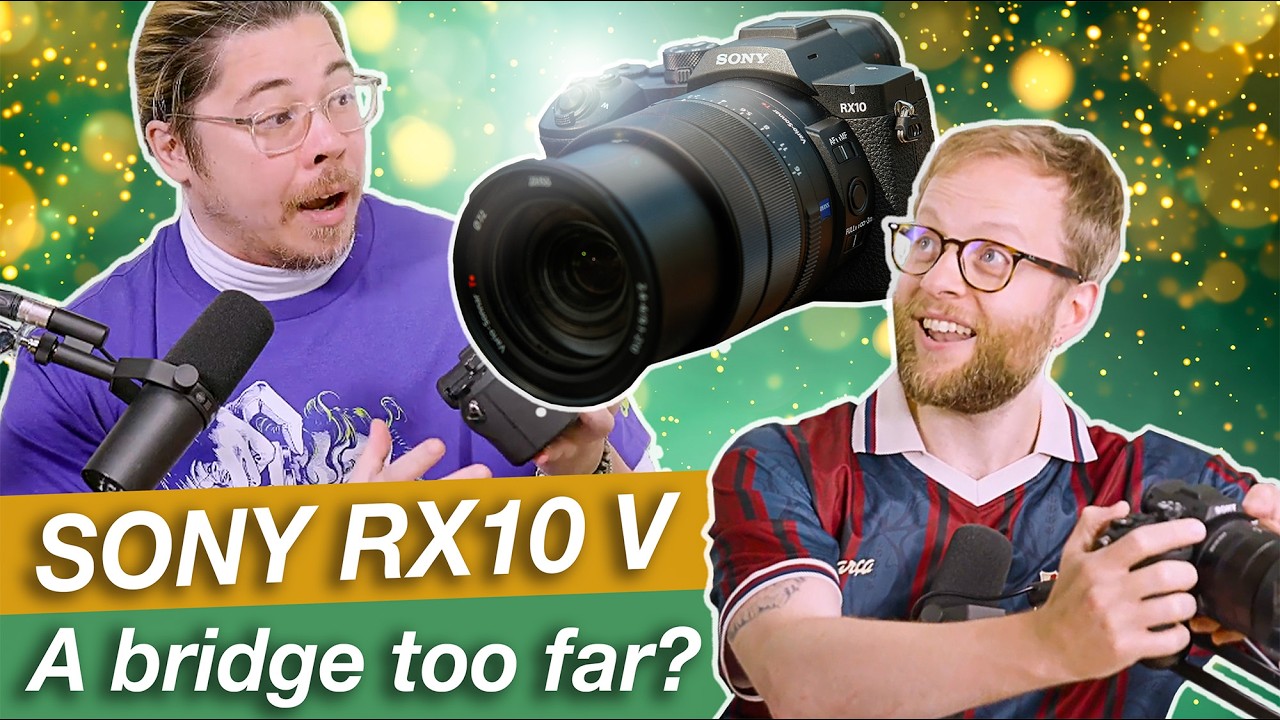
James and I talk about the Sony RX10 V in the latest episode of the Bokeh Face podcast
Still, the Dutch Grand Prix certainly sounds like it’s much more stringent. And if you’re going to take anyone’s advice as to what you can and can’t bring to a race, it might as well be a pro F1 photographer like Jamey.
If you’re wondering what camera to take in light of this weekend’s regulations, the safe option would be a compact zoom camera. The better, but risky, recommendation would be a bridge camera like the recently released Sony RX10 V or Nikon Coolpix P1100. These cameras will give you oodles of reach and they’re both fixed-lens. The Sony would be a great choice as the AF is also top-notch.
However, I will add in the caveat that while they 'seemingly' adhere to the rules, it’s possible that security may question size and assume they’re professional kit. So, if you’re heading to the F1 this weekend to take photos, good luck!
You might also like...
If you're not bothered about the aforementioned restrictions, check out the best cameras for sports photography. If you'd like to improve your motorsport photography, here's how to capture perfect panning shots. And if you're a petrolhead, here are my top car photography tips.

