
February is set to be a spectacular month for astrophotographers in the Northern Hemisphere. Long, cold winter nights favor deep sky imaging, Jupiter dominates the evening sky, and a mid-month new moon opens an important dark-sky window. Add the return of Venus as an Evening Star, Mercury’s strongest evening apparition of the year, a central solar eclipse, delicate crescent moons and subtle zodiacal light, and February offers a balanced mix of planetary, deep-sky and wide-field nightscape opportunities. Here’s everything you need to know about astrophotography in February 2026.
Read: 10 must-shoot events for astrophotographers in 2026
Sunday, February 1: A full Snow Moon

February begins with a full moon. It rises in the east around sunset while in the constellation Leo, with its brightest star, Regulus, close by. Always prioritize the time of moonrise for your location — when the moon is low, Earth’s atmosphere adds warm color and apparent size, especially when framed against distant buildings, hills or trees. Plan your shot using apps and websites such as Photo Ephemeris, PhotoPills and Planit Pro to align the moon with a foreground feature.
A telephoto lens in the 150–600mm zoom range works well for tight perspectives, while wider lenses can capture the moon rising into a landscape. Start with exposures around 1/125 sec, f/8, ISO 100, then bracket to protect highlights. Switch to manual focus and use live view at maximum magnification to ensure the lunar surface is razor sharp — softness is a common mistake with the full moon.
Read: How to photograph the full moon
Monday, February 2: Occultation of Regulus by the moon

One night after it's full, the Snow Moon will appear to occult (block) bright star Regulus — but only as seen from parts of North America and northwest Africa. It may not seem much of a photographic opportunity, but ingress (when the star first starts to disappear) and egress (when the star reappears) offer rare chances to image a bright star right next to the limb of the moon.
From the northeast U.S. and eastern Canada, the action occurs between 8:40 and 10:05 p.m. EST, according to In-The-Sky.org, though from any one place, the event will last about an hour. Europe and western North America will see a very close conjunction of the moon and Regulus — a special sight in itself.
Read: The best cameras for astrophotography
Sunday, February 8 : Venus, Mercury and Saturn in conjunction

Venus returns to the post-sunset night sky this month as a low “Evening Star” in the west-southwest, briefly joined by Mercury and Saturn. These compact groupings are ideal for twilight astrophotography — but demand great timing and clear horizons. Shoot 30-60 minutes after sunset using a tripod and a 35-85mm lens. Balance the bright planets against the fading sky by bracketing exposures, manually focusing on Venus.
Read: Astrophotography tools: the best camera, lenses and gear
February 13-17: Dark sky window and zodiacal light

As the moon wanes toward its new phase on February 17, the month's prime astrophotography window opens. These nights are perfect for imaging deep-sky showpieces, including the Orion Nebula (M42), Horsehead Nebula (Barnard 33), Pleiades (M45), Crab Nebula (M1), the three open clusters in Auriga (M36, M37, M38) and the Hyades — among many others.
These moon-free evenings also offer one of the year’s best chances to capture the zodiacal light — a faint, triangular glow rising from the western horizon along the plane of the solar system. Choose a very dark site with minimal light pollution and a clear western horizon, and be ready about an hour after sunset. Use a wide lens, exposures of 15-30 seconds, and ISO 1600-3200 for clean images.
Read: The best star tracker camera mounts

The new moon on Tuesday, February 17 — and the evenings in its wake — are filled with opportunities for creative twilight astrophotography. It begins with the new moon, which signifies the beginning of the Lunar New Year (also called Chinese New Year), with 2026 being the “Year of the Horse.” There’s no specific astro-shot to be had, though the constellation Pegasus, “The Winged Horse,” is in the western night sky as it gets dark.
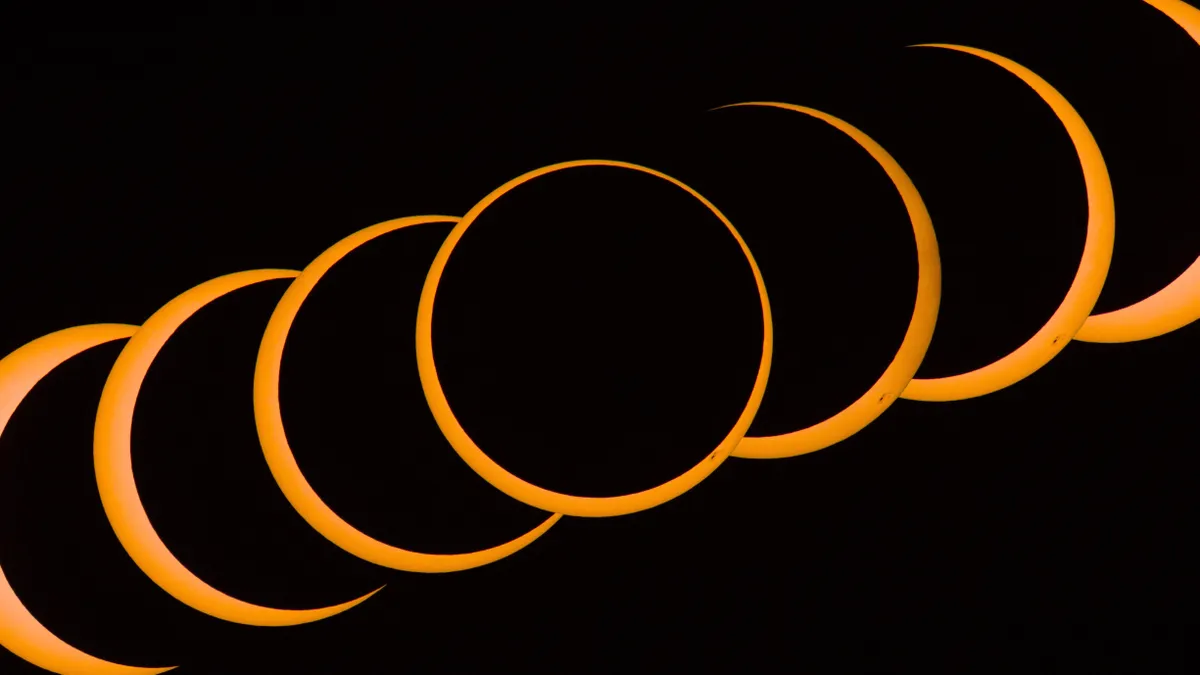
The same day hosts an annular solar eclipse, when 96% of the sun will be blocked by a distant moon, though the resulting “ring of fire” will only be seen in Antarctica. A partial solar eclipse will be viewed from southern South Africa and southern South America.
The following evening, on Wednesday, 18 February, the sighting of a 2%-lit waxing crescent moon in the west just after sunset will trigger the beginning of Ramadan, the Islamic religion’s fasting month. The slim crescent will have Mercury above and Venus below.
On Thursday, 19 February, a 7%-lit waxing crescent moon will shine close to Saturn, with Mercury and Venus below. It’s a fabulous chance to image inner planet Mercury — most likely seen as a reddish point of light low on the horizon — which actually reaches its highest above the horizon post-sunset on Friday, February 20.
Read more:

