





I've always admired Leica for its willingness to do things differently, and perhaps one of the best examples of that philosophy is its S-series of medium format cameras. While the Leica M-series has become synonymous with rangefinder photography, and the Q and SL systems have established themselves as incredibly capable modern cameras, the S-series has quietly faded into the background.
Its most recent model, the Leica S3, arrived back in 2020, and for years there have been rumors suggesting that a successor, widely referred to as the Leica S4, was in development. However, more recent reports suggest Leica has significantly reduced its medium format development activities, with engineers previously working on the S-series reportedly reassigned to the company's SL and M divisions.
For me, that raises an interesting question: as much as I would love to see another Leica medium format camera, does the world really need an S4, and more importantly, does Leica?

To understand why this is such a difficult decision, you first have to appreciate what made the Leica S-series special. Originally introduced with the Leica S2 in 2008, the system was Leica's answer to professional medium format photography, combining the image quality and larger sensors traditionally associated with studio cameras with the familiar handling of a DSLR.
The latest Leica S3 took that philosophy further, introducing a 64MP medium format sensor measuring 45 x 30mm, an optical viewfinder, and Leica's exceptional S-mount lenses. It was a beautiful camera capable of producing extraordinary images, but it was also a rather chunky piece of equipment, particularly when compared with today's increasingly compact mirrorless systems. And therein lies one of the biggest problems facing any potential successor. The photography industry has moved on considerably in the six years since the S3 arrived, and I struggle to see how Leica could simply update the existing formula and expect it to compete with the likes of Fujifilm and Hasselblad.
The rumored Leica S4 has been an interesting story to follow. Previous reports suggested Leica was working on an entirely new mirrorless medium format system, potentially featuring a new lens mount and accompanying optics. In May 2025, Leica chairman Dr. Andreas Kaufmann was reported to have acknowledged that the camera was still being developed. Yet, by May 2026, Leica Rumors was reporting that the dedicated medium format development structure had effectively been dissolved, with personnel moving to other projects.
Interestingly, Leica's vice president of global marketing and communications, Andrea Pacella, subsequently told Digital Camera World in August that the company had not abandoned medium format, but had paused development of its next-generation S camera while waiting for advances in sensor and processing technology. So, while the S4 may not be completely dead, its future certainly appears uncertain.
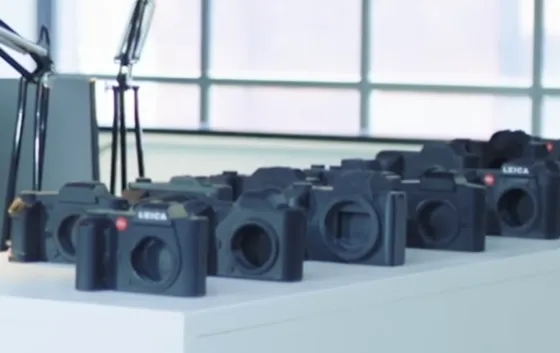
I think one of Leica's biggest headaches would be deciding exactly what a modern S4 should look like. Today, we have cameras such as the Fujifilm GFX100S II delivering 102MP resolution in relatively compact bodies, while Hasselblad has established itself as another major player in the 100MP medium format market. For Leica to launch a new S4 with the S3's existing 64MP resolution would undoubtedly raise eyebrows, even though I personally believe 64MP is more than enough for almost any photographic application.
However, moving to a 100MP sensor introduces another question: what happens to all those wonderful Leica S lenses? While increasing resolution doesn't automatically mean existing lenses need replacing, it would certainly put their optical performance, autofocus capabilities, and compatibility with a modern system under greater scrutiny. Would Leica have to redesign some of its glass to deliver the performance photographers expect from a new flagship? And if so, how much would that add to the already considerable cost of developing a new camera system?
Then there is the physical design of the camera itself. The Leica S-series has always followed a traditional DSLR-style design, complete with a mirror box and a substantial body, which made sense when the system was first introduced. But I cannot imagine Leica releasing a new medium format DSLR in today's market.
A mirrorless S4 would almost certainly be the direction to take, allowing for a slimmer camera body, an electronic viewfinder, improved autofocus, and potentially in-body image stabilization. However, making that transition properly could mean developing an entirely new lens mount, something previous rumors had already suggested. Leica could potentially retain compatibility with existing S-mount lenses through adapters, but that still leaves the prospect of developing a new generation of native lenses designed specifically for the shorter flange distance and more compact proportions of a mirrorless system.
Suddenly, what initially sounds like a relatively straightforward upgrade from 64MP to 100MP becomes the development of an entirely new camera ecosystem. And knowing Leica's commitment to optical quality, I cannot imagine the company wanting to cut corners.

What makes the situation even more complicated is Leica's current position in the photography market. The Q3 and Q3 43 have helped make the Q-series one of the most compelling premium compact camera systems available, while the SL-series continues to develop into a serious professional alternative to Canon, Nikon, and Sony.
Then, of course, there is the M-series, which remains at the very heart of Leica's identity and offers something genuinely different from almost anything else on the market. These are camera systems with established audiences, recognizable identities, and extensive ecosystems that Leica can continue refining. Developing a new medium format system would require enormous investment in research, development, manufacturing, and marketing, all to compete in a relatively small segment already served incredibly well by Fujifilm and Hasselblad.
When I look at it that way, the reports of Leica redirecting resources toward its SL and M systems make perfect business sense, particularly when those resources could help develop the next generation of cameras and lenses that existing Leica customers are already invested in.

Of course, the photographer in me would still love to see Leica surprise us with an S4. There is something undeniably appealing about a beautifully engineered Leica medium format camera, particularly one that could combine the company's outstanding lens design with a modern 100MP sensor and a more compact mirrorless body.
But the realist in me thinks Leica has a much bigger decision to make than simply whether to release another camera. To bring back the S-series successfully, Leica would need to create something that feels genuinely different from what Fujifilm and Hasselblad are already offering, rather than simply attaching a red dot to another high-resolution medium format system. And that would be no small undertaking. I would much rather see Leica continue pushing the boundaries of its hugely capable Q, SL, and M cameras than spend years and significant resources resurrecting a system that might struggle to find its place in today's market.
The Leica S-series deserves to be remembered as something special, but perhaps, just perhaps, its greatest legacy is what it has already given us, rather than what Leica might attempt to create next.

