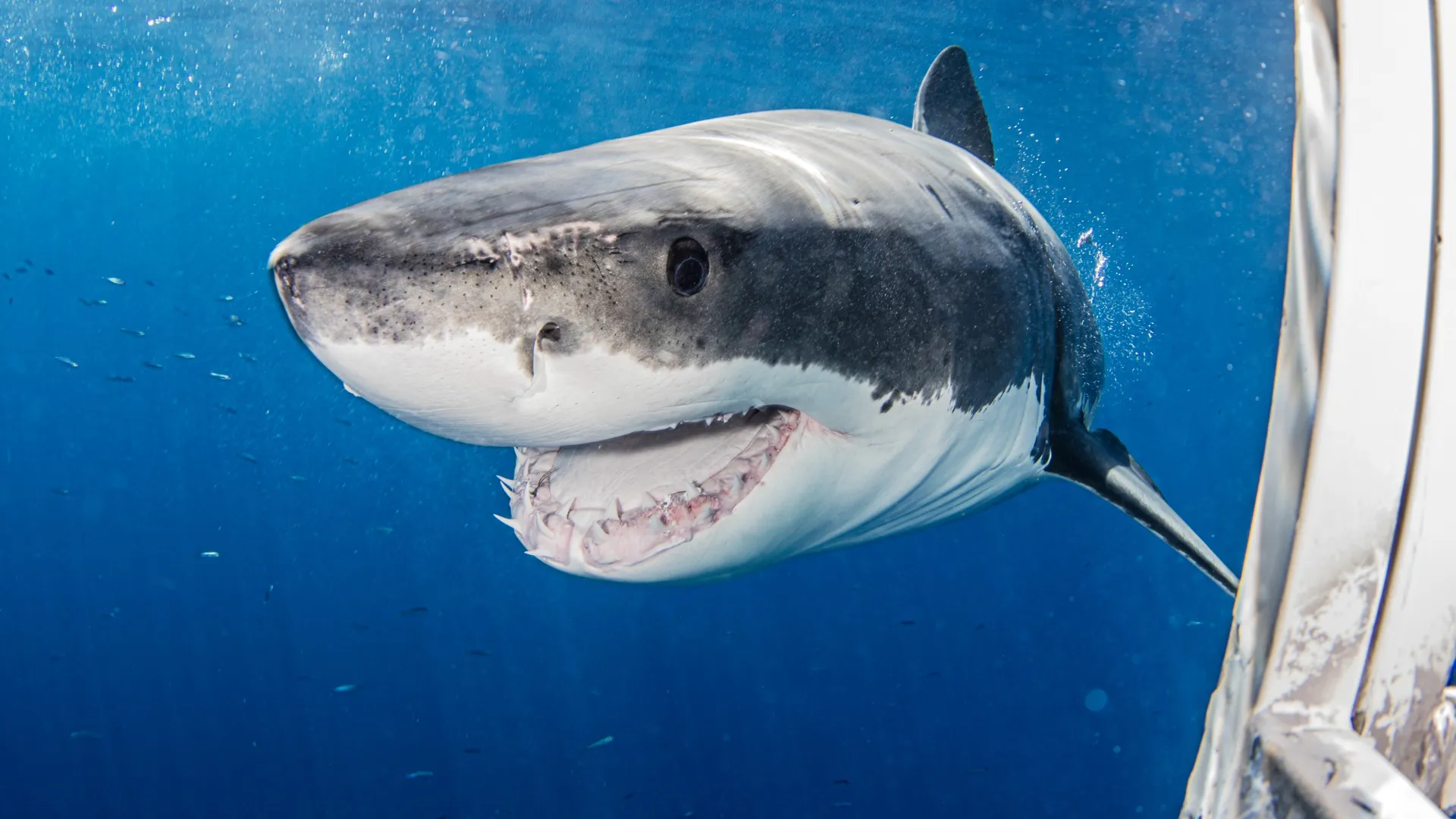
A National Geographic filmmaker has captured footage clearly showing great white shark depredation – the act of stealing a fish hook from a fishing line – beneath the waves.
While great white depredation has previously been observed from the surface, according to National Geographic, this is the first time a recording has been made of the behavior below water.
The footage was captured by Brian Skerry, a renowned whale and shark filmmaker, at Cape Cod, on the Atlantic Coast of Massachusetts, US.
According to National Geographic, Skerry, a native of Massachusetts, had been trying to capture the footage for several days earlier this year, when the moment finally struck. “It was so sudden, it wasn’t even a second. She just rocketed through and then it was over,” he told the publication.
In the split-second footage, which, according to Skerry, was captured in slow motion, we see a juvenile female great white shark snagging hooked striped bass at lightning speed. Skerry also explained that he used a custom-designed camera setup that ensured the fishing lure stayed in the camera's frame.
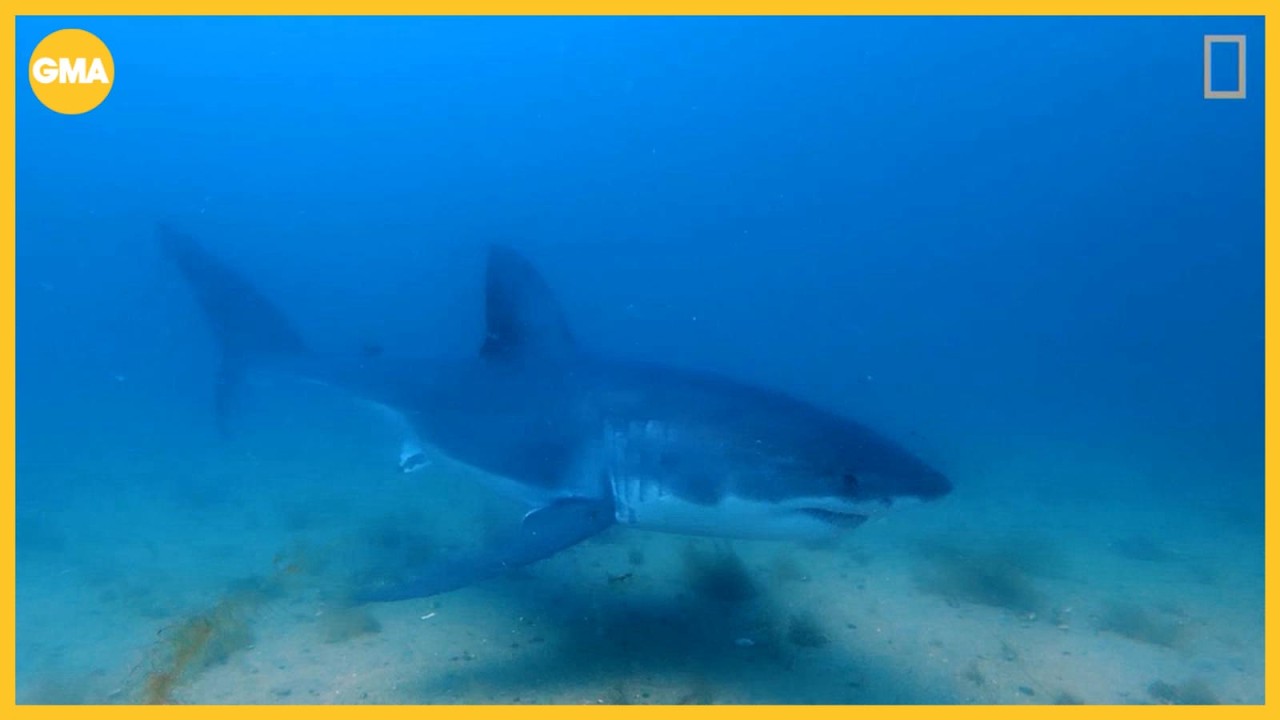
Above: watch the moment a juvenile female great white sharks rips the striped bass off the fishing line
According to Scientific American, great white populations have “surged” off the coast of Cape Cod in recent years, with the area now considered the first-ever white shark “hotspot” in the North Atlantic. The publication has explained that sharks are convening on the Cape because the gray seal population there is rebounding.
By the 1960s, New England seal populations had been largely culled by commercial fishermen. However, the Marine Mammal Protection Act of 1972 gradually restored seal numbers in the region, with an estimated 30,000 individuals on Cape Cod by 2017.
According to Scientific American, seals are a favorite fat-rich prey for white sharks as the fish make their annual northern migration, typically arriving on Cape Cod between mid-May and late June as the coastal water warms up.
Skerry told National Geographic that he recorded the footage to help people understand that Cape Cod and the Gulf of Maine have a “healthy, recovering” population of large, predatory sharks.
You might also like…
Here’s our pick of the best underwater housings for cameras and phones.

