
Around 4000 BC the landscape of Britain was a wild, forested place, where tribes of hunter gathers roamed freely. However, the British Isles were still attached to mainland Europe and over this landbridge came settlers with ideas of agriculture, community and religious rituals. The age of Neolithic Britain had begun and was to transform the landscape over the next 1,500 years, clearing the woodlands and building impressive stone structures that were to last through until the modern day.
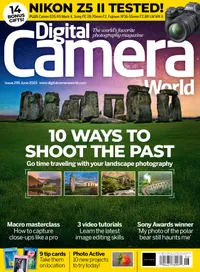
The most famous Neolithic site in Britain is, of course, Stonehenge, though it’s not the best, so that’s where I headed, followed by a visit to Avebury, which is much more interesting. The thing about Stonehenge is that you don’t want to visit at mid-day, which is when the light is right overhead, especially in summer. Winter is a good time, because with sunset around 4pm, you can catch the late afternoon sun (if there is any) before the site shuts.

1 Catch the sun

Just before sunset the light changes color to a more golden hue, which particularly suits things like standing stones. Compose the shot so that you can see the spread of stones, like here at Avebury, and that they are facing into the sunlight. Focus on the nearest stone with f/8 aperture.
2 Wait for sunset

Now sit and wait for sunset and see what light you get in the sky. Change the composition so you are facing towards where the sun went down. Either bracket the shot for combining later, or meter from the sky and bring the light up on the foreground later when editing the RAW file.
3 Hillside carvings

Technically speaking, hillside carvings of horses, giants and the like started to appear around the time of the Bronze Age, but hey, if you’re out looking for ancient elements in the landscape, then why not. Try to show the carving in the context of the landscape itself. You may need a telephoto lens for this.
4 Discover entire villages

One of the most spectacular Neolithic villages in the world, and the best preserved settlement in Western Europe, Skara Brae on the Orkney Islands is older than Stonehenge. Use a wide angle lens to show as much as possible, with an aperture of f/5.6 and focussing on the nearest stonework.
5 Going underground

The final item of Neolithic life to look for is how they preserved the dead, with burial chambers. Either go inside, open up the aperture and use a torch to light up details and rooms, or shoot from the outside showing the overall construction. For the interiors a tripod would also help avoid having to use high ISOs.
Essential kit

You’ll need a wide angle lens for some locations, but also a short telephoto if you’re cordoned off from getting too close, like a Stonehenge. The main image used a 24mm focal length. It’s worth using a circular polariser to enhance clouds and overall contrast, and an ND filter for controlling the exposure when shooting towards a sunset.
You may also be interested in...
Grab yourself a wide-angle lens to take Neolithic photos, some ND Grad filters and carry it all around in a decent camera bag.

