
The photography world has weathered a number of profound losses in 2025. They span the full spectrum of practice, from commercial and sports photography to fine-art and documentary. Some lived past 100, witnessing a century of photographic evolution from film to digital. Others were taken from us too early, leaving us to mourn what more they might have created.
Together, they represent not just individual talents but a reminder that this medium thrives because of diverse voices, approaches, and visions. Read on to find out who they were, and why they mattered.
Sebastião Salgado
- Died 23 May, aged 81
If you've ever been moved by a photograph of human struggle or natural beauty rendered in luminous black and white, you've likely encountered Sebastião Salgado's influence. The Brazilian photographer spent decades creating some of the most powerful documentary images of our time; from the haunting ant-like armies of workers scaling Brazil's Serra Pelada gold mines to intimate portraits of indigenous communities in the Amazon.
But Salgado was more than a photographer; he was a visual philosopher who believed photography was "a way of life" and "a language that allows you to travel over the wave of history." His large-scale exhibitions and books reached millions, proving that documentary photography could be both beautiful and unflinching. His work remains the gold standard for how images can bear witness while maintaining profound aesthetic power.
Martin Parr

- Died 6 December, aged 73
Martin Parr made the ordinary extraordinary. The British documentary photographer built his career photographing things many would overlook: fish and chip wrappers at rundown seaside resorts, garden parties, supermarket queues. His signature style (saturated colors that mimicked vintage postcards, combined with an eye for absurdity) revealed the beauty and strangeness of everyday British life.
Parr democratized photography's subject matter, showing that you don't need war zones to create important work; just curiosity about the world around you. He also championed other photographers through his extensive photobook collection and the Martin Parr Foundation, cementing his role as both creator and curator of photographic culture.
Chris Steele-Perkins

- Died 8 September, aged 78
A Magnum photographer who documented both intimate subcultures and devastating conflicts, Chris Steele-Perkins showed how spending time with subjects creates powerful work. His three-year project photographing the Teddy Boy revival in 1970s Britain became a documentary classic, while his war photography from Northern Ireland, Lebanon, and Afghanistan captured humanity amid chaos.
Born in Myanmar to an English father and Burmese mother, he understood what it meant to exist between worlds; a perspective that informed his empathetic approach to photographing others. His near-miss with a grenade led him to step back from conflict photography to spend more time with his young children; a reminder that even legendary photojournalists must sometimes choose life over the pursuit of that one more frame.
Joe Stevens
- Died 26 August, aged 87
American rock photographer Joe Stevens was there for defining moments in music history. David Bowie stepping off a train at Gare du Nord transformed from David Jones into a star; Paul McCartney's first post-Beatles tour; the Sex Pistols at their chaotic beginning.
Working under the pseudonym Captain Snaps for the NME, he earned access through his libertine lifestyle, sharp wit, and absolute fearlessness. He made Prince laugh, kept Bowie talking with spliffs, and wasn't remotely intimidated by fame. Stevens understood that celebrities were "just like you and I, no big deal"... except when performing.
John Blakemore
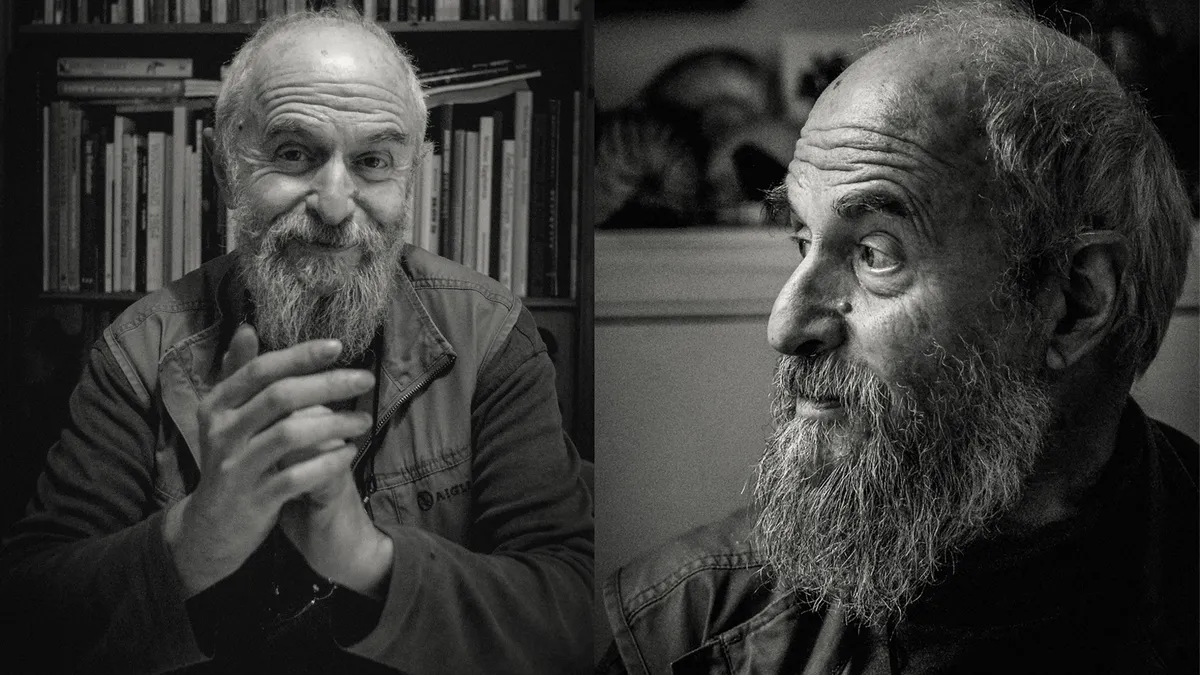
- Died 14 January, aged 88
Deeply influential among fine-art photographers, John Blakemore transformed landscape photography into something meditative and metaphysical. The British photographer's long-exposure images of wind-blown trees and water in motion captured not just landscapes but the invisible forces that shape them.
His sensual still-life images of tulips, created over nine years, demonstrated that patient observation could reveal endless visual possibilities in a single subject. But perhaps his greatest legacy was as an educator at the University of Derby, where he taught generations of photographers to see beyond surfaces.
Ruth Thorne-Thomsen
- Died 27 October, aged 82
Working with the simplest technology – homemade pinhole cameras fashioned from cardboard boxes – American photographer Ruth Thorne-Thomsen created some of the 20th century's most enchanting images.
Her postcard-sized photos were surreal tableaux: tiny pyramids on beaches, paper airplanes "flying" over Chicago's skyline, the Leaning Tower of Pisa planted in sand beside a distant hot-air balloon. These "environmental collages" evoked 19th-century romantic travel photography while subverting it via dreamlike scenes that one critic described as "absurdly unreal".
Jim Brandenburg

- Died 4 April, aged 79
Jim Brandenburg's photograph Brother Wolf (a wolf peering from behind a tree, staring directly at his lens) is one of the most iconic wildlife images ever created. But the American nature photographer's importance extends beyond a single shots. He spent six months living on Ellesmere Island documenting Arctic wolves, creating work that helped reshape public perception of these misunderstood animals. More broadly, his images told stories that needed telling about species and ecosystems under threat.
George Tice
- Died 16 January, aged 86
American photographer George Tice spent 60 years finding beauty in ordinary landscapes and architecture, proving that you don't need exotic locations to create compelling work. His black-and-white images elevated gas stations, water towers and everyday streets into subjects worthy of contemplation.
His favorite photo, Petit's Mobil Station, Cherry Hill, NJ, shows how careful observation and technical mastery can transform the mundane into the memorable. For those wondering if their own backyard holds sufficient material, Tice's career provides a resounding answer: "In New Jersey, I can do anything."
Heinz Kluetmeier
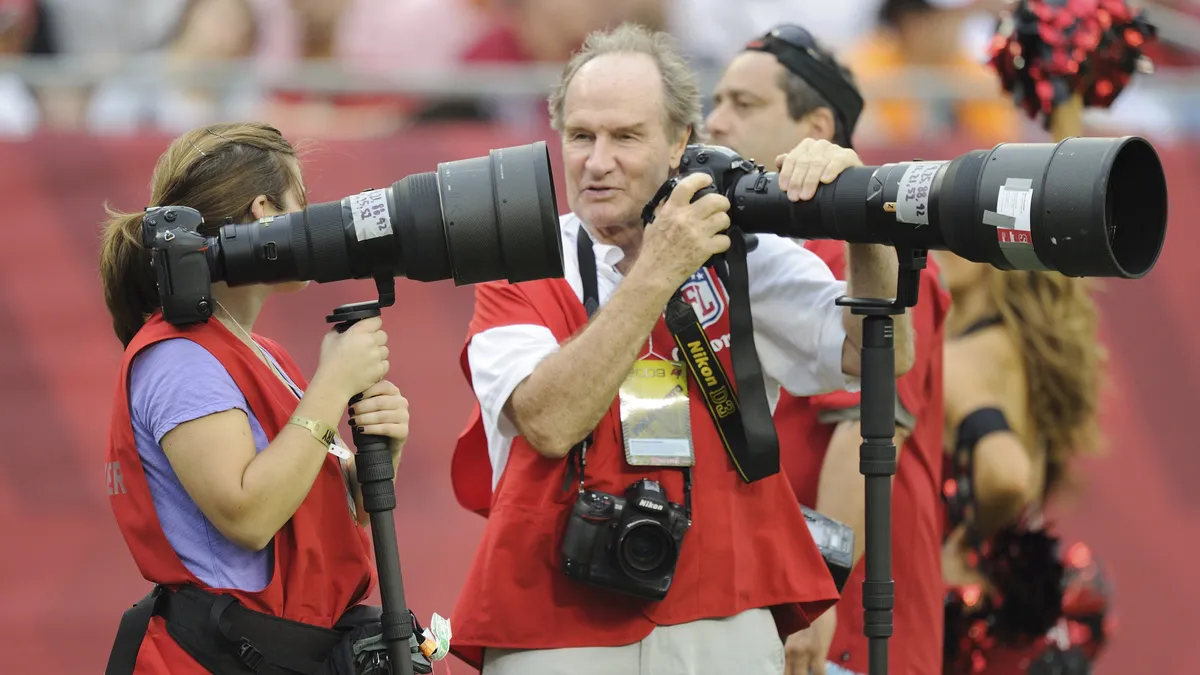
- Died 14 January, aged 82
The German photographer behind more than 100 Sports Illustrated covers, Heinz Kluetmeier was a technical innovator who transformed sports shooting. He was the first to use underwater cameras at swimming competitions, creating the 2008 image that proved Michael Phelps' seventh Olympic gold medal. He also pioneered the use of strobes at indoor football games and developed tethered underwater camera systems that transmitted images instantly.
Beyond the tech, Kluetmeier understood that "the most important thing is to have a vision, to have an emotional feeling, to care about what you're photographing." His career spanned the transition from film to digital, from hand-delivering rolls in his own airplane to instant wireless transmission.
Oliviero Toscani

- Died 13 January, aged 82
The Italian photographer behind Benetton's provocative advertising campaigns brought social issues into commercial spaces in ways that remain controversial decades later. Oliviero Toscani's images addressed anorexia, AIDS, racism, and capital punishment; subjects that made viewers uncomfortable but sparked necessary conversations.
When magazines such as Vogue and Elle refused to run his 1992 campaign showing AIDS activist David Kirby on his deathbed (shot by Therese Frare then colorized by Toscani), he didn't retreat. but doubled down on his belief that advertising could do more than sell products. More broadly, his work challenged the fashion industry's promotion of impossible beauty standards, decades before such criticism became mainstream.
George Kalinsky
- Died 16 January, aged 88
For more than 50 years, George Kalinsky was the visual historian of Madison Square Garden, capturing everything from Willis Reed's iconic walk onto the court in 1970 to the Pope's 1979 visit. His work documented not just sports but the full spectrum of events that made the New York venue a cultural landmark.
Kalinsky understood that sports photography is all about capturing human drama; the tension, triumph and heartbreak that unfolds in arenas. His long career at a single venue demonstrates the power of deep commitment to place; by staying and observing, he accumulated a visual archive of cultural history.
David Lynch
- Died 15 January, aged 78

Though best known as the American filmmaker behind Twin Peaks and Mulholland Drive, David Lynch was also a serious photographer whose work explored many of the same surreal, haunting themes as his cinema.
His photography book The Factory Photographs inspired countless artists with its ability to convey complex emotions through still images. And his photographic work in general demonstrated that the medium could capture the dreamlike and subconscious just as effectively as moving pictures.
Michele Singer Reiner

- Died 14 December, aged 70
Before becoming the wife of director Rob Reiner, Michele Singer was a photographer whose work graced the cover of Donald Trump's book The Art of the Deal. She transitioned into producing, earning an Emmy nomination for documentary work, but her photographic eye remained evident in her choices.
Her tragic death, along with her husband's, shocked the entertainment and photography communities alike. She represented a generation of photographers who moved fluidly between commercial work, art and other creative fields; a reminder that photographic skills open many doors.
Princess Marianne Sayn-Wittgenstein-Sayn
- Died May 4, aged 105
Receiving her first camera at age 10, German noblewoman and socialite Princess Marianne Sayn-Wittgenstein-Sayn spent a century documenting aristocracy, politicians, artists and cultural figures. Her 2006 New York exhibition revealed a photographer who not only had access to the "beau monde", but the skill to do something meaningful with that access.
An inspiration to us all
The photographers we lost in 2025 worked across every genre and style; from war zones to seaside resorts, fashion studios to suburban gas stations. What united them was the conviction that photographs matter, that images can document, provoke, console, and inspire.
So whether you recognize every name on this list or are discovering some for the first time, take a moment to seek out their work. Look at Salgado's luminous documentary images. Study Parr's bright, affectionate portraits of British life. Marvel at Brandenburg's patient wildlife observations. Let Liz Hatton's brief but brilliant career remind you that time is precious and should be spent creating.
These photographers taught us how to see. They may have left us, but that gift endures.

