Nikon Small World in Motion has announced its 2026 winners in what might just be one of the most remarkable imaging contests in the world. This annual celebration of microvideography invites viewers to experience alien worlds captured through the lens of a microscope.
But it’s not all about the visual beauty of these microscopic videos; the competition also serves as a platform in which to highlight the science behind this niche genre of imaging, and how it can be a vital tool in both scientific and medical research.
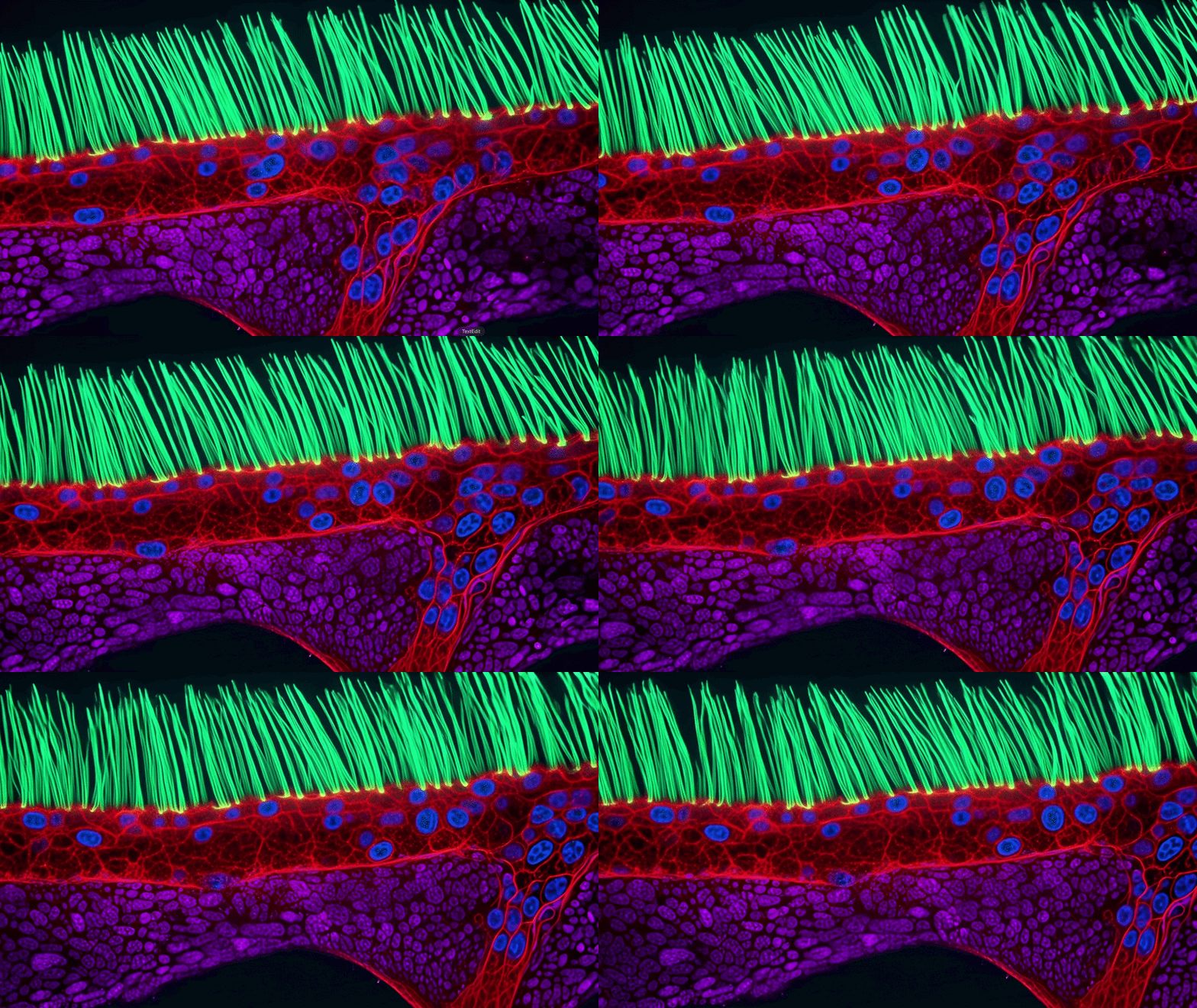
This is demonstrated in this year’s winning video (see snippet above) by Dr Ning Xu, of China's Tsinghua University, depicting the abnormal beating of a cellular structure, indicating a rare genetic respiratory function disorder.
As the Beijing-based Dr Xu explained: “To understand this disease, you need to watch the cilia through dozens of beat cycles, not just a still image”.
The winning video presented its own unique challenges. If the sample died or if the imaging process altered its behavior, the video would be ruined. And typical microscopy lighting had to be avoided for fear of damaging the sample.
Dr Xu’s solution was to shape the existing light via light waves and a digital micromirror, controlling how much light actually reached the living subject. The image was captured using diffractive super-resolution microscopy to achieve 100x objective lens magnification.
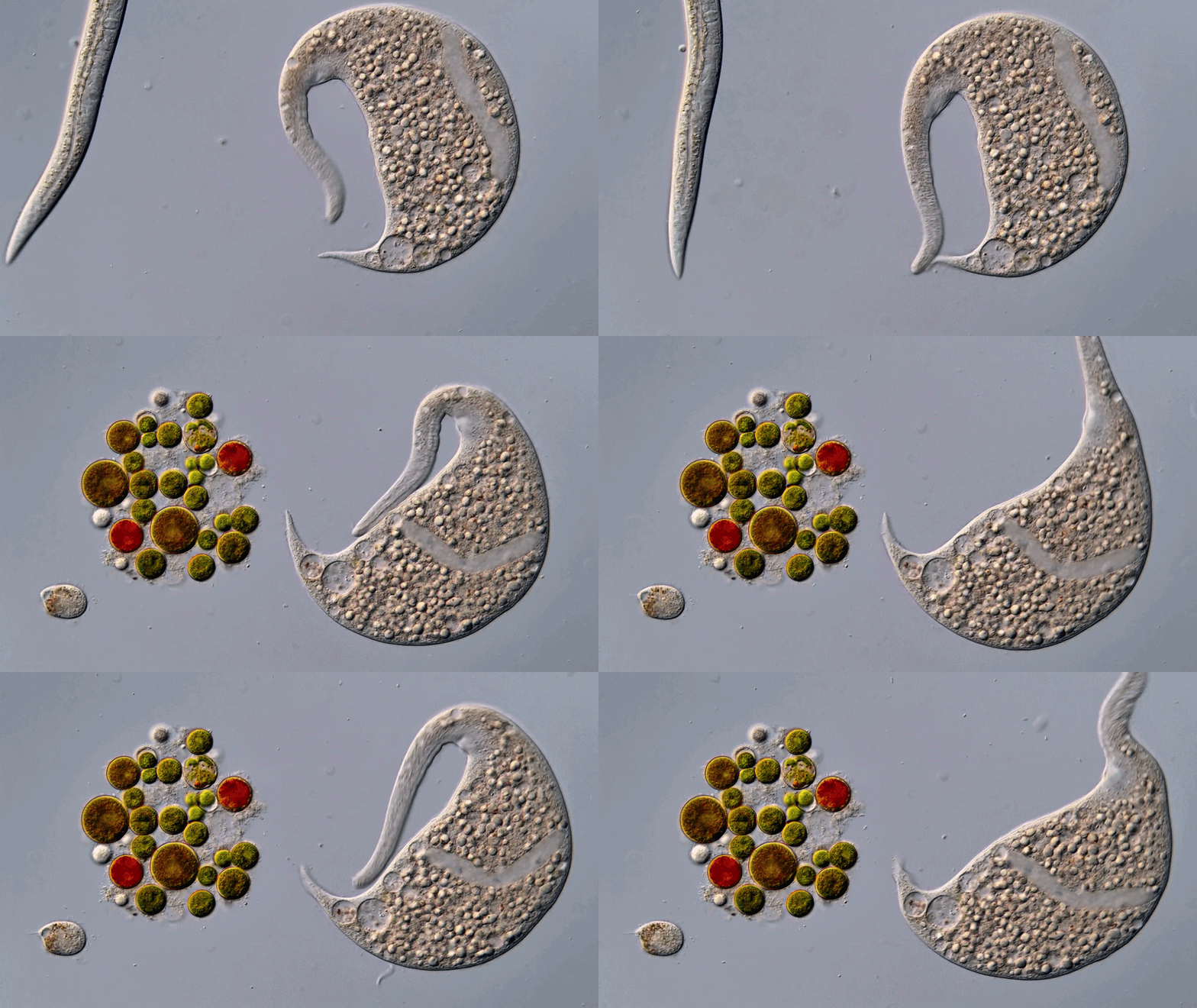
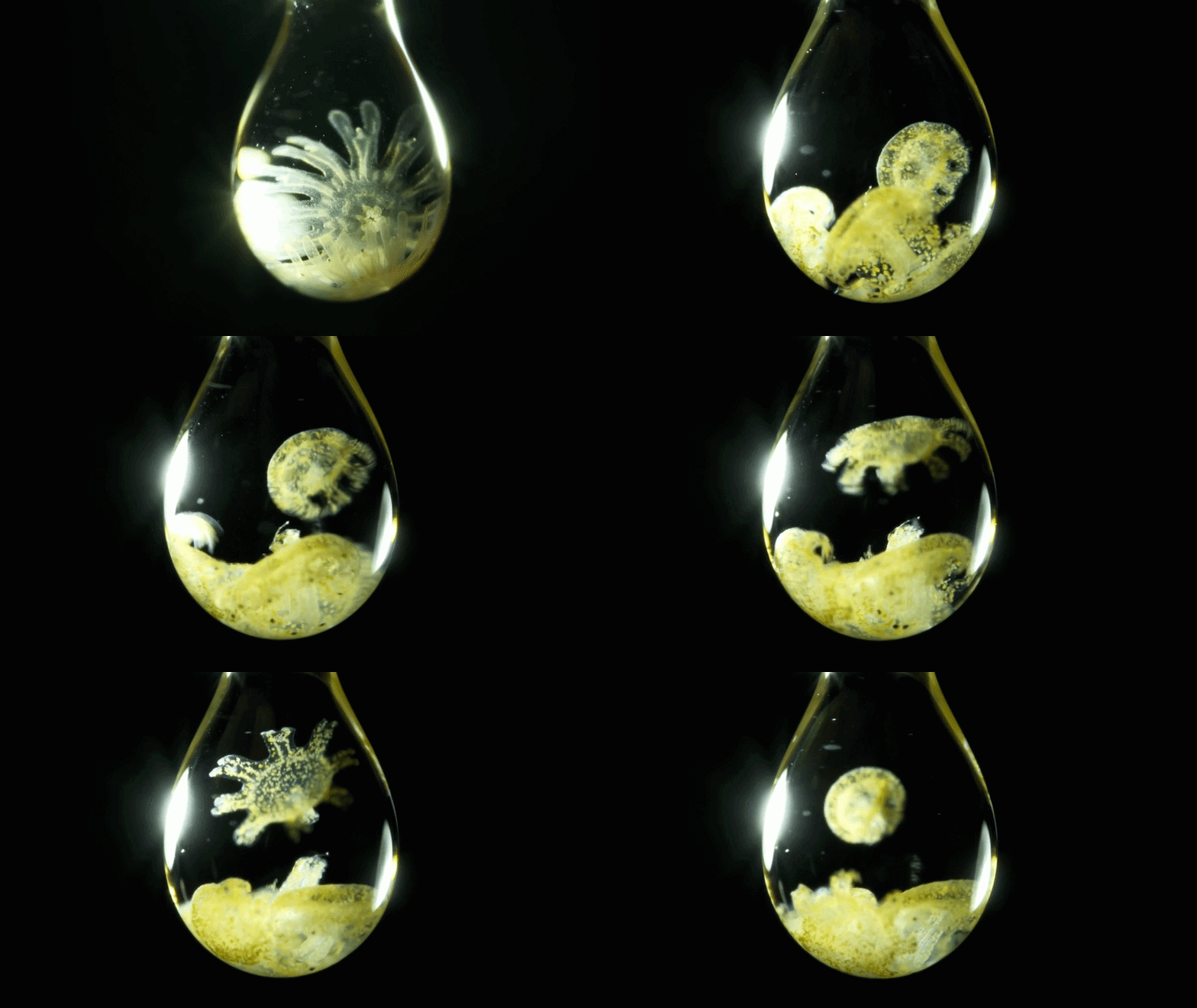
The runner-up spots were awarded to Vietnam’s Nguyen Nam Nhat and Germany’s Benedikt Pleyer, achieving second and third place, respectively.
The former entered a bizarrely rather charming video of roundworm in a single-celled Dileptus, while the latter’s submission is a mesmerizing video of jellyfish larvae within droplets of water.
Each entry makes up the latest chapter in Nikon Small World’s long-running history of over 50 years, while this is the 16th year of Nikon Small World in Motion. As always, the video entries are critiqued by an expert panel of judges.
Find out more about the competition and entries at the official website.
You might also like...
Check out the best microscopes for photography. If you're interested in close-up photography but want something that's a little more accessible, take a look at the best macro lenses. Plus, all award-winning photographers started somewhere – 10 photography contests to get your photography noticed this September.

