





On May 18, 1980, at 8:32 a.m. PDT, all hell broke loose as Mt. St. Helens, a 9,677-foot (2,950-meter) stratovolcano in Washington state, US, violently erupted.
The blast collapsed the northern face of the volcano, sending a pyroclastic flow, a destructive, superheated avalanche of gas, ash, and pumice, racing outward, reaching an estimated speed of 670 mph and temperature of 800°F (400°C).
In its path, just four miles away, stood photographer Robert Landsburg. “I wonder, was he scared, was he… excited, was he just at peace with knowing that he was gonna’ pass away?” said Jill Dutchess, Landsburg’s niece, interviewed for the forthcoming documentary film, 8:32.

The film, currently in development by award-winning documentary maker Marq Evans, sheds light on Landsburg’s final moments and the frightening series of images he captured during them.
As the pyroclastic flow enveloped him, with no hope of surviving, Landsburg raised his Nikon F2 Photomic loaded with Kodachrome 64 film and fired off a series of frames capturing the deadly eruption from a terrifying perspective.
Before the surging volcanic cloud reached him, Landsburg’s final act was to rewind the film into its case, place his Nikon camera inside his camera bag, and lie directly on top of it to shield it from the blast.
“It’s amazing that this (Nikon F2) survived a volcanic eruption,” said Dutchess. “You can see ash that’s inside the lens.”
But more than simply telling the story of Landsburg’s valiant final moments, which are well documented, 8:32 delves deeper into the photographer’s dedication to the craft, bringing his family into the narrative.
“He wanted to be a National Geographic photographer; that’s what his goal was,” said Dutchess. And Landsburg’s dream would come true, albeit posthumously.
Seventeen days after the eruption, the photographer’s body, camera and film were found. The negatives were developed, and Landsburg’s final images were published in the January 1981 issue of National Geographic.


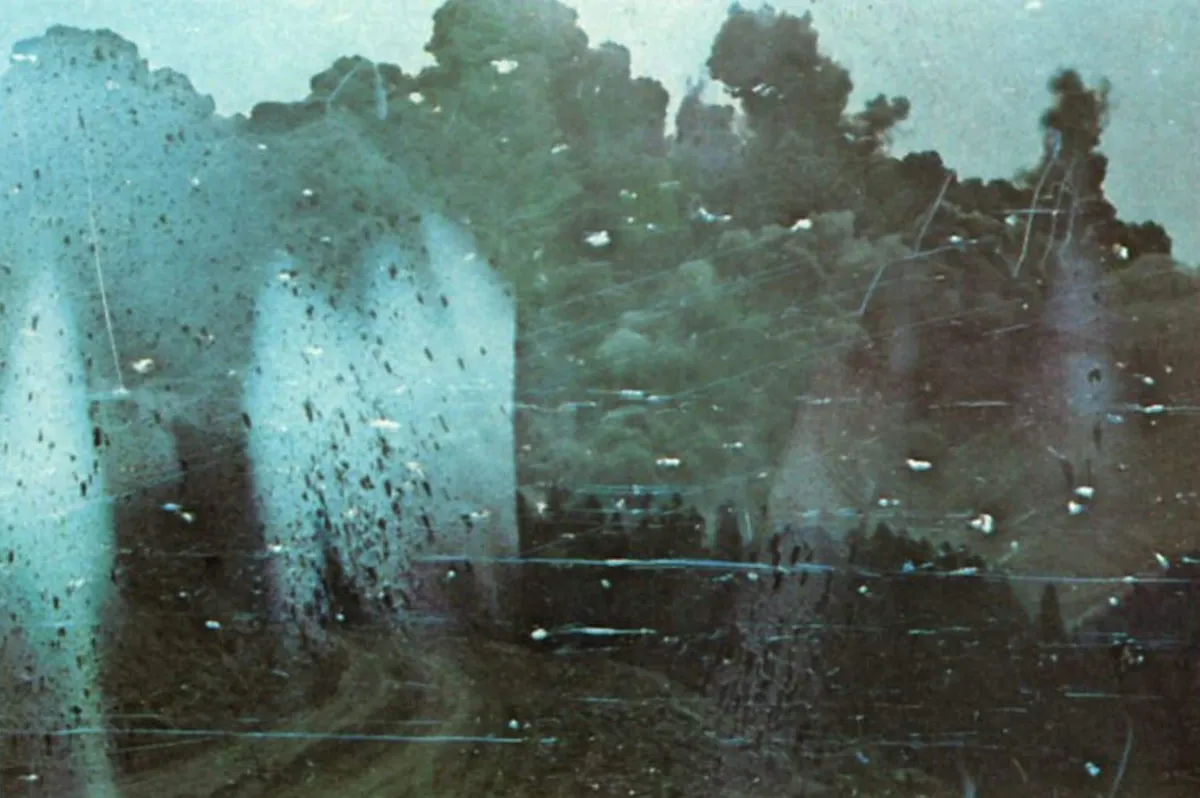


“Bob’s (Robert’s) last act was a photographer’s act. He made the pictures, protected the film, and trusted it to outlast him,” said Evans. “In a moment when we’re all wondering what’s real and who made it, those four frames say something simple: I was here, and these are mine.”
The producer added that he expects to complete shooting for the documentary by the end of this year, with the film set to be released next year.
You might also like
Here’s our expert take on the best cameras for landscape photography. Our analogue expert, Seb Oakley, also shares his pick of the best film cameras here.

