




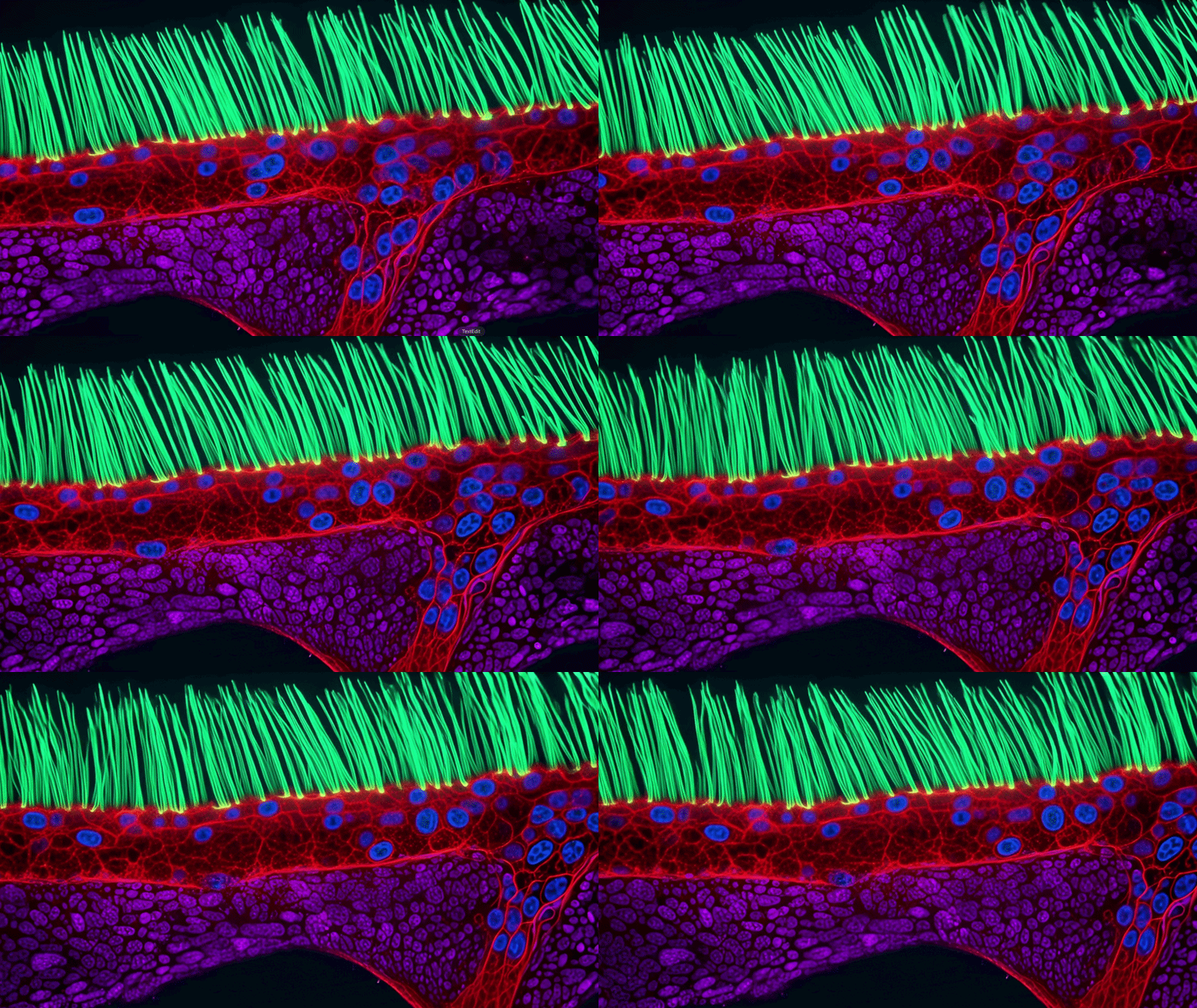
Nikon has announced that the winner of its 2026 Small World in Motion Video Competition — a long-running and prestigious scientific imaging contest — has been disqualified.
According to the company, the winning video, created by Dr. Ning Xu of China’s Tsinghua University, “did not comply with the competition rules regarding generative AI,” although Nikon did not state exactly how the rules were broken.
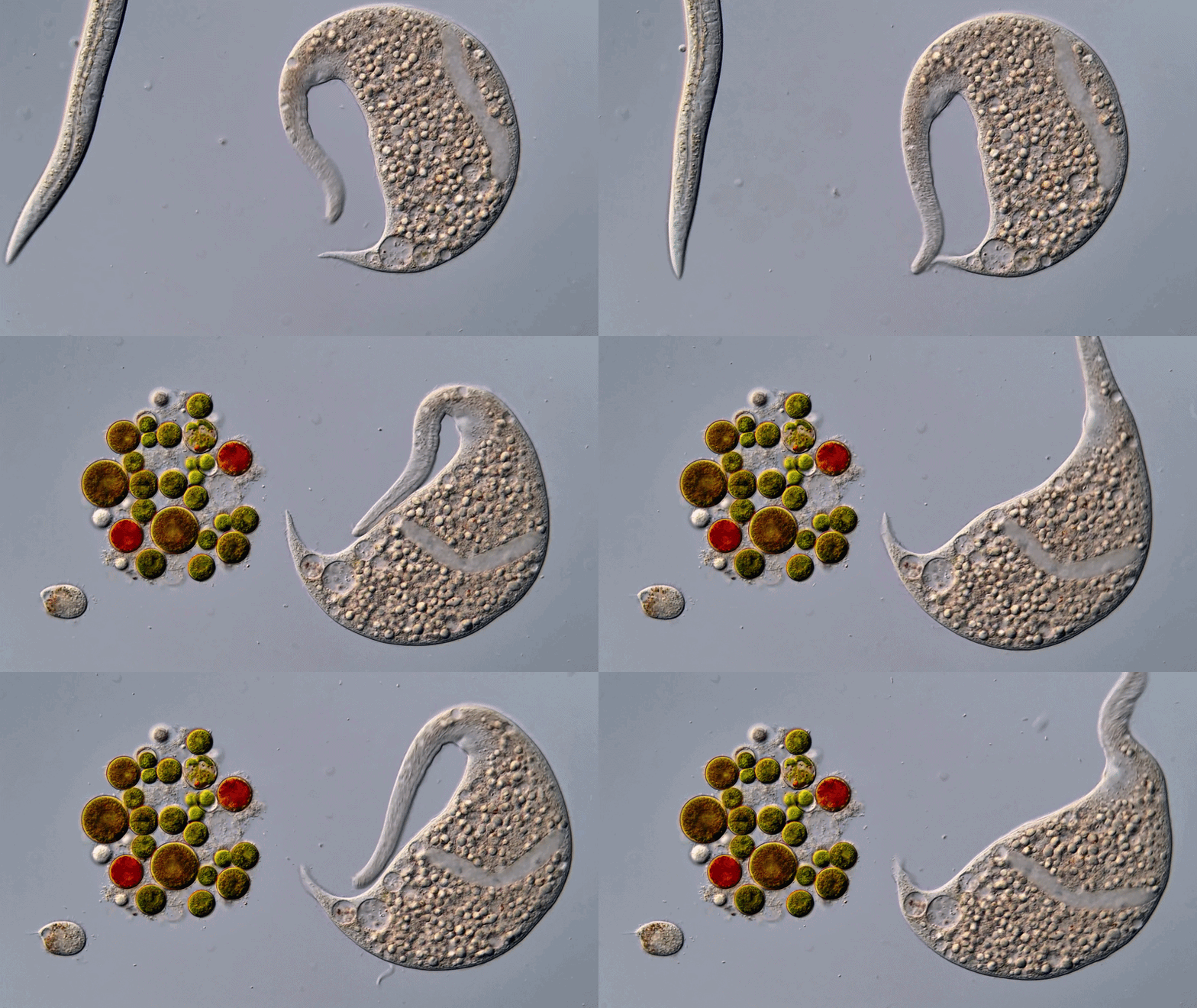
The company did, however, subsequently name Nguyen Nam Nhat, of Vietnam, the new winner for a video depicting a tiny roundworm and a single-celled Dileptus “exploring their microscopic world.”
In late September, Dr. Ning Xu, a biomedical imaging specialist, took first place at the 15th edition of the Nikon contest. His microscopic video captured the abnormal beating of a cellular structure in a patient with a rare genetic respiratory disorder called primary ciliary dyskinesia (PCD).
According to the BBC, after the entry appeared on a now-deleted post on the competition official LinkedIn page, scientists began pointing out to Nikon that Dr. Ning Xu’s video appeared to be computer-generated.
Among them was Dr. Robert Hirst, principal scientist at the University of Leicester’s Division of Respiratory Sciences, who told the BBC he “knew immediately that the video was fabricated.”
“I have been diagnosing PCD for 20 years by examining their cilia waveform, length, cell size and shape,” he said, adding that the cells and cilia in the video looked “nothing like” those of PCD patients.
Dr. Xu defended his use of AI in the post comments before it was deleted, according to CNN stating that he wanted the video to be “visually engaging as well as scientifically interesting."
The disqualified winner explained that AI-assistance was used in the post-processing of grayscale images to “distinguish and visualize” features in the region below the cilia, not to “anatomically reconstruct the underlying cells or organelles."
Dr Xu concluded that "a more detailed description” of his optical system and quantitative analysis of the ciliary motion are currently being prepared for publication.
Following the outcry, Nikon removed Dr. Ning Xu’s entry from the winners’ webpage, stating that it had “thoroughly” reevaluated the video and supporting materials, while also consulting members of the judging panel.
Nikon said that the disqualification was “based solely” on the submitted video’s eligibility under the competition rules and should not be interpreted as a “judgment of the entrant’s professional reputation, scientific contributions, or intent.”
You might also like…
Here’s our pick of the best microscopes — perfect for students, kids and photographers.

