
Parts of North America and Europe were wowed by the standout astrophotography event of the year, yesterday evening: a total solar eclipse. Switzerland-based Nikon photographer Angel Fux (@angelfux) traveled to Spain to capture the phenomenon in the optimal location, following over two years of preparation. She had just 103 seconds to capture the moment, all while operating two Nikon cameras and following strict safety precautions.
I was lucky enough to chat to the landscape and astrophotographer – who is known for hiking out to secluded mountainous locations – just days before the event. Angel had promised to deliver a stunning photograph of the total eclipse for publication, and as you read on to find out just how much planning was involved, you’ll realize that the gorgeous images that populate this article were never in doubt.
How Angel Fux prepared for the 2026 total solar eclipse

Digital Camera World: It took you over two years to prepare for this shoot. How did you go about researching the location?
Angel Fux: “When I first learned that a total solar eclipse would cross Europe in August 2026, I immediately felt there was an opportunity to create something very different from my usual astrophotography work. I knew I wanted to approach it as an artistic project rather than simply documenting the event.
“Like most of my projects, the research started on Google Earth. I spent countless hours virtually exploring landscapes along the path of totality, looking for locations that resonated with the kind of scenery I’m naturally drawn to. Mountains have always been where I feel most inspired, so I was searching for landscapes that carried some of that feeling while still preserving the identity of northern Spain.
“Along the way, it was recommended that I look into a particular area, and a viewpoint immediately stood out. It required a bit of scrambling to reach the summit, but the panorama was exactly what I had hoped for.
My decision to choose Spain was mainly driven by weather. Greenland and Iceland were incredibly tempting, but for an event that lasts only a few precious minutes, I wanted to maximize my chances of clear skies.”

DCW: You even rehearsed the shoot beforehand: How on Earth does that work?
AF: “It sounds funny at first – how do you rehearse an eclipse when you don't actually have one? The reality is that you're not rehearsing the eclipse itself; you're rehearsing everything around it. Over the past few months, I've repeated my entire shooting sequence many times. The goal is to make every movement almost instinctive by the time totality arrives. That means practicing camera settings, timing, switching between cameras, checking focus, and following a precise sequence under time pressure.
“The only step I obviously don't perform is removing the solar filter, because the sun isn't eclipsed during practice. Everything else can be rehearsed exactly as it will happen on eclipse day.
“Practice sessions are also invaluable for testing exposure settings. I compared different apertures, shutter speeds and ISO combinations, then carefully reviewed every frame afterwards to determine what works best for my equipment. By the time the eclipse happened, I wanted as many decisions as possible to have already been made.”

DCW: What split-second decisions could you be forced to make when the Moon passes in front of the Sun?
AF: “Ideally, none.
“The entire reason for months of preparation is to reduce the number of decisions that have to be made during those precious minutes. Every step is carefully planned beforehand. If something does require a last-second adjustment, it’s most likely weather-related. Even thin clouds passing in front of the sun can change the exposure enough to require small adjustments.
“Another important consideration is focus. Because this eclipse happens very close to sunset, atmospheric turbulence becomes more significant as the sun approaches the horizon. I therefore plan one final focus check just before totality begins to ensure everything remains perfectly sharp. The less you have to think during totality, the more you can actually experience it.”

DCW: You’re shooting with two cameras; does this double the decision-making process in the moment?
AF: “Not necessarily. The two camera setups have been designed to complement each other rather than compete for my attention. One camera is dedicated to a close-up view of the eclipse, while the other captures a much wider perspective.
“Because those two shots have different technical requirements, I’ve deliberately planned the sequence so I don’t have to perform critical actions on both cameras at exactly the same moment. It certainly adds more steps to the workflow, but they’re sequential rather than simultaneous.”

DCW: How and why did you select the Nikon Z8, Nikon Z 400mm f/4.5 VR S and Nikon Z 14-24mm f/2.8 S?
AF: “The Nikon Z8 has become a camera I know and trust completely. I’ve been working with Nikon equipment for over fifteen years, and the Z8 has accompanied me through some very demanding environments – from freezing alpine nights to high-altitude expeditions. Reliability becomes incredibly important when you only get one chance.
“The Nikon Z 400mm f/4.5 VR S was chosen because I wanted something between 300mm and 500mm that offered an excellent balance between reach, image quality and portability. For this project, it felt like the perfect focal length. The Nikon Z 14-24mm f/2.8 S lens, on the other hand, is probably the lens that best represents my photography.
“Most of my landscapes and night sky images are made somewhere within that focal range. It allows me to place the eclipse within its wider environment while capturing the dramatic changes happening across the sky during totality.”
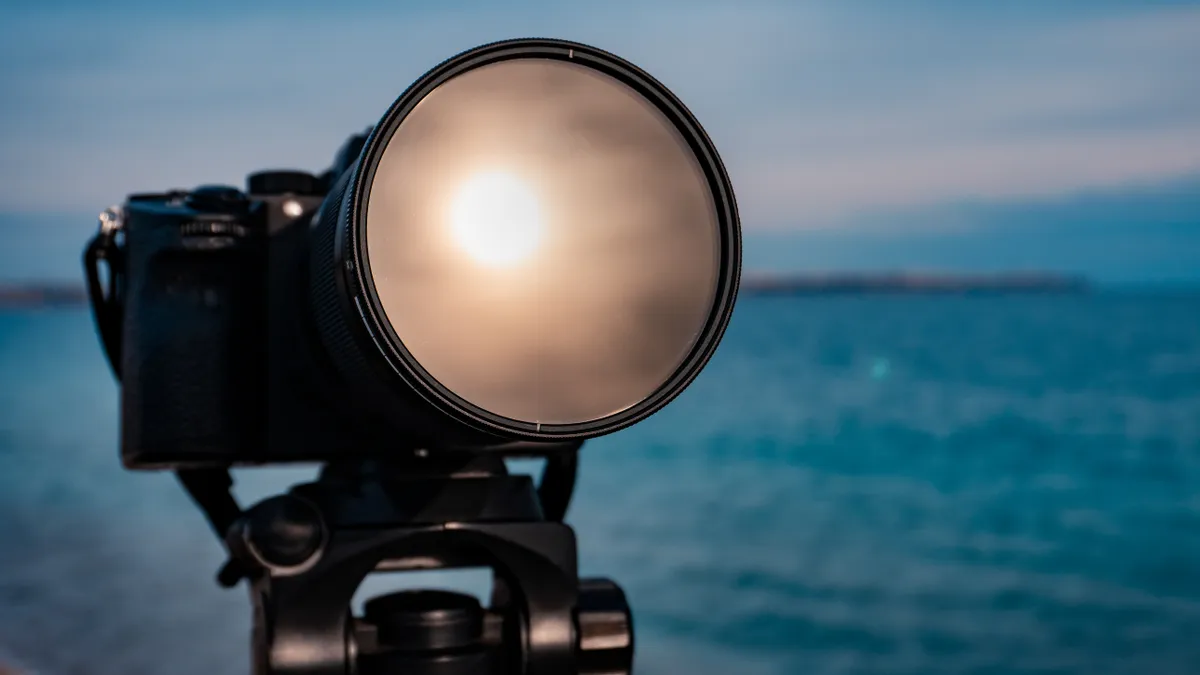
DCW: Are budget solar filters effective or are quality alternatives worth investing in?
AF: “For me, certified solar filters are absolutely worth investing in. Beyond protecting both your eyesight and your equipment, a well-designed filter can also make your workflow significantly smoother.
“For example, I’m using a magnetic filter system that allows me to remove and replace the filter very quickly during the narrow window around totality. When you’re working with seconds rather than minutes, that kind of practical advantage
becomes very valuable. Ultimately, you’re protecting equipment worth thousands of dollars – and more importantly, your eyesight. That’s not an area where I’d personally choose to compromise.”
DCW: Has working with mirrorless tech made checking your exposure and focus much easier?
AF: “Yes, although I usually start by letting autofocus acquire the sun first before switching immediately to manual focus for the remainder of the sequence. Modern mirrorless cameras make that entire process much easier.
“Being able to magnify the live view, use focus peaking and check exposure in real time gives you a level of confidence that simply wasn’t available years ago. The autofocus systems themselves have also become remarkably reliable, so acquiring initial focus is incredibly straightforward before making those final manual refinements.”
DCW: What’s your top tip for beginner photographers looking to get into astro or solar photography?
AF: “I’d actually separate astrophotography and solar photography because they’re very different disciplines.
“For astrophotography, my advice is simple: start with the equipment you already own. That’s exactly how I began, with a fairly basic wide-angle lens and a tripod. The most important thing is simply getting outside and experimenting. Every night teaches you something new, and little by little you’ll understand what additional equipment would genuinely benefit your photography.
“Solar photography is quite different. Personally, I find it becomes much more exciting with longer focal lengths, but it’s also a field where safety has to come first. Before thinking about the photograph itself, learn how to properly protect both your eyes and your equipment using certified solar filters. Once that’s in place, experimenting with longer focal lengths opens up a fascinating world of detail that most people never get to see.”
DCW: Can you tell me a little bit about the short film you’re making with Nikon?
AF: “The film isn’t intended to explain how to photograph an eclipse – it aims to capture what it feels like to prepare for one. One thing I heard over and over while listening to experienced eclipse chasers or people who have experienced one, is that a total solar eclipse is almost impossible to describe. Everyone says the same thing: You simply have to experience it for yourself. That became the starting point for the film.
“Rather than making a technical documentary, we’re creating something much more cinematic and emotional. The story follows the anticipation, the preparation, the uncertainty, and ultimately that overwhelming sense of awe that comes from witnessing one of nature’s rarest spectacles.
“Alongside the film, I’ll also be unveiling the final artwork created for this project, which forms one of the central creative threads throughout the story. The film is being co-directed and produced together with filmmaker Prince Berkoh, whom I’ve known for several years. From the beginning, I felt he was the perfect creative partner for this project. He immediately understood the emotional direction we wanted to take, and collaborating with him has been instrumental in bringing this vision to life. Together, our goal isn’t simply to show an eclipse, but to inspire people to experience one for themselves.”
Angel Fux is an award-winning astro and landscape photographer who specializes in high-altitude mountain photography. Her work has been recognized and shared by some of the world’s biggest organizations, including NASA, BBC Science Focus and The Guardian.
You might also like...
Looking for a step-by-step guide to photographing a future solar eclipse? Here's how to photograph a total solar eclipse. If you're looking for other subjects to photograph in the sky, here's our guide to Astrophotography in August 2026. Plus, here are the best cameras for astrophotography.

