
As a tech journalist, I’ve been immersed in the camera industry for more than a decade – and I’ve watched camera prices steadily climb over the last several years. But evidence coming from the biggest camera brands suggests that camera prices are probably only going to get worse – and the reason why breaks my heart: artificial intelligence.
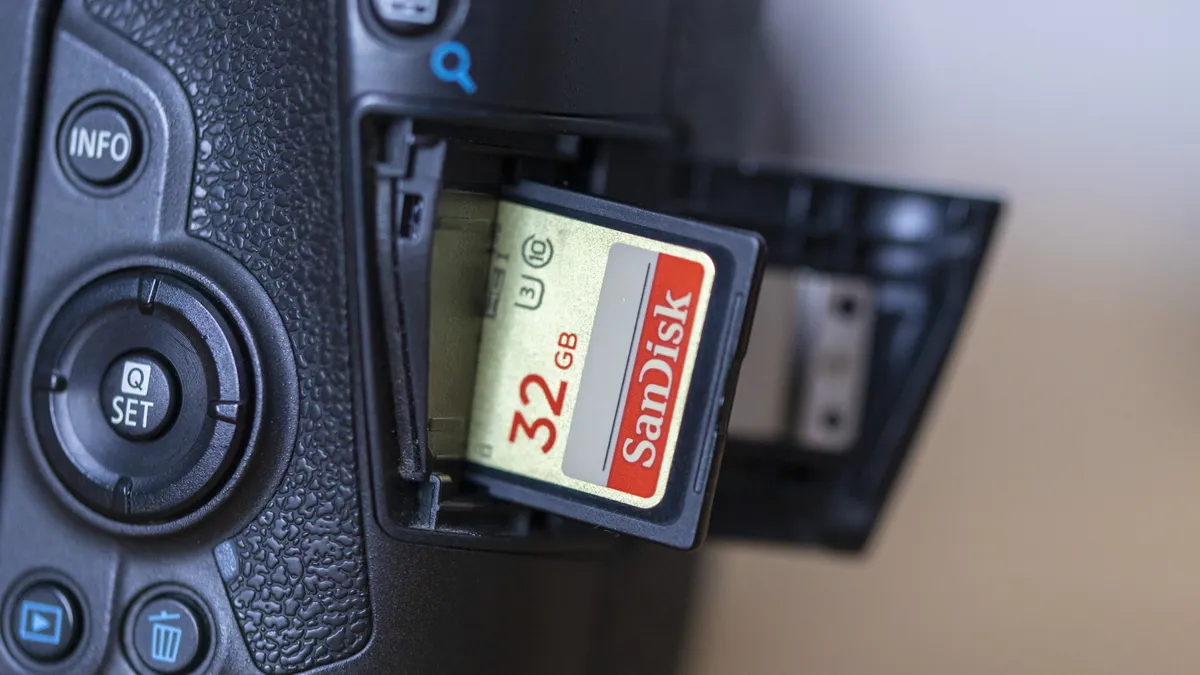
Generative AI needs power-hungry data centers in order to store all the training data. The technology has created a steep rise in demand for all forms of digital storage. Photographers have already seen the effects of this through the steep price jump on memory cards.
But the effects of the AI data crisis are not going to be limited to just memory cards and external hard drives. Several major camera brands have already noted that the cost of the memory components that go inside cameras has also risen – and prices could be adjusted as a result.
The continued surge in memory prices remains a key business challenge for this segment this fiscal year. However, the business is doing everything it can to implement cost-reduction measures in procurement and design, and to adjust its pricing strategies, including foreign exchange management”
Sony Q2 2026 investor report
My work as a tech journalist also means that I’m regularly diving into the latest financial and investor reports from key camera brands, and I’ve noticed a very clear pattern: Memory costs have gone up for building cameras themselves, and several camera brands have mentioned that prices could be adjusted as a result.
Even cameras without built-in memory still require memory chips. The camera needs to temporarily store photos while they are being processed, which means that the AI data crisis is affecting not just memory cards but the chips inside cameras themselves.
Sony, Canon, Nikon and Fujifilm have all told investors that the rising cost of memory components is a key challenge and mentioned the potential to compensate for those rising costs through pricing adjustments, along with other possibilities like cost-cutting measures.
Even action camera giant GoPro says that memory hardware costs have increased as much as 80 to 110% compared to a year ago.
The rising cost of memory isn’t a minor change. Fujifilm, for example, estimates that increased memory costs will cost the company an additional ¥25 billion in 2026 over the previous year’s costs – that’s $157 million / £116.2 million / AU$222 million / CA$218.6 million at current exchange rates.
Canon’s estimate is even worse at ¥69.4 billion ($423.9 million / £318.9 million / AU$606.4 million / CA$598.6 million)
The investor reports from those brands only discuss the possibility of a price increase. But the number of camera brands discussing the impact of rising memory costs makes it clear that the impact isn’t a small one.
As memory prices are expected to take some time to normalize, we will closely monitor future price trends and seek to mitigate the negative impact as much as possible through price increases and additional cost reductions"
Canon Q2 2026 Investor Report
While a price increase is currently just a possibility, the number of brands commenting on the change and the estimated cost for additional memory has me suspecting that camera prices are only going to get worse.
Some brands saw the writing on the wall and managed to secure most of the memory that they’d need for 2026, so it’s entirely possible that photographers make it out of 2026 without seeing a significant memory-fueled price increase.
But some chipmakers and industry analysts are predicting that the cost of memory will continue post 2030. If that is indeed the case, I fully expect camera prices to see some form of a price climb.
A price change may not necessarily mean that a camera brand goes through its entire catalog and raises prices – as many camera brands did after increased tariffs in the US. The higher costs may instead mean that upcoming cameras launch at a higher list price than their predecessors.
Despite the Supreme Court ruling some tariffs illegal and issuing refunds, I would be very surprised to see those prices go back to pre-tariff levels – though perhaps those already increased US prices could potentially help hold off a price increase in the US.
Price increases are never easy to swallow, but the fact that the increases are caused by computers trying to replace traditional images with GenAI makes the possibility more of an insult than price increases fueled by other factors, such as inflation.
Memory won’t be the only factor going into the cost of cameras – and one potential salve on the GenAI memory crisis is that the Camera and Imaging Products Association is expecting a slight slowdown for the camera industry in 2026 (albeit not for compact cameras).
Higher demand creates higher prices, so a slightly lower demand could potentially help.
So far, camera brands have only told investors that pricing changes, along with other measures, are being considered to help offset rising memory costs. But as an industry expert, I suspect that if the memory crisis does not slow, then memory cards won’t be the only gear photographers end up paying more for thanks to AI.
You may also like…
Browse the best mirrorless cameras or the best compact cameras.

