
The Lavazza Calendar has long been a prestigious platform for the world's most acclaimed photographers, with a history featuring names like Helmut Newton, Annie Leibovitz, and Steve McCurry. For its 2026 edition, unveiled this week at Art Basel Miami Beach, the Italian coffee giant has turned to Magnum Photos legend Alex Webb to capture a "most authentic essence of Italy".
Titled "Pleasure Makes Us Human", the 34th edition of the calendar explores the "intangible yet universally recognizable" quality of "Italianness". Rather than relying on postcards or clichés, Lavazza engaged Webb, known for capturing striking and insightful street images, most recognisable by their bold colors. The images he and the team have created for this year’s calendar encapsulate visual narratives that find beauty and intrigue in the spontaneous rhythm of daily life.
A "Grand Tour" of Light and Shadow
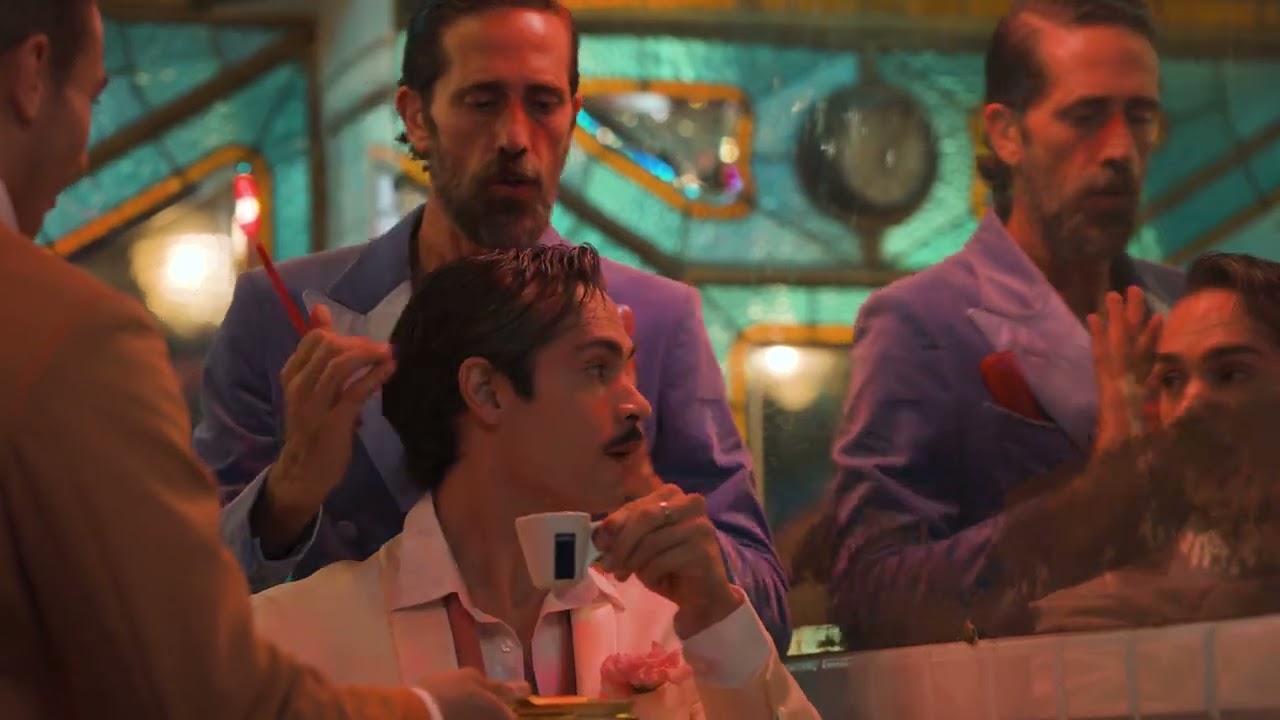
The project is conceived as a modern "Grand Tour" spanning the Italian peninsula from north to south. The 14 shots weave together landscapes and daily routines, from the quiet dignity of an Art Nouveau barbershop in Genoa to the spiritual intensity of the Feast of Santa Rosalia in Palermo.
Webb, who has been a member of Magnum since 1979 and is celebrated for his complex, layered street photography, brought his signature aesthetic to the project. Known for using "dramatic shadows" and "audacious geometries," Webb’s images for the calendar are permeated by warm, vibrant colors. However, when asked about beauty in his work, Webb stated that he’s "more comfortable with a term like resonance". He is not looking for the "beauty of a postcard" but a "complicated beauty" because he feels that approach authentically reflects the complex beauty of the world.
While commissioned work involves models and a creative team, Webb explained that once they get into the situation, it becomes "more serendipitous". He seeks out "moments that are essentially uncertain" in the composition of his subjects, noting that commissioned work succeeds best when it retains "a sense of the uncertainty of life".

Speaking to me via video link, Webb revealed a personal connection to the project's setting: his history with Italy dates back to 1957, when, aged just five, he took his first trip to Europe. The 3-month journey with his family included a month in Italy. "It's a resonance with things in the past," Webb reflected, recalling vivid memories of the food, including the roast beef in Rome and his first taste of wine in Pisa.
Inside The Process
Webb shot the entire project over just 12-13 days in July, with initial discussions starting as early as April. The final selection was made in August, and the final toning was completed by early September.
True to his street photography roots, Webb kept his setup minimal, describing his camera as simply "an extension of the eye". He shot most of the calendar on a Leica M (Typ 240) rangefinder with a Summicron 35mm f/2 lens, deviating to a 28mm lens for only a single picture.
The editing process stayed true to Webb's documentary style, with toning being "not terrifically dramatic," mainly consisting of "adding a little vibrancy, maybe opening it up a little bit". He works with his printer to create match prints to ensure color consistency for both the physical calendar and the Art Basel exhibition prints. The only digital enhancements made to the imagery were to ensure the clarity of the cups. "We did some extra work on the actual coffee cups to make sure that they were clearly the [Lavazza] cups.”
The final selection of 14 images was a collaborative effort, with images chosen for their "visual and emotional resonance". Webb noted that for the most part, the creative team chose the ones that he particularly wanted.

Capturing the "Joy and Play”
The calendar’s imagery moves away from conventional iconography, explained Michele Mariani. Mariani is the Executive Creative Director of Armando Testa Group, the longstanding ad agency that works with Lavazza to produce the annual calendars. Speaking ahead of the launch, he said that they wanted to avoid stereotypes, and instead create a "journey into Italianness".
For Webb, the project was about capturing more than just food and drink; it was about "joy and play". He noted that motifs like cotton candy, balloons, balls, and jumping children - all elements that often appear in his wider body of work - represent a "response to, you know, the small pleasures in life" and the "possibility of pleasure, even in quite difficult places". Ten years prior to this project, Webb photographed coffee harvesting in Guatemala, where it’s central to the economy, but also the culture. His work often brings focus to people in places that rarely get mass media attention.

Calendar Highlights
May: An intriguing image depicting a man enjoying a quiet moment with coffee, while a girl walks a dog in the background. The use of shadow, composition, color and perspective gives the shot a surreal feel.

June: A young woman enjoying the ritual of coffee and focaccia, a scene punctuated by "resonating-colored elements".

December: A vibrant night time party scene, with two women dancing and singing on a balcony. The slow shutter accentuates the movement and energy of the moment.

You can see all the images and find out more about the 2026 Lavazza Calendar, as well as get your own copy on Lavazza's website.
You might also like...
Inspired to shoot some great portraits? Check out some of the best cameras for portraits and the best lenses for portraits to get you started.

