
I remember a few years ago seeing a picture of a terrifyingly ugly shark that went viral. It had this protruding mouth packed with razor-sharp teeth and a long pointed head.
It turns out that this was a goblin shark, which quickly gained the reputation of the world's “ugliest” sea creature. Now researchers have captured footage of these less-than-stellar-looking fish in their natural habitats for the first time.
Australian scientists from the Minderoo-UWA Deep-Sea Research Centre video the fish during a research project in the Tonga Trench – the second-deepest marine trench in the world – in 2024.
In 2019, in another region of the Pacific Ocean, researchers from the University of Hawaii observed the sharks near Jarvis Island.
The two sightings of this elusive species, which happened some 1,500 miles apart, have been published together in the Journal of Fish Biology.
“We actually know virtually nothing about them [goblin sharks],” Professor Alan Jamieson, director of the Minderoo-UWA Deep-Sea Research Centre, told the Guardian.
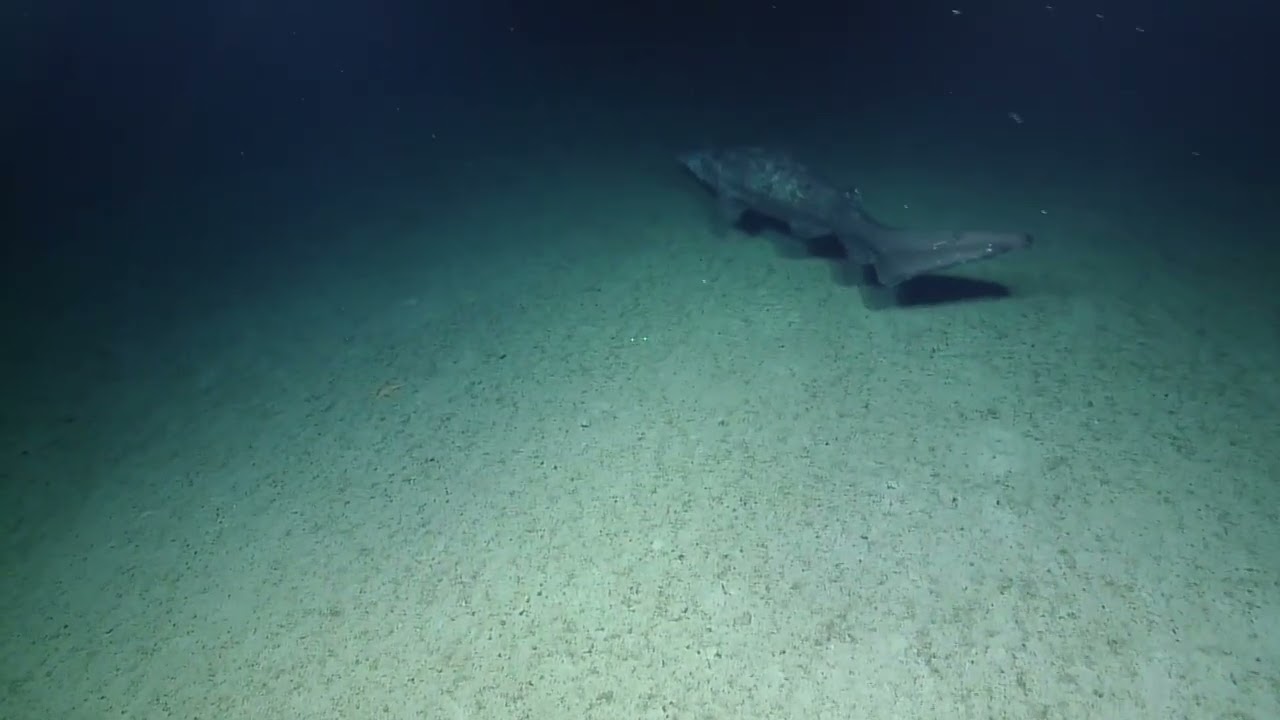
ABOVE: Footage of the goblin shark spotted in the Tonga Trench
While the species was first discovered in 1898, there have been few sightings of them alive. The sharks typically remain at a depth of around 3,000 feet (approximately 915 meters), with Jamieson explaining that any previous sightings were usually because of accidental fishing.
The 2024 video lasts just over 20 seconds and the individual recorded in the Tonga Trench was captured at a depth of 6,500 feet (approximately 2,000 meters).
Jamieson said the result was only possible due to the sheer amount of footage collected during the expedition, which included over 50 days of continuous filming.
“They [goblin sharks] are ridiculously horrendous to look at,” said Professor Culum Brown, a fish expert at Macquarie University. “Not even their mother would love their faces.”
Brown explained how the sharks are like “something out of a horror movie”, using their long snouts to detect prey and then shooting out their protrusible jaws to snag them.
I’m certainly glad I’ll never encounter one of these terrifying creatures on a wildlife shoot, but it is amazing to see footage of them in their native habitats for the first time ever.
You might also like…
Discover our pick of the best waterproof cameras and the best underwater housings for cameras and phones.

