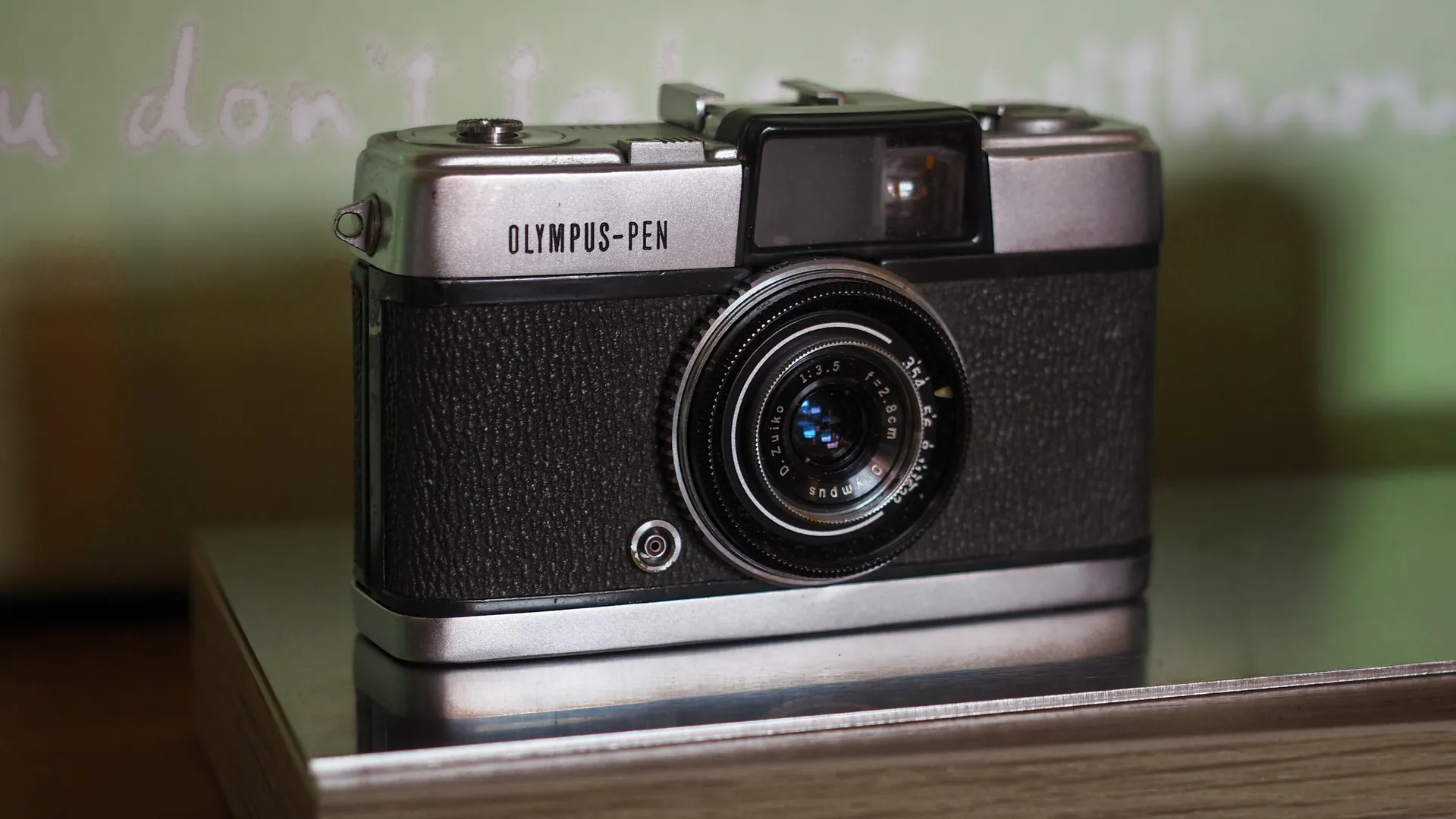
The Olympus PEN is such a legendary design concept that it has survived the transition from film to digital and, nearly 70 years later, lives on as the new OM System PEN mirrorless camera.
Yet, after the introduction of the original Olympus PEN in 1959, Yoshihisa Maitani – the designer behind several legendary Olympus cameras, including the PEN – had actually called the original PEN “a huge failure.”
The reason that the designer dubbed the first PEN a failure is that the half-frame film camera was so radically different in order to create a smaller, lighter SLR that other camera makers couldn’t copy it.
“Because we took all the patents, no other company could manufacture this type of camera, and there was no boom,” he said.
While the PEN didn’t inspire copycats, the first half-frame camera made in Japan did spark a wider movement for half-frame film and was unexpectedly popular.
But despite labeling the original Olympus PEN as a failure for failing to spark a wider movement for compact designs, the PEN survived, undergoing many iterations from the film PEN F to the digital PEN E-P7.
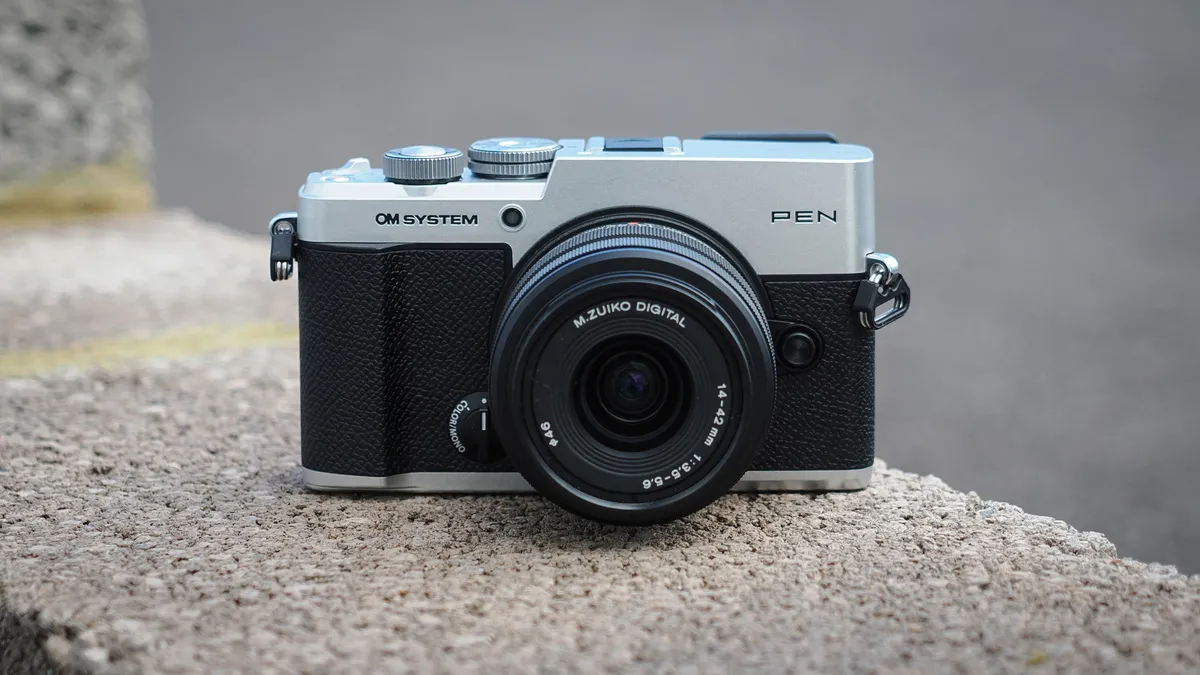
Had Maitani seen the evolution from the Olympus PEN in 1959 to the OM System PEN in 2026, I have to think that he wouldn’t have called the camera a failure. Despite the 67 years between those two cameras, the original PEN and the modern equivalent are still built prioritizing the same three things: size, simplicity and price.
A camera built for anyone to enjoy

Maitani’s original concept for who the original PEN camera was built for remains right in the name. The designer described the camera as “a tool that allows everyone to enjoy photography easily, just like a paper and pen.”
The name has stuck through several decades and iterations, but the series remains committed to simplicity. The new OM System PEN may have a retro design inspired by the original, but the camera still has a classic mode dial with easy access to auto mode.
"A tool that allows everyone to enjoy photography easily, just like a paper and pen
Yoshihisa Maitani
Part of being built for everyone is the compact size, meant to be easy to carry around. Size was a focus for Maitani when he first started working for Olympus in 1956. The original PEN was unusual in that it was half-frame – which feels appropriately not unlike Micro Four Thirds cameras today.
Perhaps the biggest difference between the PEN then and the PEN now is that the original 1959 camera was a fixed-lens compact, not an interchangeable-lens camera. While Maitani continued to develop small fixed-lens cameras like the PEN EE, he saw the growing demand for small but advanced cameras.

The key challenge to creating a smaller SLR at that time was the mirror box.
Miaitani built a smaller mirror box that was turned on its side, but this created issues with the traditional shutter. So he built a rotary shutter design made from titanium and the first interchangeable lens camera in the series, the PEN F, was born in 1963.
A camera meant to head outside

OM System’s commitment to Micro Four Thirds feels true to Olympus’ history of compact designs – and particularly the PEN – but size isn’t the only one of Maitani’s priorities that continues in modern designs.
One of OM System’s key focuses is creating cameras built for the outdoors. The new OM PEN is the first in the series that has full weather-sealing, including a new sealed kit lens: the OM System M.Zuiko 14-42mm f/3.5-5.6 III.
This, too, could perhaps be inspired by another one of Maitani’s famous quotes: “A camera is meaningless unless you take it outside.”

OM System says the new 2026 PEN is meant to be an everyday carry camera – and that rain resistance goes a long way in making that possible.
But one of the key features that the 1959 PEN was known for was price. While designing the original PEN, Maitani had a strict target of ¥6,000; that was a fraction of Olympus' cheapest consumer camera at the time, which cost ¥23,000.
"A camera is meaningless unless you take it outside.”
Yoshihisa Maitani
Using the exchange rate of the time, that meant the camera cost about $17 / £15. Adjusting for inflation, that’s about $196 / £315 today.
The PEN may not come close to that original price, but the new mirrorless iteration is the most affordable OM System camera (though the Olympus OM-D E-M10 Mark IV remains available and is cheaper).
It sells for $999 / £849 / AU$1,499, making it one of the few mirrorless cameras under four figures that still has in-body image stabilization, weather-sealing and an electronic viewfinder – and a retro design that harks back to Mitani's vision, all those years ago.
You may also like
Browse the best Micro Four Thirds cameras or the best retro cameras.

