




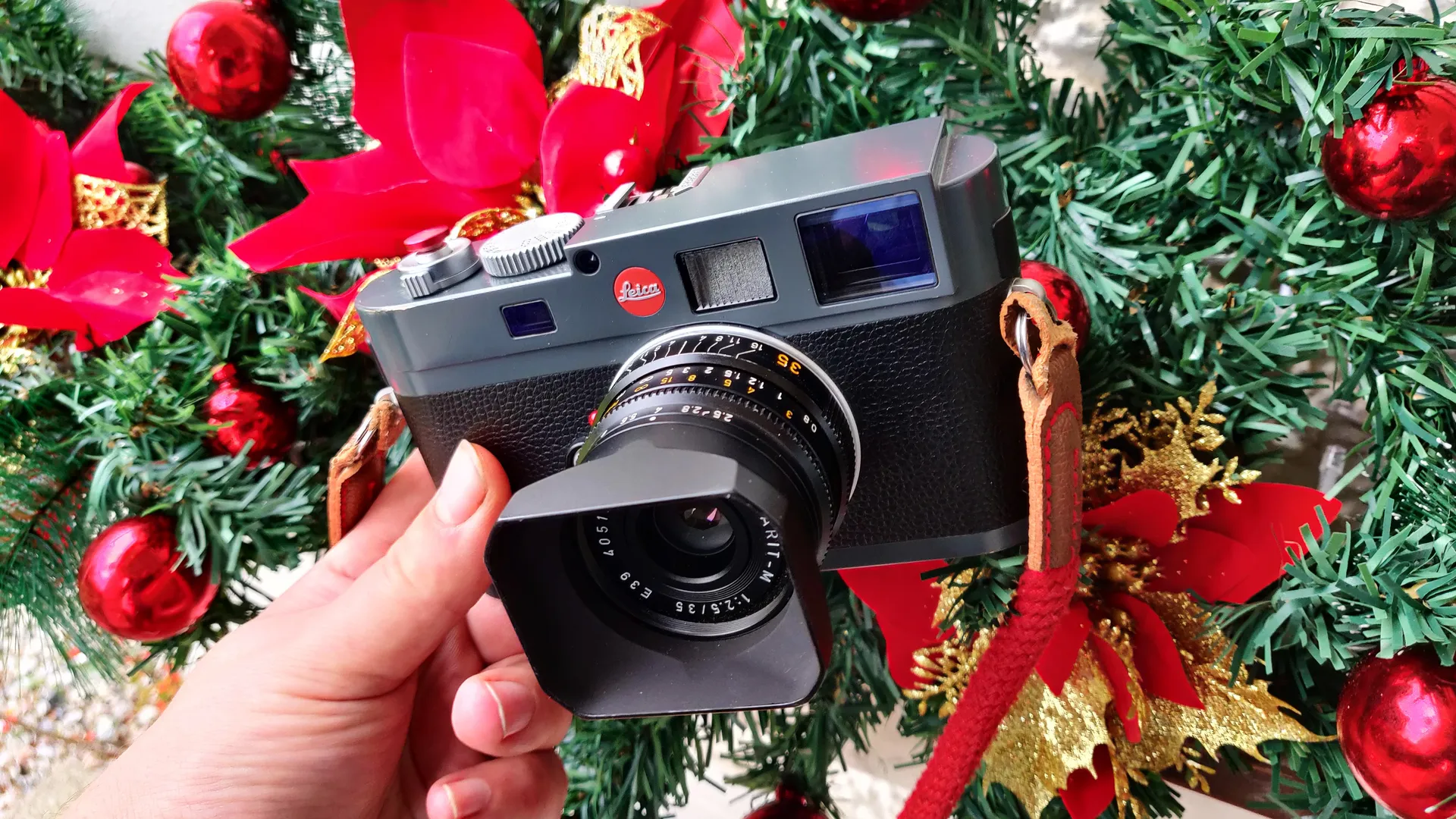
There are cameras you buy, cameras you enjoy, then there are cameras that leave a lasting impression long after you've reluctantly parted ways with them.
For me, that camera will always be the Leica M-E (Typ 220), a rather beautiful, understated rangefinder that was essentially the more affordable version of the legendary Leica M9.
Introduced in 2012, the M-E was marketed as the "entry-level" digital M, although with a launch price of $5,450, entry-level was certainly a matter of perspective!
What made it particularly special, at least to my eyes, was that gorgeous anthracite-gray finish, which somehow managed to look both contemporary and unmistakably Leica.
It was also my very first digital Leica M camera and, while I've owned and used plenty of exceptional cameras over the years, there was something about that particular Leica that I've never quite managed to find again.

At the heart of the M-E was the very same 18MP full-frame CCD sensor found in the original Leica M9 – and goodness me, what a sensor it was.
Now, I appreciate that camera technology has moved on considerably since 2012. By today's standards, 18MP, a rather basic rear LCD and an ISO ceiling of 2500 hardly sound like the ingredients of something extraordinary.
However, anyone who has spent time shooting with one of these cameras will understand exactly what I'm talking about. The colors were simply glorious, with a richness, depth and almost film-like quality that made photographs feel wonderfully organic.
There was something about the way that CCD sensor interpreted light, particularly in natural daylight, that I still struggle to explain.
And when it came to black-and-white photography, well, it was in a league of its own. The tonal transitions, contrast and character of those monochrome images were, to my eyes, absolutely out of this world.
Unfortunately, my love affair with the M-E wasn't destined to last forever – and like so many owners of the Leica M9 generation, I eventually encountered the dreaded sensor corrosion problem.
This was a well-documented issue affecting the protective glass covering the CCD sensor, particularly on earlier examples, which could gradually develop corrosion and leave unwanted marks across photographs.
It was an incredibly frustrating problem, especially on a camera that commanded such a premium price, and one that ultimately led me to sell mine. Looking back, I genuinely wish I had been able to keep it – particularly knowing how desirable examples with properly replaced sensors have become.
Leica did introduce a replacement program, although the availability of replacement CCD sensors eventually came to an end in 2020. Today, finding a good example with a documented replacement sensor is something I would consider essential, but even the knowledge of those potential problems doesn't stop me from missing mine.

Of course, I haven't exactly been left without a Leica M in my life. I absolutely love my Leica M (Typ 240), which was announced alongside the M-E in 2012 and represented the next generation of digital M photography.
With its 24MP CMOS sensor, considerably improved high-ISO performance, live view and greater versatility, the M240 was undoubtedly a more technologically accomplished camera.
In many ways, it remains everything I could want from a digital rangefinder – and I still take enormous pleasure in using it. Yet, despite all those improvements, there is one thing I have never quite been able to replicate – and that is the rendering of the old CCD sensor.
Don't get me wrong, the M240 produces beautiful photographs. And I'm certainly not suggesting that its CMOS sensor is somehow inferior.
However, there was a distinctive character to the Leica M9 generation that felt different, particularly in the colors and the way black-and-white files responded to even the simplest adjustments. Perhaps some of that is nostalgia, but I know which files still make me stop and admire them.
What makes the story even more remarkable is how these aging digital Leicas have become increasingly collectible, particularly when you consider just how far digital camera technology has progressed.
We're now in 2026 and the original Leica M9 is 17 years old, while my beloved M-E is celebrating its 14th birthday. Yet, examples with documented sensor replacements can still command asking prices around $3,500 – sometimes considerably more depending on their condition and provenance.
Think about that for a moment.
We're talking about a digital camera with an ancient screen, limited high-ISO capabilities, no autofocus, no video and a sensor that was already considered modest in resolution more than a decade ago. And yet photographers are still prepared to spend thousands to own one.
That tells you something rather important about the Leica M9 and M-E. These cameras have become desirable not because of what they can do on a specification sheet, but because of the photographs they produce and the experience of making them.
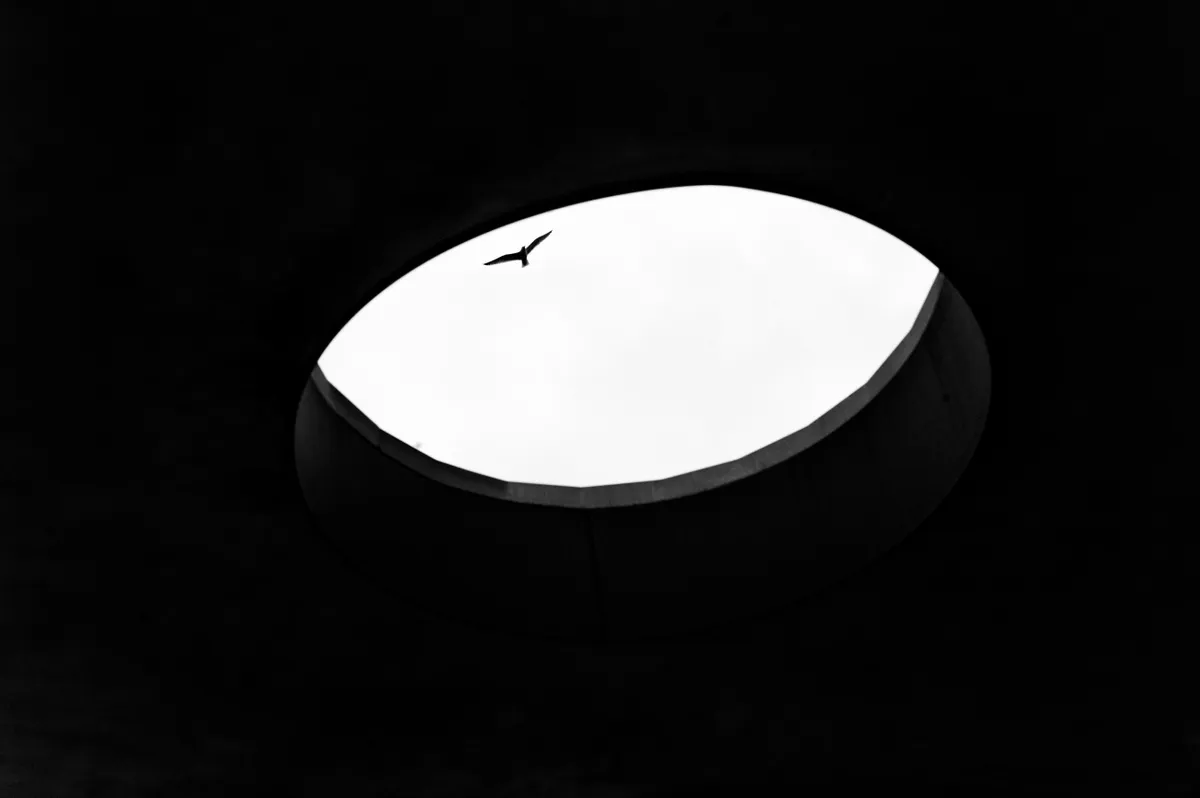
And perhaps that's exactly why I still miss mine so much. Photography has become increasingly obsessed with resolution, computational processing, autofocus algorithms and specifications that seem to improve with every new generation.
But none of those things necessarily make a camera more enjoyable to use or its photographs more meaningful. My Leica M-E was slow, uncomplicated, occasionally frustrating and ultimately flawed, but it encouraged me to think about every photograph I took.
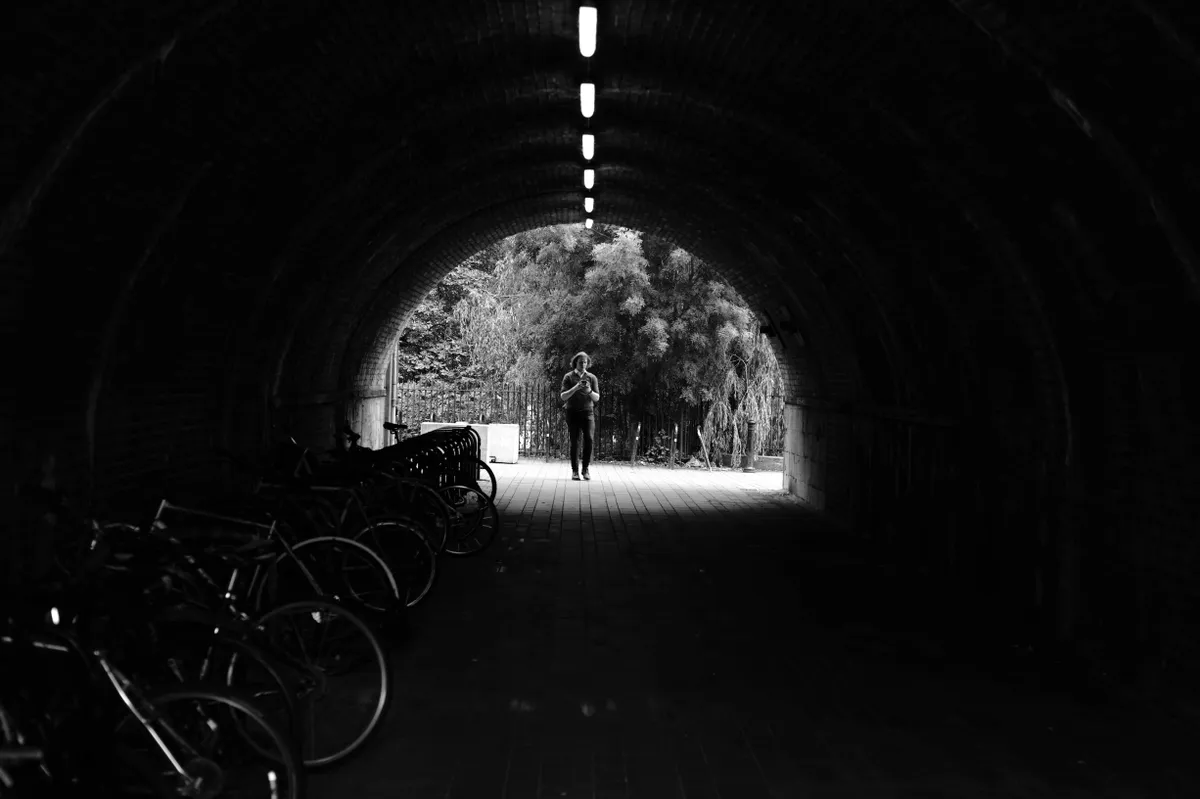
It had a personality that went far beyond its technical capabilities, and that wonderful CCD sensor gave its images a character I still find myself chasing today.
So would I buy another one? Absolutely, provided it had a healthy or properly repaired sensor, although I suspect my bank account might have something to say about that.
For now, I'll continue enjoying my M240, which remains a magnificent camera in its own right. But if there is one digital Leica I wish I had never sold, it will always be that beautiful anthracite-gray M-E Typ 220. Fourteen years later, I still miss it, and I suspect I always will.
You might also like…
Check out the best Leica cameras and best rangefinder cameras, along with the best Leica M lenses.

