
There are camera repair videos, and then there is this. Leica has released an official video documenting the complete restoration of a Leica I, also known as the Leica A, taking viewers inside one of the most important cameras in photographic history as it is stripped down, repaired and brought back to working condition some 100 years after it was made.
Better still, this isn't a quick five-minute promotional film: the entire process runs for around two and a half hours, showing the restoration virtually from beginning to end. If you have even the slightest interest in Leica, mechanical cameras or simply watching somebody who really knows what they are doing work on something extraordinarily valuable, make sure you watch the full repair video below.
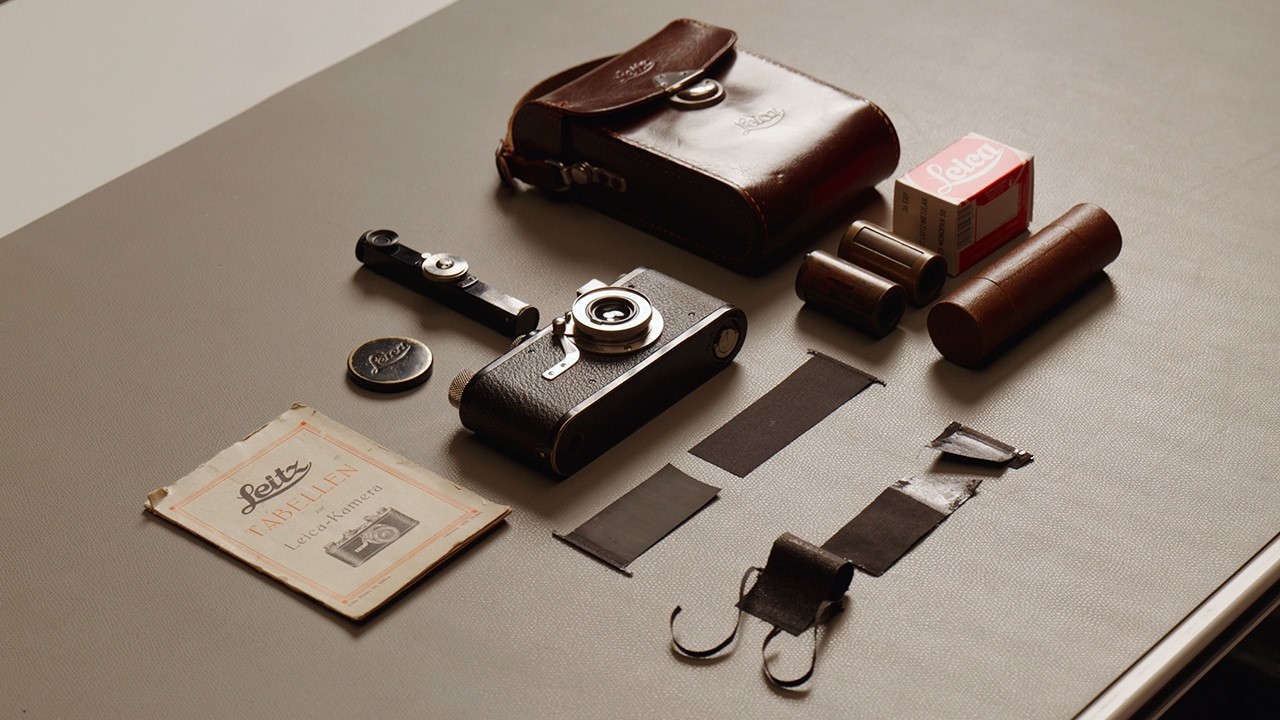
Above: watch the YouTube video that shows the restoration process
The Leica I dates back to 1925, when it was manufactured by Ernst Leitz, and it helped establish the 35mm format as something photographers could genuinely carry with them rather than being tied to considerably larger cameras. The Leica name itself famously comes from combining "Leitz" and "camera", although the business would not formally become the Leica Camera company we know today until many decades later. The particular Leica I featured in this restoration is even more interesting because it belongs to the Leitz family, adding another layer of provenance to a camera that was already approaching museum-piece territory before anyone began reaching for a screwdriver.
After around a century, however, even a Leica eventually needs some attention. The biggest problem with this particular camera was its ageing cloth shutter curtain, which had deteriorated to the point where countless tiny pinholes had appeared across its surface. That might sound insignificant, but inside a film camera those holes mean unwanted light reaching the film, alongside potential problems with the shutter mechanism itself.
Leica's answer is not simply to replace one obvious component and send the camera on its way. The restoration begins with an almost complete disassembly of the camera, removing the mechanical assembly from the outer body before systematically cleaning decades of accumulated dirt and old lubricant from the components within.

And this is where the video becomes dangerously addictive for anyone who enjoys mechanical engineering. At around the 25-minute mark, the base plate and gearing are cleaned before fresh lubricant is carefully applied. The process then moves into the heart of the camera, with the front and rear shutter curtain mechanisms removed, serviced, and fitted with a newly prepared curtain.
Later, the winding shaft is cleaned and lubricated, before the mechanism undergoes the painstaking shutter-speed adjustment required to make sure this century-old camera is actually operating as it should. By the time the video reaches its final stages, the internal assembly is returned to the body, the lens is fitted, and the exterior is cleaned, leaving a Leica I that not only looks remarkably good for its age but is once again a functioning photographic tool.
There is something wonderfully romantic about watching all this happen, particularly at a time when so much modern technology is effectively considered disposable once manufacturers stop supporting it. Here is a camera built around 100 years ago being dismantled, repaired, adjusted, and returned to service by people who still possess the knowledge required to understand every spring, roller, gear, and screw inside it.
That longevity is one of the things that continues to make old mechanical Leicas so fascinating. This isn't merely a restoration video about an antique camera; it is a demonstration of what happens when manufacturing, repairability, and craftsmanship are treated as things worth preserving.
A century after the Leica I helped change photography forever, the fact that one can still be revived and potentially used to make photographs today might be the most impressive specification of all.

