





There’s something rather sad about seeing a camera manufacturer that dared to do things differently potentially disappear from the industry, especially when it was one of the few companies genuinely trying to challenge the traditional camera market.
Unfortunately, that appears to be the situation facing French camera manufacturer Pixii, which has entered judicial liquidation, casting serious doubt over the future of its innovative digital rangefinders and its ambitions to compete with Leica.

According to Leica Rumors and official French business records, Pixii initially entered court-supervised restructuring on December 10, 2025, before the Commercial Court of Besançon converted those proceedings into judicial liquidation on July 22, 2026.
The court permitted business operations to continue until July 31, but the company now faces a deeply uncertain future. In simple terms, judicial liquidation means that a business is no longer considered financially capable of continuing under its current circumstances, with a court-appointed liquidator overseeing the process of selling assets and settling debts. It doesn't necessarily mean Pixii is gone forever, but without a buyer, fresh investment, or someone willing to take over its technology, the prospect of another Pixii camera reaching the market looks increasingly unlikely.
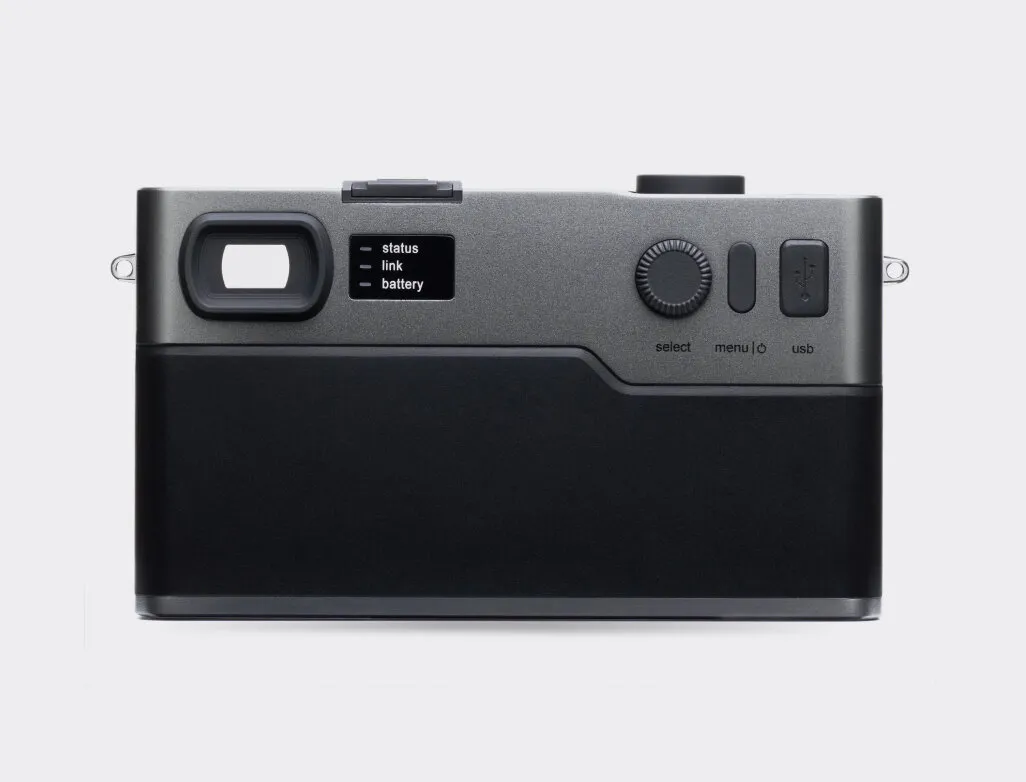
What makes this news particularly disappointing is that Pixii wasn't simply another manufacturer producing a familiar mirrorless camera with a slightly different badge. Its APS-C Pixii+ and full-frame Pixii Max offered a genuinely alternative approach to digital photography, combining traditional Leica M-mount rangefinder shooting with modern computing technology. The absence of a rear LCD, built-in storage instead of memory cards, smartphone integration, and software-driven updates certainly divided opinion, but there was also some seriously impressive technology beneath those minimalist designs.
Perhaps the most interesting was Pixii's monochrome RAW technology, which used clever processing to reconstruct monochrome information from a conventional color sensor, producing up to 16-bit black-and-white DNG files while retaining the ability to shoot in color. As someone who spends much of his time shooting black-and-white photography, I always thought this was one of the company's most exciting achievements, and something I would have loved to see developed further.

However, while some of Pixii's technology was genuinely impressive, I can't help feeling that the company struggled with the balance between innovation, practicality, and price. Removing a camera's rear screen might appeal to photographers who want a more traditional shooting experience, but removing the memory card slot and relying heavily on smartphone connectivity was always going to be a harder sell.
Then there was the price. With the Pixii Max originally reaching $4,999, it was hardly an affordable alternative to Leica, particularly when photographers were being asked to invest in a relatively unfamiliar system from a small manufacturer. That doesn't mean these decisions caused Pixii's financial difficulties, but it demonstrates just how challenging it can be to turn an interesting photographic concept into a commercially sustainable product.
For the wider camera industry, I think this is where the real disappointment lies. We have reached a point where major manufacturers such as Canon, Nikon, Sony and Fujifilm dominate much of the market, while Leica continues to occupy its own established position in the premium rangefinder world. Independent manufacturers like Pixii are important because they challenge the established formula, experiment with ideas that larger companies might consider too risky, and remind us that not every camera needs to follow the same design philosophy.
Pixii was never going to threaten Leica's dominance overnight, but it offered something different in a category where genuine alternatives remain surprisingly limited. Losing that competition, along with the potential for its technology to influence future products, would be a shame for photographers and the industry alike.
There are also immediate questions for existing Pixii owners, particularly concerning warranty support, repairs, replacement parts, and future software updates. These are important considerations for anyone thinking of purchasing remaining stock, and at present the long-term support arrangements remain unclear.
There is still a possibility that another manufacturer or investor could acquire Pixii's intellectual property and continue developing its technology, particularly as the company had reportedly been searching for partners to help bring a next-generation rangefinder to market. I sincerely hope that happens, because although Pixii didn't get everything right, it was a manufacturer willing to take risks and rethink what a modern camera could be. And in an industry that sometimes feels increasingly predictable, that's exactly the kind of thinking we need more of.
Check out the best rangefinder cameras you can buy today

