Digital Camera World Verdict
The Oppo Reno 16 Pro has one of the best selfie cameras I've ever used. If you're an avid selfie snapper, you'll absolutely love it. It's a great phone elsewhere, too, with loads of great picture styles to choose from, fun collage tools, great battery life, and excellent software.
Pros
- +
Capable cameras with fun picture styles
- +
The best selfie camera around
- +
Great battery life
- +
Superb software
Cons
- -
No wireless charging
- -
No Log profile or 4K120
Why you can trust Digital Camera World Our expert reviewers spend hours testing and comparing products and services so you can choose the best for you. Find out how we test.
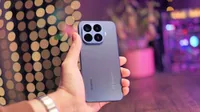
Oppo's Reno series phones have always aimed to give you a lot for your money, and the latest 16-series models are following suit. The Reno 16 Pro boasts a 200MP main camera, one of the most impressive selfie cameras around, a premium build, top-class software, and a sizable 6700 mAh battery.
Oppo told us that, unlike the flagship X-series phones, the latest Reno models are aimed at a younger audience. Rather than professional-level imaging, these handsets are all about creating quick, hassle-free Instagram-ready snaps to brighten up your feed.
As such, there are loads of excellent filters to play about with, and some novel collage effects that are more impressive than they might first sound. I've been having a lot of fun with the Reno 16 Pro, and after slipping my SIM card in for the past week, here are my thoughts.

Specifications
Screen |
6.32-inch 144Hz 2640 x1216 |
CPU |
Mediatek Dimensity 8550 |
RAM / Storage |
12GB + 512GB |
Wide Main Camera |
200MP 24mm f/1.8 |
Ultra Wide Camera |
50MP 16mm f/2 |
Telephoto Camera |
50MP 80mm f/2.8 |
Front Camera |
50MP 18mm f/2 with AF |
Video |
Up to 4K 60fps |
Battery |
6700 mAh |
Operating System |
ColorOS 16 (Android 16) |
Size (HWD) |
151.21 x 72.42 x 8.36 mm |
Weight |
188g |
Price & Availability
The Oppo Reno 16 Pro is available in Europe in a single 12GB RAM and 512GB storage configuration, priced at €1,099, with a launch discount bringing it down to €899 until July 31. There’s no confirmed US release, which is a shame, as this would be a strong option for creators looking for flagship-adjacent camera features without paying true flagship money.
Design
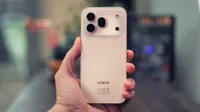
The Oppo Reno 16 Pro stands out from the crowd in its signature Pop White colourway. While it might not be to my particular tastes, I can imagine younger, more feminine users being quite taken with it. (There's also a more sensible black version that might be more my speed.)
So, what makes this phone stand out so much? Well, the glossy rear panel has a subtle glittering finish when the light hits it, complete with a 3D planet motif that's unique to this phone.
When I say 3D, I really mean it. Oppo is calling this tech HoloVerse 3D, and it uses multiple layers of material and millions of micro lenses to create a sense of 3D depth without requiring glasses. Not only that, but the design actually casts a shadow on the back of the phone when you shine a torch at it.

Fancy rear casing aside, the phone looks and feels premium throughout. It has matte aluminium side rails and a flat, boxy, iPhone-like shape. It has a 6.32-inch screen, which makes it much more compact than many of its rivals. As such, it's much easier to reach the top of the screen, and it won't make such a bulge in your pocket. If you have smaller hands, you'll definitely appreciate it.
In addition to the usual power button and volume rocker combo, this phone also has a "Snap Key", which is Oppo's version of Apple's Action Button. I love this button. I use it all the time on my other Oppo devices, mainly as a way to quickly toggle my torch on, but it can do a lot more than just that.
Oppo seems most keen on this button being used like Nothing's Essential Key. By default, it's set to save screenshots to the Mind Space app, which will then use AI to organise your screenshots and make them searchable. It's a handy feature, but as a frequent ecosystem-hopper, it's not ideal for me. Instead, I'm more excited about the ability to quickly launch translation tools when travelling or open my favourite camera mode in a flash.


The screen is pretty impressive. It's an OLED panel with a speedy 144Hz refresh rate, and it can reach up to 3600 nits at peak brightness. There are slim symmetrical bezels on all sides, and while the selfie camera cutout is slightly larger than usual, there's a good reason for that, which we'll dive into a bit later.
The Reno 16 Pro is IP69K certified, a slight increase over the previous model's IP69 rating. Essentially, dust and water don't pose much of a threat to this handset, even at high temperatures; you'll only need to be careful around salt water - but that's always the case.

Image credit: Luke Baker / Digital Camera World

Image credit: Luke Baker / Digital Camera World
You also get a hard plastic transparent case included in the box, so you can keep your phone scratch-free and show off the rear design without needing to purchase additional accessories. This case is clearer than the usual soft TPU freebies, and may be more immune to yellowing - but time will tell.
Camera Performance
The Reno 16 Pro has three cameras on the rear. There's a 200MP main snapper with a decently sized 1/1.56-inch sensor, a 50MP ultrawide, and a 50MP 3.5x telephoto. The latter two sensors are smaller at 1/2.88-inch and 1/2.75-inch, respectively, but I was pleased to find that the ultrawide has autofocus.

Arguably, the most exciting camera on this phone is the selfie camera - and considering the target audience, it's probably the one that'll get used the most often. This camera uses a Samsung JN5 sensor - the same sensor the main camera of the Reno 13F used last year.
The specs aren't too wild, but considering this is a selfie camera, they're pretty darn impressive. It's a 1/2.75-inch sensor with a 50MP resolution and a wide 18mm-equivalent f/2.0 autofocus lens. This setup makes it perfect for wide group shots and matches (or perhaps surpasses) the quality of rear ultrawide for vlogging.
Having just tested the latest batch of "flagship killer" phones like the Xiaomi 17T Pro and Vivo X300 FE, I was quite surprised by the Reno 16 Pro. It might not have a legacy camera logo slapped on it, but this phone is probably the most versatile shooter of the lot. Every single camera is at least 50MP and has autofocus; none of the others can match that.


Of course, these aren't quite flagship-grade optics, but with the slew of filters and styling options that Oppo has included here, most people aren't going to notice.
There's a new mode in the camera app called "Pop" which gives you quick access to a bunch of preset looks. There's a mode that makes photos look like Polaroids, there's a CCD digicam mode with the compulsory Y2K excessive flash, and plenty of film simulations, too. My favourite filter from the X9 Ultra's Master Mode also makes an appearance. It's called Primrose, it's inspired by Portra film, and it delivers some lovely warm tones.
I was also pleased to see that the excellent Soft Light option is available on this phone, and it works in both the normal photo mode and Pop. If you're not familiar, this is like a digital mist filter, softening skin textures and making highlights bloom a little more. It's a great way to get away from the typical hyper-sharp smartphone look.


Otherwise, the usual mid-range caveats apply. At night, you'll want to stick to the main camera as much as possible, as the relatively small sensors elsewhere struggle to keep up. That is, unless you're going all-in on that flash look.
The flash on this phone is surprisingly well-engineered. It's not just on or off; you actually get three strength settings ranging from "soft" to "high contrast". I've never been much of an on-camera flash kind of guy, but it's a trendy look, and it's well worth exploring on this phone.
Overall, it's a really solid camera system, but its weak point is macro photography. The telephoto can focus from around 30cm away, which isn't awful, but it's only an 85mm lens, so you'll need to do a fair bit of digital zoom to get into macro territory. The actual macro camera is the ultrawide, which is never my favourite option, and even then, it can't get as close up as some of its rivals.

Image credit: Luke Baker / Digital Camera World

Image credit: Luke Baker / Digital Camera World
Video shooting is pretty decent on this phone. You can capture at up to 4K 60fps on every single camera, and stabilisation is respectable across the board. There's a new feature built in that automatically straightens your horizon by up to 5 degrees of tilt, which is quite handy, and the Dual-View video capabilities have been boosted, too.
If you're looking for pro video features, though, you might find this handset lacking. It doesn't support 4K120 recording like some of its rivals do, and there's no Log profile, either. That said, you do get a Pro Video mode with manual controls, so you can get a little creative with it.
Phone Performance
The Oppo Reno 16 Pro is powered by the MediaTek Dimensity 8550 SoC, and it comes with 12GB of RAM and 512GB of storage. It's not a full-fledged flagship chip, but it's more powerful than you might expect, and I dare say it's more than most users would ever need.
In general use, checking social media, editing photos and videos, and streaming content, the phone was buttery smooth. I never noticed any hiccups or performance slowdowns. You have to boot up a very graphically demanding game if you want to spot the difference between this and a top-tier flagship.
I've been playing a lot of NTE, an open-world gatcha game that requires some serious horsepower to run smoothly. I had to lower the graphics preset to "balanced" and run it at 30fps to get a consistent experience. But when I did, the game was perfectly playable. This phone won't satisfy hardcore competitive gamers, but for everyone else, it's more than good enough.

When it comes to the software, the Reno 16 Pro runs ColorOS 16, just like Oppo's flagship devices. I've been hopping between the Find X9 Ultra and Find N6 as of late, and I felt right at home here, as the software is almost identical.
The OS has a slick look with iOS-inspired elements like transparent liquid-glass icons and Oppo's Dynamic Island clone. However, if that's not your thing, you can make it look completely different. There's an abundance of theming options to choose from, and loads of different lockscreen styles, too.
ColorOS continues to offer some of the most useful AI features around, including everything from screen translation, narration, transcription, and writing assistance. It also pairs well with a MacBook, as you can use the O+Connect app to share files, your clipboard, and even use your keyboard and trackpad to control the phone.


One of the newer additions is the AI bill manager. It can log your digital payments or physical receipts, using the Mind Space via the camera app. It'll keep a total of your expenses and even cross-convert different currencies.
What I found much more exciting, though, are the new collage modes that are perfect for posting on Instagram. Oppo gives you tonnes of options for different layouts and styles, and the new pop-out feature means you can superimpose your subject over multiple shots. It even works with motion photos.


Image credit: Luke Baker / Digital Camera World

Image credit: Luke Baker / Digital Camera World
The battery life was excellent throughout my testing. This phone has a fairly large 6700 mAh cell, and that easily got me through a day and a half of normal usage; I could even stretch it to two days, on occasion. Charging is rapid, too. It supports up to 80W speeds, and the speedy charger is included in the box (that may vary from region to region). The only disappointment is that there's no wireless charging available.
When it comes to long-term support, Oppo promises 5 years of OS updates and 6 years of security patches. Perhaps more importantly, though, it comes with a 6-year fluency guarantee, which means (according to Oppo's testing) the phone should still feel quick and responsive after 6 years of daily use.
Final Verdict
To be completely honest, I didn't have especially high hopes for the Reno 16 Pro. I knew it would be decent enough, but Oppo's mid-range cameras haven't wowed me too much in the past, and I wasn't expecting anything different here, but I was mistaken.
Not only is the hardware on point, with high-resolution sensors across the board, but the selfie camera is probably the best of any phone I have ever tested. The super-wide FOV is great for vlogging and group photos, and the autofocus and high resolution make for super-sharp photos.
Plus, there's a plethora of fun filters and effects to make your photos stand out, and the collage mode is so good that it's a little bit addictive. The only downside, really, is the lack of professional video options.
Elsewhere, the phone is solid on all fronts. It's powerful enough, it feels premium, the software is among the best, and the battery is great. The design might not be to my taste, but at least it stands out, and you can always opt for the black one.
Design ★★★★½ |
The 3D-effect rear won’t be for everyone, but the Reno 16 Pro feels premium, is compact and comfortable to use, and adds useful extras like the Snap Key and IP69K protection. |
Camera Performance ★★★★½ |
A surprisingly versatile camera setup, with autofocus across every camera, excellent filters, and possibly the best selfie camera around. Macro is a weak spot, and pro video options are limited. |
Phone Performance ★★★★½ |
Smooth everyday performance, slick ColorOS 16 software, useful AI tools, and excellent battery life make this feel close to flagship level, even if serious gamers may find the chip’s limits. |
Value ★★★★½ |
Strong cameras, generous storage, fast charging, long-term support, and a premium feel make this good value, though wireless charging and stronger video tools would have made it more compelling. |
Overall |
★★★★½ |
Alternatives