





A fascinating squid with an incredible ability to dazzle predators by glowing in the dark has been photographed in the wild for the first time by marine biologists.
Scientists aboard a joint expedition cruise vessel spotted the mature female Arctic bobtail squid within Northeast Greenland National Park, using an M2 S Remotely Operated Vehicle (ROV) equipped with an additional GoPro Hero 13.
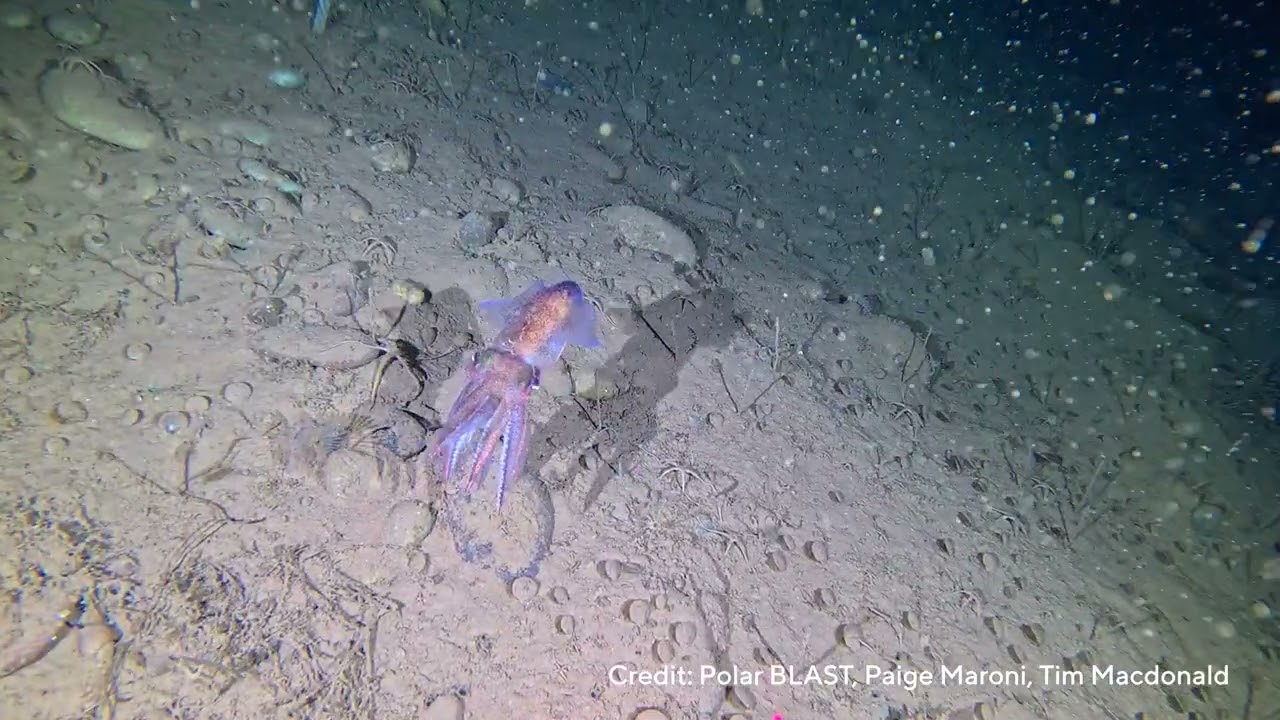
ABOVE: Watch the the rainbow-colored Arctic bobtail squid, which was spotted at depths up to 87m in sub-zero waters as low as 29.1°F / -1.6°C
Some 70 species of bobtail squid are known to inhabit oceans across the planet, including warmer regions of the Pacific and Indian Oceans, along with the sub-zero underwater regions of the Arctic.
When these squids hunt at night, moonlight from above would normally cast a dark shadow to predators swimming below.
However, bioluminescent bacteria housed in a special organ emit a blue-green light that matches the exact brightness of the moon – effectively making the squids invisible to other predators in a process called “counter-illuminated camouflage.”
The research crew, led by Dr Paige Maroni from The University of Western Australia’s School of Biological Sciences, recorded the adult bobtail squid at depths between 37-87m, also spotting a trio of egg clusters attached to a rocky substrate.


These egg clusters were recorded at a depth of 50m, where the water temperature had reached a cool 29.1°F / -1.6°C, highlighting what Dr Maroni called the “resilience of marine life in one of Earth’s most extreme environments.”
According to Dr Maroni, who co-authored the research paper recently published following the expedition, cephalopods – the class of marine animals to which squids belong – play “vital ecological roles” in Arctic waters.
However, the researchers stated that more work is needed to establish biodiversity baselines in this under-documented aquatic region.
You might also like…
Discover our pick of the best waterproof cameras and the best underwater housings for cameras and phones.

