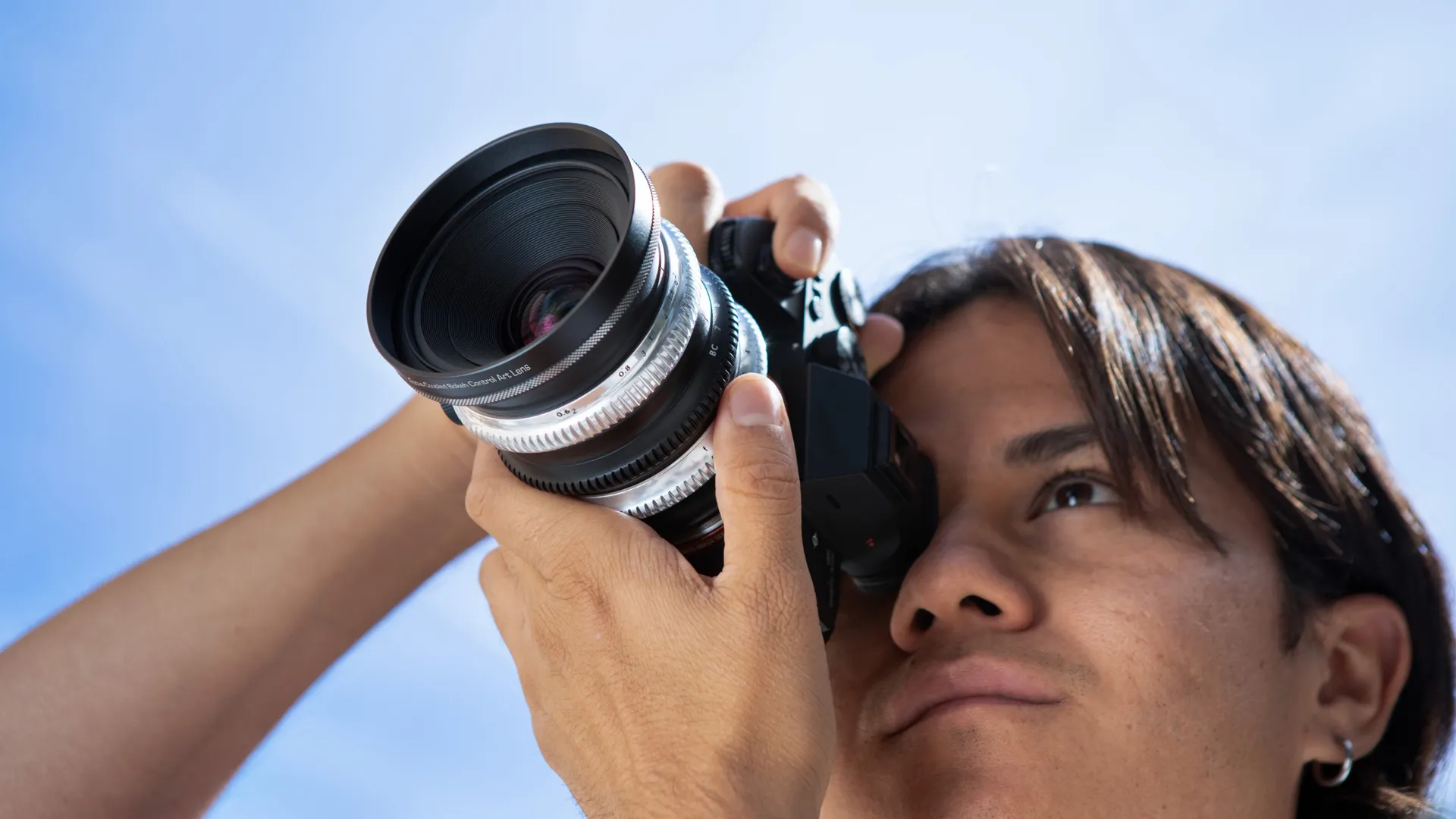
Lomography has taken one of the most recognizable looks in experimental photography and pushed it into completely new territory, with the Joseph Petzval Métamorphose 35mm f/1.8 – a new focus-coupled, bokeh control art lens designed for both photographers and filmmakers.
Available for Sony E, Canon RF and Nikon Z mounts, the new optic moves beyond the classic Petzval swirl and introduces a far more aggressive, almost vortex-like rendering that can be adjusted in-camera directly.

The Petzval name is already synonymous with wonderfully strange backgrounds, swirling bokeh and portraits that look as though they have been dragged straight out of another century – but the Métamorphose takes that character considerably further.
At its strongest bokeh setting, Lomography says the lens creates a perception-bending optical warp around an incredibly sharp center, with points of light stretching into comet-like shapes and the background appearing to surge around the subject.
At closer focusing distances that effect becomes even more pronounced, combining stretching and swirling bokeh to make the subject appear almost as though it is jumping out of the frame. At the opposite end of the scale, the effect can be dialled back for a much calmer rendering, with softer edges and soap-bubble-style bokeh textures.
The strength of the effect is adjustable across seven levels, while further changes can be made through aperture and focus, giving photographers and filmmakers considerably more control over just how strange they want their final image to look.
Lomography sees the lens as a creative storytelling tool, capable of adding a sense of speed to static scenes, creating feelings of confusion or movement, and even recreating some of the visual language associated with classic horror films.
What makes the story particularly interesting is where the optical design comes from. Lomography says its inspiration stretches back more than 200 years to the work of German mathematician and physicist, Carl Friedrich Gauss.
His Single Gaussian lens design from 1817 suffered from significant coma and astigmatism – optical characteristics that saw it deemed unsuitable for photography and instead used for telescopes. Lomography has deliberately embraced those imperfections, rather than correcting them, using the historically rejected design as the starting point for a modern photographic and cinematographic lens.
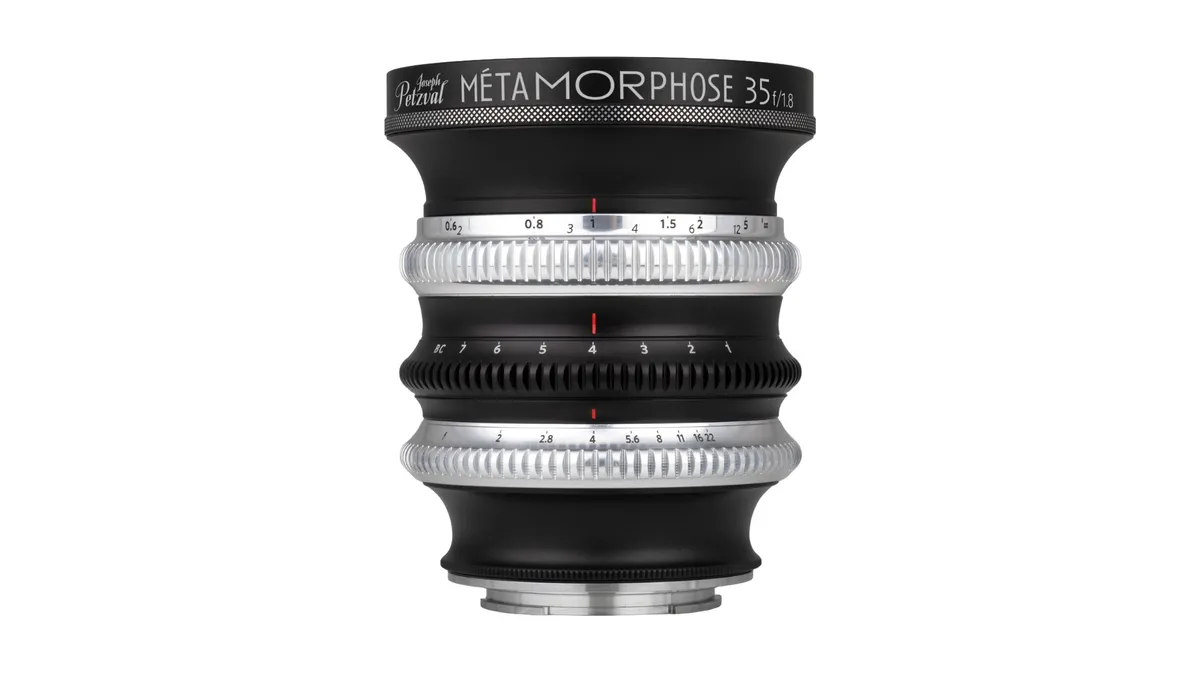
The 35mm lens uses 6 elements arranged in 5 groups and offers a fast f/1.8 maximum aperture, closing down to f/22 through a stopless iris-style aperture system. There is also support for drop-in rear aperture plates, a 62° field of view, a minimum focusing distance of 0.35m and a 67mm filter thread.
There are no electronic contacts, as you would probably expect from something this deliberately old-school in its optical philosophy, with focusing handled entirely manually through a helicoid mechanism.
Sample images


Lomography has clearly paid particular attention to filmmakers as well. The Métamorphose features a 180° focus throw, mod 0.8 follow-focus gearing and stopless control rings for focus, aperture and bokeh adjustment.
There is also a built-in quarter-inch lens support for tripod, handheld and gimbal setups, while the focus-coupling mechanism is designed to prevent unwanted focus shift as the bokeh effect is changed. That means the character of the background can effectively be altered during a shot, opening the door to gradual transitions and increasingly pronounced subject isolation without interrupting focus.
I have always liked lenses that do something genuinely different rather, than simply chasing another tiny improvement in sharpness, and the Joseph Petzval Métamorphose certainly looks as though it falls into that category. This is not a lens pretending to be clinically perfect; its entire appeal comes from exaggerating the optical characteristics lens designers spent generations trying to remove.
For photographers and filmmakers who enjoy creating their look in-camera rather than adding everything afterwards, this could be one of the more unusual 35mm lenses we have seen for some time.
An on-sale date has yet to be announced, but the Lomography Joseph Petzval Métamorphose 35mm f/1.8 will carry a price of $649 (approximately £489 / AU$930).
You might also like…
Take a look at the best Lomography lenses for more creative art optics!

