
Meta VR smart glasses could be the biggest announcement in the world of smart glasses for some time. Not because they're the best, the most powerful, or the most innovative, but because they're pushing for a balance that others haven't yet seemed to manage – a balance including the price.
Meta has already grown a popular – if controversial – market, dominating the best smart camera glasses thanks to variants of its Ray-Ban Meta Gen 3, the latest version of which was also just announced. These are essentially sunglasses with a camera and a voice-based A.I. assistant built in, and sold in good numbers at around the $300 price.
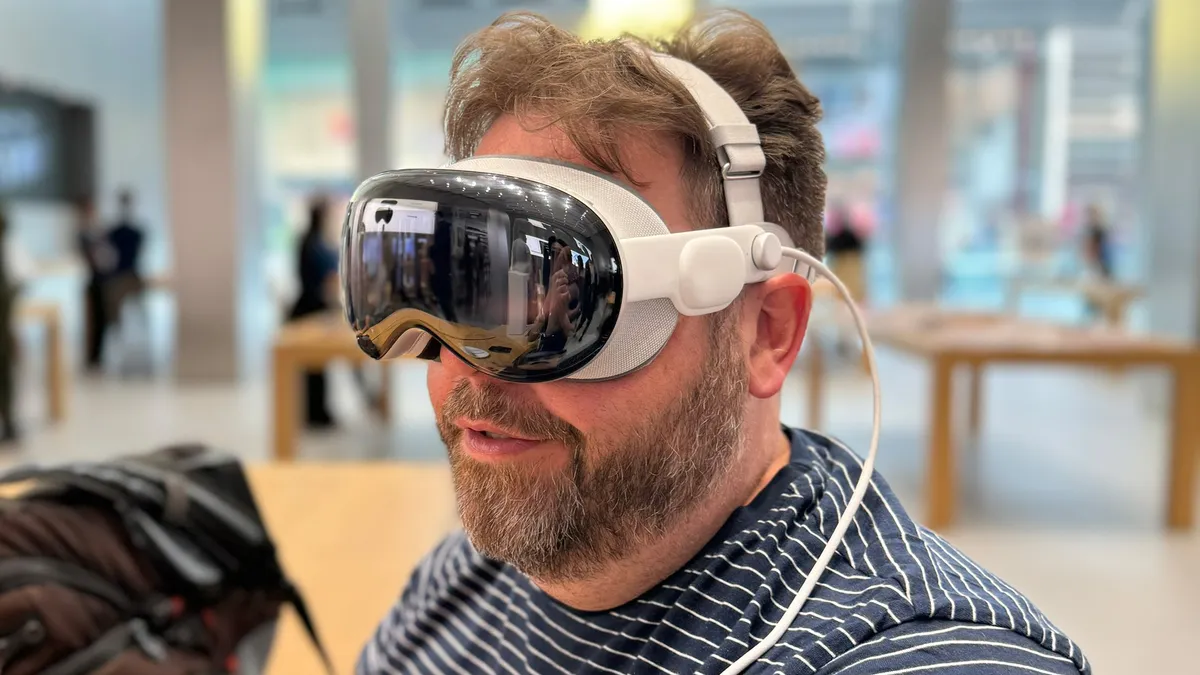
Apple, of course, went for a carefully tested, refined, technically incomparable device (not wholly without flaws, but it did impress me when I tried the Vision Pro). There were two key downsides: it cost the wrong side of $3000 and it looked like really nice ski goggles, so it was never going to be something that consumers bought and wore every day.
So, what if you want more than the camera glasses but less than the Apple's Vision Pro? What if you actually liked the idea of the Vision Pro but feel that it has 'failed'. Sure, Apple is still updating the OS and adding productivity features, but there is a lack of momentum and, as we have covered here, the company has also reduced manufacturing orders for the Vision Pro.
Well, the Meta VR seems to be pitching itself as the solution.

The company already had the Meta Ray-Ban Display, which is a variant of these glasses that features an internal display that appears 'projected' over the wearer's view. The view can be interacted with using a wristband. This extends the capabilities, not in a way that would trouble Vision Pro users but definitely in a way that'd impress owners of the first Google Glass (remember them?)

The fact Meta had a means of interaction – the wristband – the beginnings of an on-screen operating system, and a market for glasses (as well, sorry Apple, but a cooler brand tie-in) put it in a good place to deliver the Meta VR glasses.
These ARE a lot closer to being a Vision Pro-like concept, obscuring the eyes with a big opaque black goggle-like cover. There are cameras on the outside and a virtual world is projected onto what you see, so, like Vision Pro, everything you see when wearing them is the result of computation (even if it is just a camera image passing through).
Pass-through, by the way, introduces all the 'qualities' you'd expect of a small digital camera, and the slight delay of computation.
The upshot is that several images can be displayed in your field of view – a giant cinema, or multiple 'windows'.

Like Apple's device, or the FPV goggles I've been using for years as a drone fan, there is a cable and 'puck' where the 'power' is stored. Power is a key word here; the glasses are only 100g, so power as Meta uses it refers to compute power as well as the battery. (It remains to be seen if this is problematic when topping power up.)
In fact, these look a lot more like glasses when you consider they're actually VR devices – which usually come with a headstrap because of the weight. That's pretty exciting.
This seems a little odd from a company that only a few months ago scaled back its Meta Quest gaming glasses, but, presumably that is because it knew it was attempting to expand further with more capable hardware.
On which subject, the Meta VR also doesn't come with the wristband that the earlier glasses relied on, instead having mastered the ability to detect pinch controls in the way others (Apple, Samsung, Snap SPECS) seem to have.
If you need some productivity on the go, Meta's system will detect a flat surface – perhaps a table in Starbucks – and put a "keyboard" there for you.
The system has no confirmed specs and won't be available until "Spring 2027" – but the other detail Meta has shared is perhaps the most crucial: a price of $1,299 (just under £1,000 were it translated directly).
Given the price of the Apple Vision Pro and the SPECS announced a few days before, not to mention the cost of chips, this is a surprising commitment, but one that might well buy the market.

