





A puma lies along the top of a fence, eyes closed. It seems to be dozing in the late afternoon sun. Behind it, a golden grassland stretches off to the horizon. On the face of it, it's a beautiful, tranquil scene.
Well, sorry to burst the bubble, but in fact, this animal isn’t sleeping. It’s dead, tied to the fence and put on display as a trophy.
The photo was taken by Chilean photographer Francisco Negroni in the province of Santa Cruz, in Argentine Patagonia. Titled Warning Sign, it just won the Photojournalism category of Wildlife Photographer of the Year 2026. The Wildlife Photographer of the Year is developed and produced by the Natural History Museum, London. He told the organizers it was a scene he had “never witnessed or photographed before”.
So what's going on, exactly? Well, Santa Cruz officially banned the hunting of pumas in 2025. But it turns out, the practise continues, albeit illegally.
Farmers say they lose sheep to the pumas and often respond by killing them. But campaigners say there are other approaches, such as keeping sheep in enclosures at night and using guard dogs. In southern Chile, some landowners have even given swapped sheep farming for puma tourism.
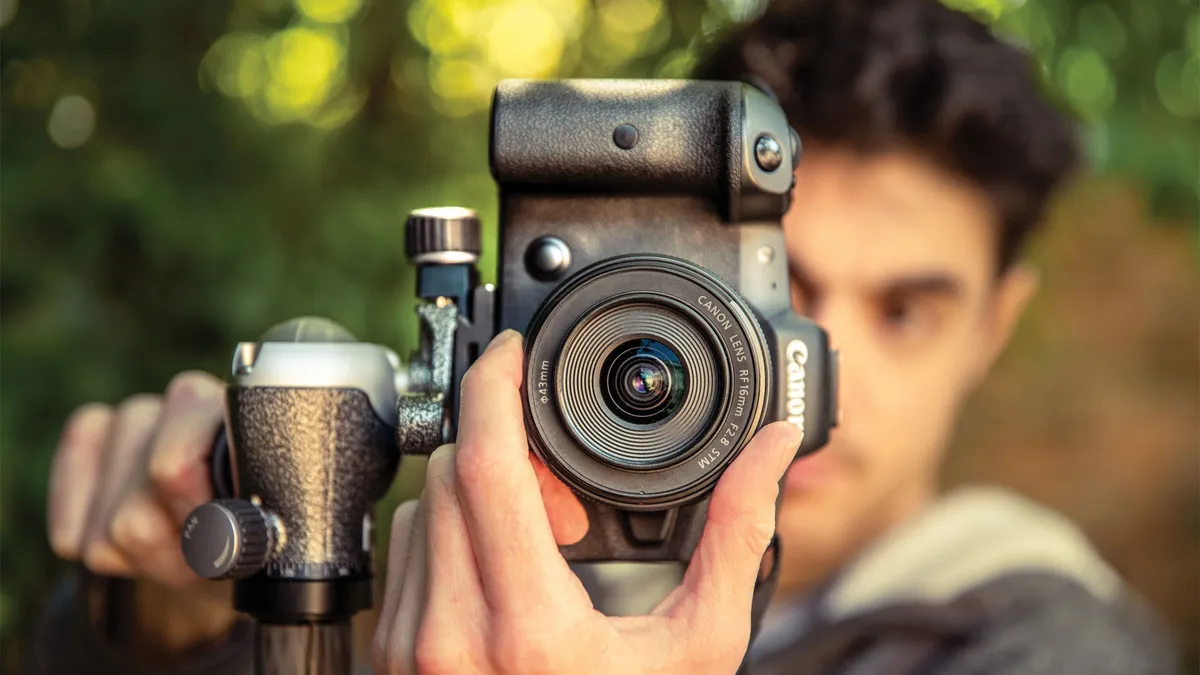
Negroni shot the Puma image on a Canon EOS R5 with a Canon RF 70–200mm f/2.8L IS USM lens, at 70mm. The exposure was 1/640 sec at f/3.2 and ISO 100, set manually.
The EOS R5 is getting on in years, having launched in 2020 and superseded by the EOS R5 Mark II, but it remains popular with wildlife shooters thanks to its 45MP sensor, fast burst shooting and superior animal-detection autofocus.
You'd assume from this photo that Negroni is a wildlife specialist by trade, but actually that's not the case. Known globally as El Cazador de Volcanes, aka The Volcano Hunter, he's spent his career photographing eruptions, volcanic lightning and lava. He describes himself as not just a photographer but “a witness to Earth’s most violent and beautiful transformations”.
This time, though, the transformation he captured was a human-made one, making the image especially powerful and disturbing.
Warning Sign will be on show from October 16, 2026 until July 11, 2027 with the other winning images in the Wildlife Photographer of the Year exhibition at the Natural History Museum in London. Tickets are available here.
You might like...
Browse the best cameras for wildlife photography and the best lenses for bird photography and wildlife.

